Why is the CDIP Package Still Widely Used in Semiconductor Devices?
-
2026-03-13 Company News






Despite the rise of surface-mount technologies, the Ceramic Dual In-line Package (CDIP) remains a cornerstone for high-reliability electronics. This article explores the technical structure, hermetic sealing advantages, and thermal stability of CDIP.
Introduction
In the field of semiconductor packaging, the package configuration directly impacts chip reliability, thermal dissipation, and long-term stability. Despite the rapid growth of small surface-mount packages like BGA and QFN, the CDIP (Ceramic Dual In-line Package) maintains a significant position in various industrial semiconductor applications.
CDIP packages feature a stable ceramic material structure, superior hermetic sealing performance, and high thermo-mechanical stability, providing reliable solutions for high-temperature environments, extended lifespans, and industrial control requirements. Compared to plastic packaging, CDIP offers improved temperature cycling and moisture resistance, while ensuring long-term system maintenance and compatibility with existing designs.
The Role of CDIP Packaging in Semiconductor
CDIP (Ceramic Through-Hole Package) is a type of ceramic package where the chip is encapsulated within a rigid ceramic body. It typically utilizes a metal lid and is hermetically sealed via glass frit or soldering. Due to its robust construction and dependable sealing, CDIP is widely used in numerous industrial semiconductor systems.
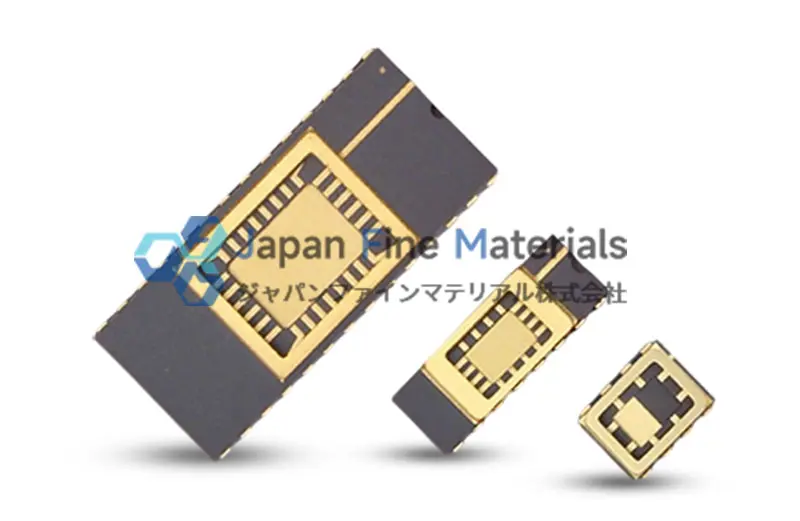
In semiconductor applications, CDIP packages are primarily used for:
● Industrial control chips
● Analog and mixed-signal chips
● High-temperature semiconductor circuits
● Power management chips
● Long-life logic chips
These applications share the following common characteristics:
● Requirement for long-term operation
● Exposure to thermal cycling
● Need for mechanical strength and structural stability
● High sensitivity to moisture
Material Stability and Thermal Compatibility
The primary advantage of the CDIP package lies in its ceramic material system, typically high-purity alumina (Al₂O₃). This material offers high thermal stability and mechanical strength. Compared to molding compounds, ceramic has low hygroscopicity and superior dimensional stability; its Coefficient of Thermal Expansion (CTE) is close to that of silicon chips, significantly reducing stress concentration during thermal cycling.
| Performance Metric | CDIP (Ceramic) | Standard Plastic Package |
|---|---|---|
| Hermeticity | High (Glass/Gold-Tin Seal) | Low (Non-hermetic) |
| Thermal Stability | Excellent | Moderate |
| Moisture Resistance | Superior | Prone to Delamination |
During semiconductor operation, thermal expansion mismatch can lead to:
● Wire bond fatigue and breakage
● Encapsulation cracking
● Delamination between chip and package
● Micro-crack accumulation in internal routing
The ceramic structure of CDIP effectively mitigates these issues, ensuring long-term reliability.
Importance of Hermetic Packaging in Semiconductors
Moisture ingress is a primary cause of failure in semiconductor devices, particularly in analog circuits and power management devices. CDIP packages achieve true hermetic sealing through glass-to-metal bonding or brazing, creating a stable internal environment. The advantages include:
● Long-term Moisture Protection: Prevents humidity ingress and reduces component failure rates.
● Stable Electrical Performance: Maintains internal air or inert gas to avoid insulation degradation.
● Reliable Thermal Cycling: Minimal internal pressure changes prevent bonding wire stress.
● Extended Safety: Suitable for systems requiring over 10 years of reliable operation.
Performance in High-Temperature Semiconductor Applications
Many industrial semiconductor systems operate in high-temperature environments, such as:
● Power conversion modules
● Industrial automation control units
● Energy equipment electronics
● Process monitoring systems
In these environments, high-purity ceramic CDIP packages maintain structural integrity and mechanical stability, effectively reducing the impact of thermal cycles on chip performance.
The Necessity for Long-Life Industrial Systems
Industrial systems often require equipment to operate stably for 10 to 20 years. The standardized design of CDIP provides:
● Compatibility: Pin layouts remain consistent for legacy PCB support.
● Environmental Adaptation: Stability against humidity and chemical corrosion.
● Mechanical Support: Through-hole design prevents solder joint failure under vibration.
● Sustainable Supply: Mature technology ensures stable supply chains for long-term projects.
Conclusion
While the industry pursues miniaturization, the CDIP package provides unique advantages in reliability and thermal management. For projects requiring continuous operation in harsh conditions, CDIP significantly improves device stability and longevity.
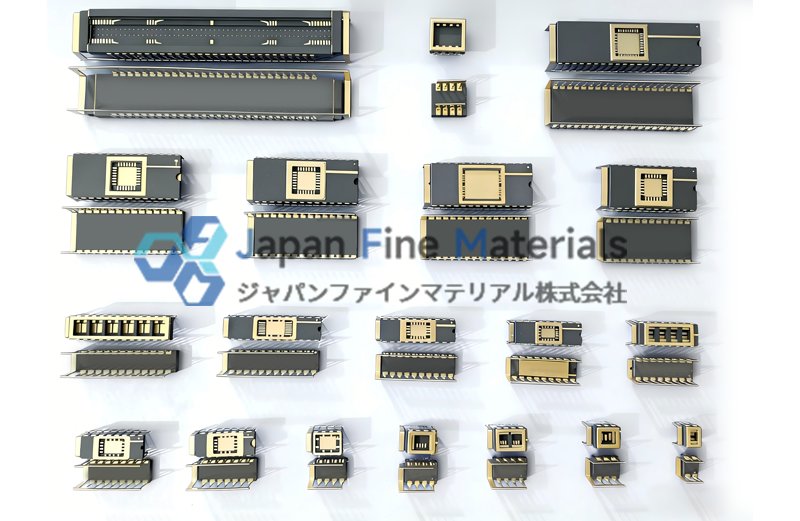
If you are seeking reliable ceramic packaging solutions for industrial semiconductor projects, we provide professional CDIP services. Please feel free to contact us for customized solutions.