How to Manufacture Advanced Ceramics
-
2025-12-05 Industry News






Discover how advanced ceramics are manufactured—from powder preparation and forming techniques to sintering, microstructure control, and precision processing. A complete guide to high-performance ceramic materials and technical ceramics manufacturing.
In today’s evolving field of advanced ceramics manufacturing, high-performance ceramic materials have become essential components in critical industries such as biomedical devices, semiconductor equipment, electronic packaging, and energy systems. Compared with traditional ceramics, advanced ceramic materials offer superior mechanical strength, thermal stability, wear resistance, and chemical durability. Such exceptional performance is rooted in a sophisticated and highly controlled ceramic manufacturing process, covering powder preparation, precursor refinement, forming technologies, sintering mechanisms, and precision post-processing. Understanding how these processes transform rigid inorganic materials into reliable, high-performance components is key to advancing modern technical ceramics manufacturing. This article provides a comprehensive overview of the full workflow—helping readers clearly understand how advanced ceramics are engineered for demanding industrial applications.
What Are Advanced Ceramics?
Advanced ceramics, also known as special ceramics or fine ceramics, are inorganic non-metallic materials synthesized from high-purity raw materials and manufactured through strict process control. These ceramics exhibit excellent electrical properties, thermal stability, optical performance, wear resistance, and corrosion resistance. They are widely used in high-tech industries.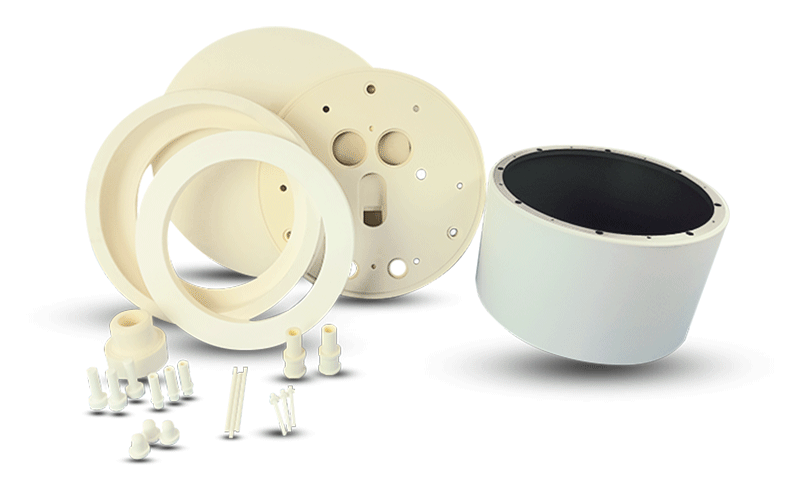
Types of advanced ceramic materials include:
● Alumina (Al₂O₃): characterized by high hardness and excellent electrical insulation, it is widely used in insulating components and wear-resistant parts.
● Zirconia (ZrO₂): characterized by excellent toughness and crack resistance, making it ideal for manufacturing medical implants and structural components.
● Silicon nitride (Si₃N₄): characterized by high thermal shock stability, making it ideal for engine components and cutting tools.
● Silicon carbide (SiC): widely used in semiconductor manufacturing equipment and sealing components due to its high-temperature resistance and excellent thermal conductivity.
● Aluminum Nitride (AlN): high thermal conductivity and excellent electrical insulation, suitable for power device packaging.
● Yttrium oxide (Y₂O₃): plays a pivotal role in stabilizing zirconia, manufacturing laser crystals, and producing transparent ceramics.
● Boron nitride (BN): classified into hexagonal boron nitride (h-BN) and cubic boron nitride (c-BN). h-BN provides high-temperature lubricity, while c-BN is an ultra-hard material with hardness close to diamond.
Due to its highly adjustable properties, advanced ceramics are regarded as one of the "key materials of the 21st century."
Advanced ceramic manufacturing processes
1. High-Purity Powder Preparation and Precursor Control
1. High-Purity Powder Preparation and Precursor Control
The performance of advanced ceramics depends on the integrity of their crystal structure, the level of impurity control, and the morphology of the powder particles. Powder is not merely a raw material—it serves as the “atomic-level foundation” of the entire performance architecture.
1.1 Detailed preparation method:
|
technique |
Applicable materials |
characteristic |
particle size control |
|
Sol-Gel method |
Zirconia (ZrO₂), Silica (SiO2) Titania (TiO2), etc. |
Tunable hollow/solid structure |
20~200 nm |
|
coprecipitation method |
composite oxide (e.g., ZTA) |
Elementary uniform dispersion, suitable for multi-component systems |
<300 nm |
|
Thermal Plasma Powder Spheroidization |
Silicon Nitride (Si3N4), Silicon Carbide (SiC) |
high sphericity and good fluidity |
1~5 µm |
|
spray pyrolysis |
Alumina (Al2O3), Magnesia (MgO) |
Tunable hollow/solid structure |
0.1~2 µm |
1.2 Impurity control indicators:
● Metal impurities (Fe, Ni, Cr, etc.) must be strictly controlled to maintain extremely low residual levels.
● The acid-soluble and alkali-soluble residues must meet high-purity standards.
● The BET specific surface area should meet the activity requirements of high-performance ceramic powders.
2. Modification of powders and Optimization of Compositional Uniformity
The introduction of surface modifiers and particle stabilizers is a key control step in the powder preprocessing stage of modern advanced ceramics.
2.1 Dispersion and Stabilization Mechanisms:
● Charge-shielding stabilizers: such as sodium tripolyphosphate (STPP), stabilize by regulating particle surface charges.
● Polymer coating system: such as PEG, PVP, etc., to form a coating layer to inhibit particle re-aggregation;
● Mechanical chemical treatment: shear force was introduced in the process of ball milling to assist molecular bond rearrangement.
2.2 Granulation parameters:
● Target particle size distribution: control particle size within a reasonable range to meet the requirements of subsequent processing.
● Bulk / Packing Density, increased to improve the compactness of the particles and the forming properties of the particles.
● Particle Morphology: Using granulation powder with higher sphericity can reduce the inhomogeneity of pore and structure during the pressing process and improve the quality of the finished product.
3. Diversified Formation Paths and Their Applicability
In advanced ceramic manufacturing, forming processes serve as the critical link between powder preparation and dense sintering. The selection of technical routes directly impacts the density distribution of green bodies, the uniformity of subsequent sintering shrinkage, and the dimensional accuracy of final products. Current mainstream forming techniques primarily include dry pressing, isostatic pressing, injection molding, extrusion molding, tape casting, and gel casting, each with specific application scenarios and technical barriers.
Dry pressing
Dry pressing is a widely used traditional method for manufacturing ceramic components with simple shapes and regular dimensions, such as alumina ceramic sheets and zirconia ceramic structural parts. The key lies in controlling the particle size distribution of the powder and optimizing the mold lubrication system. Although bidirectional or unidirectional pressing is commonly employed, the limited pressing direction often leads to interlayer density variations and internal cracks. To mitigate these issues, pre-pressing and preheating techniques or high-precision demolding control systems are typically employed to reduce defect rates.
Isostatic compaction
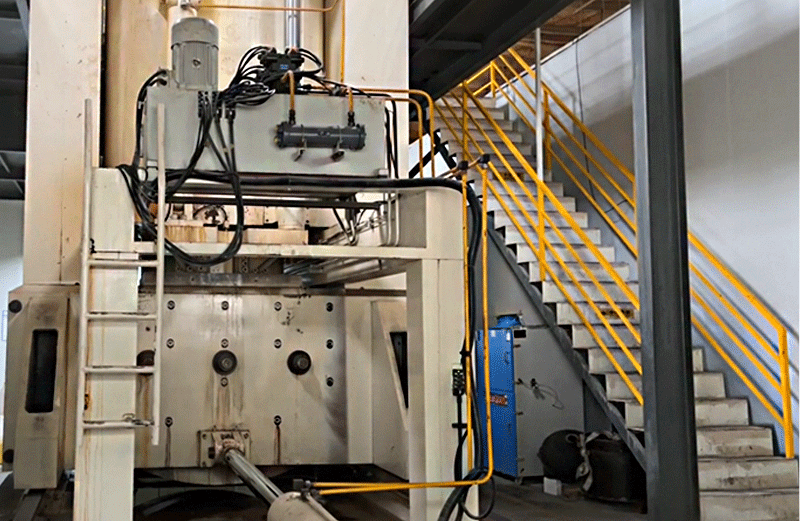
Isostatic pressing employs high-pressure liquid as the medium to achieve isotropic compression, making it ideal for products with complex cross-sections or significant length-to-diameter ratios, such as ceramic rods, ceramic tubes, and ceramic valve seats. This method significantly improves the density uniformity of green bodies while reducing warping or deformation caused by anisotropic stresses. The equipment must meet stringent requirements for sealing performance and pressure distribution uniformity. In recent years, cold isostatic pressing (CIP) has been applied to preform ceramics, metal powders, and cemented carbides. By uniformly compressing powders with high-pressure liquids, CIP achieves high-density green bodies, though complete densification requires subsequent sintering.
|
Isostatic compaction |
Gel injection molding
Gel casting is a molding technique that combines high-solid-content ceramic slurries with in-situ polymerization. It is particularly suitable for large ceramic components with complex geometries and stringent mechanical requirements, such as ceramic impellers and bioceramic scaffolds. In this process, the slurry flows and forms within the mold cavity, then undergoes in-situ gelation triggered by thermal or chemical reactions to create a high-strength green body, which is subsequently demolded and sintered. The key technical challenges involve controlling the reaction kinetics of the polymerization system and suppressing foam formation.
Extrusion molding
Extrusion molding is primarily used for producing long strip or hollow structural products, such as honeycomb ceramics and ceramic membrane carriers. The process involves pushing the slurry through a specially shaped die via a screw, forming a continuous green body. The slurry must possess appropriate bonding properties and shear-thinning capability, while maintaining the structural integrity of additives like fibers or cellulose before drying. Given the considerable length of the green body, a combination of segmented low-temperature forced air drying and microwave preheating is employed during the drying process to prevent surface hardening and internal moisture retention, which could lead to crack formation and propagation.
Tape casting
Flow casting is the standard forming process for thin ceramic sheets (e.g., multilayer ceramic capacitors, LTCC substrates). It primarily involves precisely controlling the thickness of ceramic slurry coating on the base film through blade operation. This process requires high rheological properties of the slurry, maintaining pseudoplasticity even under high shear rates. The slurry typically contains over 10 additives such as dispersants, plasticizers, and film-forming agents, each requiring strict optimization of proportion and pH to ensure the dried sheet is free from warping, adhesion, and pinholes. Post-forming, multilayer ceramic structures are often fabricated through lamination and asynchronous sintering.
Injection molding
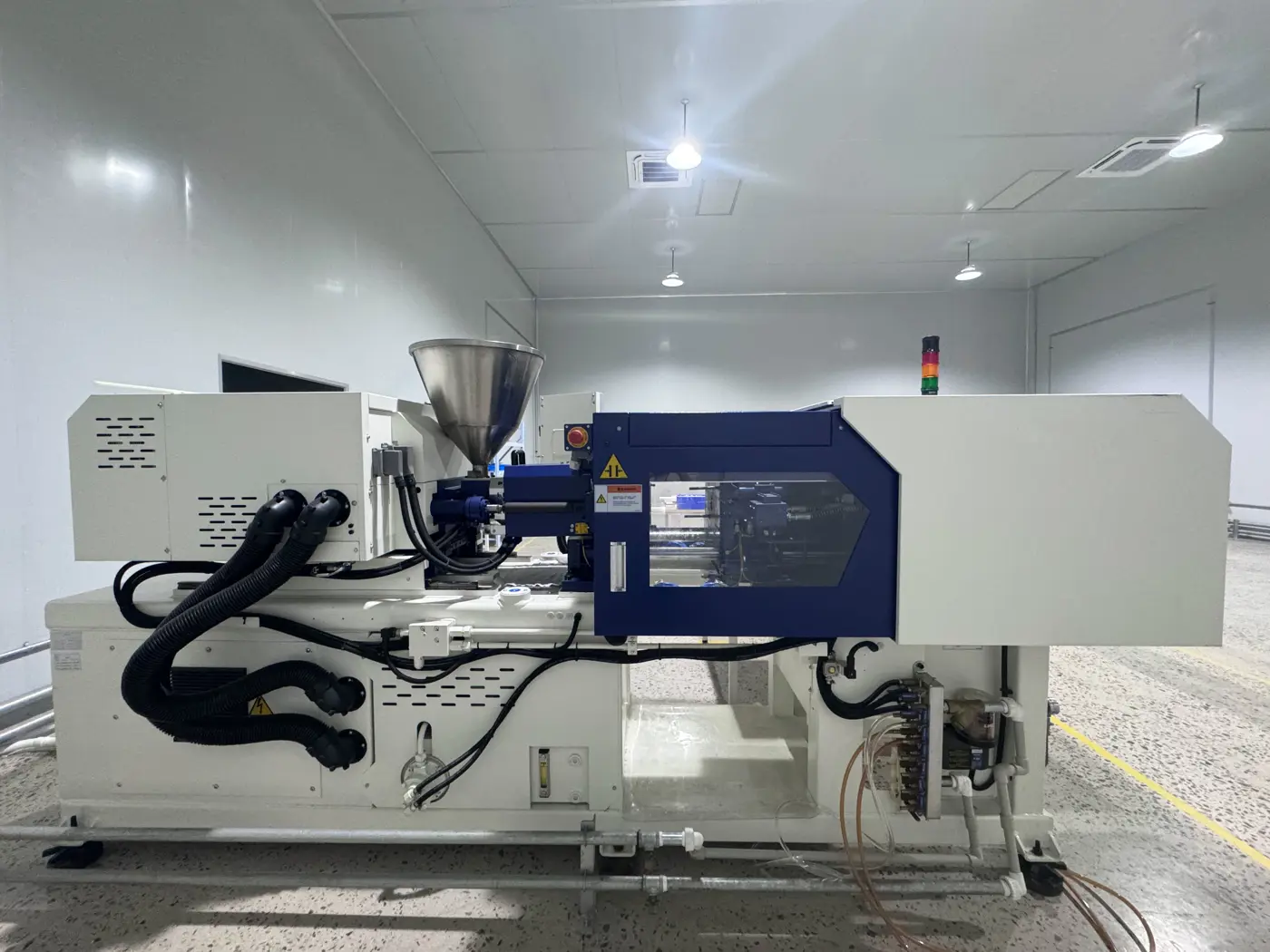
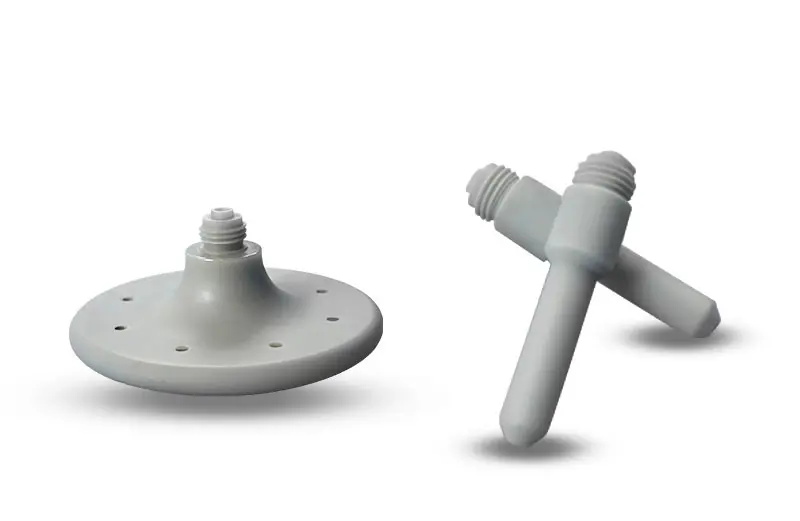
Injection molding is a specialized manufacturing process developed for producing ceramic components with intricate microstructures, small dimensions, and high-volume production requirements. Widely applied in electronic ceramics and medical implants, this technique involves blending ceramic powders into plasticized material strips using polymer binder systems, which are then molded through injection molding. The key technical challenges lie in the subsequent degreasing and sintering processes, particularly the degreasing stage where micro-cracks or internal voids may form. To ensure dimensional consistency, the process requires stepwise temperature control combined with segmented atmosphere regulation.
|
Injection molding |
Injection-molded products |
4. Refinement of Sintering Mechanism and Microstructure Control Strategy
The scientific essence of ceramic sintering is the process of atom/ion migration and pore elimination. The variables affecting the sintering result include:
4.1 Sintering kinetics control:
● Diffusion mechanism: surface diffusion (initial stage) →grain boundary diffusion (intermediate stage)→bulk diffusion (dense stage);
● Sintering activation energy: Different material systems have different activation energy.
● Growth inhibition: MgO, Y2O3 and other inhibitors are added to avoid the formation of coarse grains.
4.2 Typical sintering parameter configuration:
|
Material |
Conventional sintering temperature |
Soaking time |
Density (%TD) |
Grain control |
|
Alumina |
1600–1650°C |
2–3 h |
≥98.5% |
2–4 µm |
|
Zirconia (3Y-TZP) |
1400–1500°C |
2 h |
≥99% |
0.2–0.5 µm |
|
Silicon nitride |
1750–1850°C (N₂ atmosphere) |
3 h |
≥97% |
1–2 µm |
|
Aluminium nitride |
1850°C (N2 atmosphere) + Y2O3 assisted |
2–3 h |
≥98% |
2–4 µm |
5. Process Reoptimization for Precision Machining and Post-Processing
The post-processing of ceramic materials is not only the integration of shape, but also the key process of performance fine-tuning and interface adaptation.
5.1 Key points of processing equipment:
●Five-axis synchronized ultra-hard tool center: engineered for high-complexity 3D structures;
● Laser selective ablation: used for high precision control of surface tension area;
●Electrochemical machining of composites: for high-hardness composite ceramics (e.g., SiC-WC);
5.2 Functional processing:
● Polarization treatment (piezoelectric ceramics): Apply a relatively high electric field intensity for polarization treatment, with temperature controlled within the specified range.
● Surface coatings (CVD/PVD): Metal layers such as TiN, Pt, and Au, used for conductivity, welding, or biocompatibility.
● Laser varistor (for sensing element): control accuracy can reach sub-ohm level.
6. Intelligent Quality Control System and Full Process Tracking
Modern advanced ceramic enterprises are transitioning to digital manufacturing and AI-assisted quality control, integrating cutting-edge technologies into their production processes.
● XCT 3D porosity reconstruction system: used to detect hidden micropores and inclusions.
● Machine vision defect detection: combined with deep learning, it achieves high-speed online defect recognition.
● SPC control chart: Critical parameters (particle size, density, dielectric constant) undergo process capability index (Cpk) analysis.
● MES+ERP integrated system: tracks recipes, process parameters, equipment status, and quality inspection data with full-process traceability.
Conclusion
The development of advanced ceramics manufacturing is a long-term, technology-intensive process that demands strict control over material purity, process reliability, and microstructure stability. Every stage—from powder preparation and forming to sintering and precision finishing—requires deep technical expertise to ensure consistent performance in high-end applications.In recent years, innovative technologies such as reactive sintering, hot isostatic pressing (HIP), and 3D-printed ceramics have reshaped the industry landscape. These advancements significantly improve material density, enable the creation of complex functional structures, and reduce overall production costs, reinforcing their value within next-generation high-performance ceramic manufacturing. As functional ceramics continue to expand into semiconductor, aerospace, energy, and biomedical industries, mastering the full ceramic processing chain will remain a key driver of competitiveness and innovation.
JFM: Integrating R&D and Manufacturing for Your Advanced Ceramics Solutions
If you are looking for a reliable partner in advanced ceramics manufacturing, JFM offers comprehensive solutions from material R&D and customized design to precision processing and batch production.
With strong engineering capabilities, strict quality control, and years of industry experience, we provide high-performance ceramic components tailored to your application needs.Contact JFM today to receive targeted technical support, optimized processing solutions, and professional service for your ceramic projects.