Advanced Ceramic Applications in Modern Industry
-
2025-12-19 Industry News






Explore advanced ceramics applications across electronics, semiconductors, biomedical, energy, chemical and industrial equipment. Learn key materials, properties and use cases of technical ceramics.
In modern industrial applications, materials are required to operate reliably under high temperatures, corrosive environments, electrical stress, and continuous mechanical load. In many cases, conventional materials struggle to meet long-term performance and stability requirements. As a result, advanced ceramics, also known as technical ceramics, are increasingly utilized across various industries, including semiconductors, electronics, energy, medical technology, and industrial equipment.
The value of advanced ceramic applications lies not only in their material properties but in the practical problems they solve. By offering thermal stability, corrosion resistance, electrical insulation, and wear resistance, advanced ceramic materials enable reliable operation, longer service life, and improved system performance in demanding industrial environments.
What is Advanced Ceramics?
Advanced ceramics, also known as technical ceramics or fine ceramics, are inorganic non-metallic materials systems manufactured through modern material science and precision techniques. Unlike traditional ceramics, these materials exhibit higher purity, uniformity, and controllable structures, demonstrating the following characteristics:
● High Hardness and Good Abrasion Resistance
● Excellent Thermal Stability and High Temperature Resistance
● Excellent electrical insulation or conductivity (depending on the material)
● Strong resistance to chemical corrosion and environmental oxidation
● Low density, lightweight structure
● Good biocompatibility
Common types include alumina (Al₂O₃), zirconia (ZrO₂), yttria (Y₂O₃), silicon carbide (SiC), silicon nitride (Si₃N₄), aluminum nitride (AlN), and boron nitride (BN).
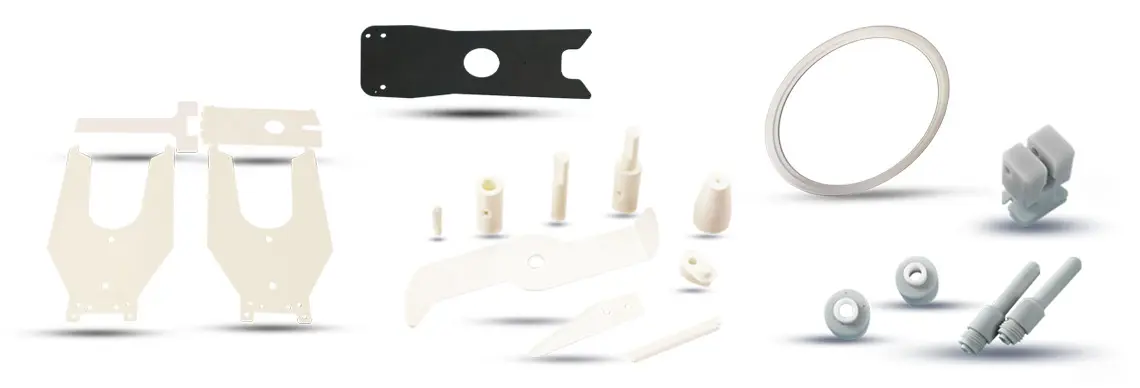
Electronics and Semiconductors
Advanced ceramics play an indispensable role in high frequency communication, microelectronic packaging, power control, semiconductor equipment and so on.
1.Ceramic substrate and packaging materials
●Alumina substrate: used for circuit insulation and heat dissipation in general electronic devices;
●Aluminum nitride substrate: With high thermal conductivity, it is ideal for high-power LEDs, 5G communication modules, and automotive electronic control systems.
●Low-temperature co-fired ceramics (LTCC) and high-temperature co-fired ceramics (HTCC) are used to achieve multi-layer circuit integration for millimeter-wave communication and radar modules.
2.Semiconductor manufacturing equipment components
Alumina, silicon nitride and other materials are suitable for the key components such as plasma etching cavity, wafer tray, heater substrate, etc. because of their excellent corrosion resistance, cleanliness and structural stability.
3.Capacitor and voltage sensitive element
●Barium titanate-based multilayer ceramic capacitors (MLCCs) provide compact, high-capacity energy storage solutions for smartphones, computers, and automotive control systems.
●ZnO ceramic varistor is suitable for circuit surge protection and power grid voltage stabilization.
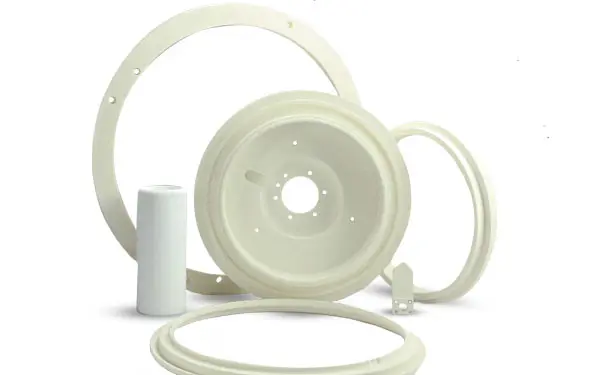
The Field of Biomedical Technology
Advanced ceramics have become a hot spot in the manufacture of medical devices and the research and development of implants due to their biocompatibility and mechanical strength.
1. Artificial joints and orthopedic implants
●Zirconia ceramics are suitable for hip and knee replacement due to their high hardness, low friction coefficient, and strong fatigue resistance.
●Alumina ceramics exhibit good biocompatibility and long-term stability, making them suitable for long-term implantation.
2 .Materials for dental restoration
All-ceramic prostheses have significant application value in the field of dental restoration due to their realistic appearance, stable color performance, and absence of metal exudation.
3 .Bone repair and tissue engineering
●Hydroxyapatite (HA) supports bone tissue repair and is used as a bone filling material, coating, and scaffold.
●Some porous ceramics are used as biostents by 3D printing technology to assist in tissue regeneration and angiogenesis.
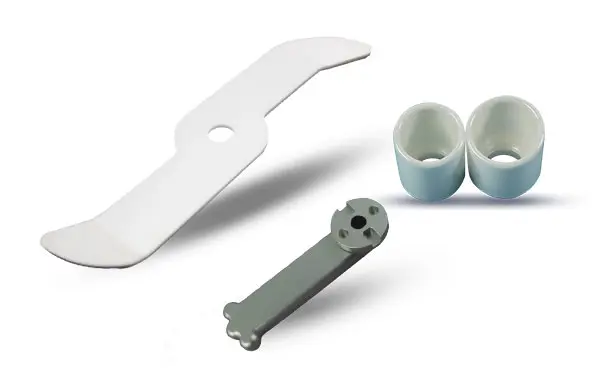
Energy and Environmental Solutions
Advanced ceramics are playing an increasingly critical role in sustainable energy and environmental governance:
1. Core Materials for Fuel Cells
In solid oxide fuel cell (SOFC) technology, modified zirconia serves as a key component, enabling stable conversion of chemical energy into electrical energy under high-temperature conditions. It represents a vital technological direction for future distributed energy supply systems.
2. Ceramic Membrane Separation and Filtration
Microporous ceramic membranes are well-suited for various applications, including wastewater treatment, gas purification, and the recovery of organic solvents. They exhibit characteristics such as resistance to high-temperature sterilization and corrosion from acids and alkalis.
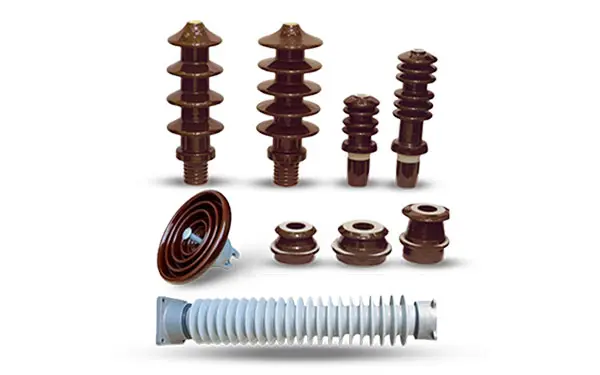
Application of Ceramics in the Food Industry
Ceramic materials demonstrate unique value in food processing, with their safety and durability playing a vital role in food production.
1. Ceramic cutting tools and grinding components
Ceramic blades (zirconia) feature exceptional hardness with zero metal shedding, making them ideal for slicing meat and processing produce.
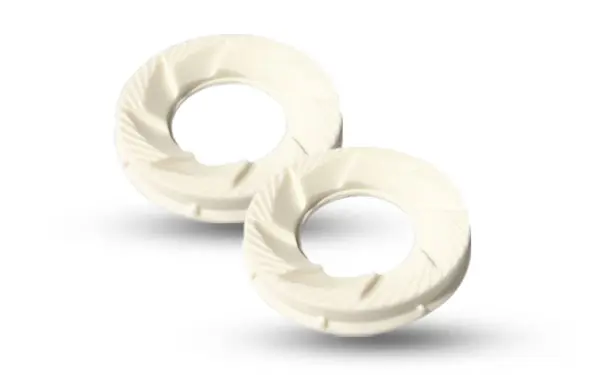
High-purity ceramic grinding balls (alumina) are specifically designed for raw material crushing and dispersion, ideal for ultra-fine grinding of premium pigments and colorants, with customizable particle sizes.
Ceramic knives (alumina) are widely used in the food processing industry due to their wear resistance, high-temperature resistance, and corrosion resistance.
2 .Ceramic pump body assembly
The conveyor rotor, made of isostatic pressure-formed alumina ceramics, is three times more resistant to corrosion than stainless steel and is specially used for the transmission of high-standard, sanitary fluids, such as dairy products and fruit juice.
Chemical Industry and Catalytic Technology
In the fields of chemical engineering and the petrochemical industry, ceramics play a crucial role in enhancing corrosion resistance and ensuring structural stability.
1. Catalytic carrier and reaction bed
Honeycomb ceramics are commonly used in automotive exhaust purification and SCR (Selective Catalytic Reduction) systems for denitrification.
Porous alumina or silica ceramics can serve as effective catalyst supports to optimize the efficiency of the catalytic reaction.
2 .Ceramic reactor and microchannel structure
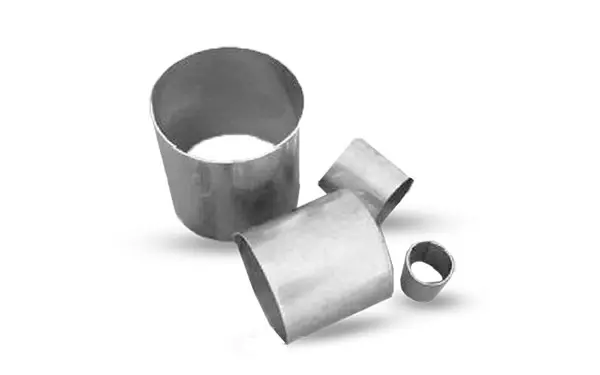
The ceramic microreactor is suitable for high-throughput and hazardous chemical reactions, offering the advantages of fast thermal management, controllable reactions, and reliable protection.
New energy vehicles and the field of electric transportation
The development of new energy vehicles has driven the extensive application of ceramic materials in electric drive systems, protection, and thermal management.
1. Ceramic heat dissipation and insulation structural parts
Aluminum nitride substrates are utilized for thermal management and insulation support in motor controllers (MCUs) and automotive inverters.
The ceramic shell replaces the traditional metal packaging, achieving lightweight and optimized voltage resistance performance.
2. Battery protection
Ceramic separator coating: spraying alumina or silica on the lithium battery separator to enhance high-temperature resistance and reduce thermal runaway.
Solid-state electrolyte ceramics, such as LLZO and LATP, are key materials for all-solid-state batteries and offer higher reliability.
3. Sensing and control systems
Piezoelectric ceramic components: used in tyre pressure monitoring systems (TPMS), vibration monitoring, and brake sensors.
High-End Manufacturing and Industrial Equipment
In environments with high precision, high wear, high corrosion, and high load, ceramic components often replace metals, effectively optimizing system performance.
1. Fine machining and cutting materials
The silicon nitride tool is suitable for machining cemented carbide, titanium alloy, and superalloy due to its thermal shock stability and high hardness.
2. Fluid control and sealing assembly
Alumina and silicon carbide ceramics are used to manufacture sealing rings, pump casings, valve cores, and bearing sleeves, suitable for high-corrosion environments such as chemical, petroleum, and food processing industries.
3. Automated production equipment
Ceramic guide, nozzle and tension control components are suitable for textile, printing, battery and pulp production, with long life and low maintenance frequency.
Conclusion
Across various industries, including semiconductors, electronics, energy, medical technology, and industrial equipment, advanced ceramics have become essential materials for addressing real-world engineering challenges. Their ability to maintain mechanical strength, thermal stability, corrosion resistance, and electrical insulation under extreme conditions makes them indispensable in high-performance systems.
As industrial systems continue to move toward higher precision, longer service life, and harsher operating environments, advanced ceramic materials provide solutions that conventional materials cannot achieve. Understanding how these materials function in specific application scenarios allows engineers and manufacturers to make more informed decisions when selecting materials for reliability, safety, and long-term performance.
Together with JFM, Pioneering the Future of Materials
JFM provides integrated R&D and manufacturing support for advanced ceramics, helping customers develop and apply advanced ceramic materials and precision ceramic components in real industrial scenarios. We support a wide range of advanced ceramics applications, including semiconductor equipment, industrial structural ceramics, and application-specific solutions.
With an experienced technical team, JFM delivers customized ceramic solutions—from material selection to precision machining and production support.