The Difference between Traditional Ceramics and Advanced Ceramics
-
2025-12-05 Industry News






Explore the key differences between advanced ceramics and traditional ceramics, including materials, manufacturing processes, properties, performance, and applications. A complete ceramic materials comparison guide for engineers and manufacturers.
When you hear the word "ceramics", you might immediately picture bowls, plates, or ancient artefacts. However, in reality, ceramic materials have evolved far beyond their everyday household applications. Modern technical ceramics and advanced ceramics now play crucial roles in high-tech industries, including those related to semiconductors, medical devices, electronics, and chemical equipment. The key differences between traditional ceramics and advanced ceramic materials lie not only in their performance but also in the technological evolution behind their manufacturing. This article provides a detailed comparison between these ceramic material categories. If you work with high-performance ceramics, explore advanced material applications, or are selecting the right ceramic components for your product, this guide will provide you with clear and practical insights.
What Are Advanced Ceramics?
Advanced ceramics, also known as engineering ceramics or fine ceramics, are a kind of functional or structural material based on high-purity inorganic non-metallic materials, which are processed by high-precision technology.
What sets advanced ceramics apart is their designability and tunability. By engineering atomic structures, controlling particle size, and optimizing sintering conditions, their properties can be tailored for specific applications. For example, zirconia ceramics are widely used in artificial joints due to their superior toughness and excellent biocompatibility. In contrast, silicon nitride ceramics, known for their high mechanical strength and remarkable thermal shock resistance, are used as key structural components in engines and gas turbines.
In short, advanced ceramics are not simply materials—they represent a complete solution integrating materials science, engineering, and application-driven design.
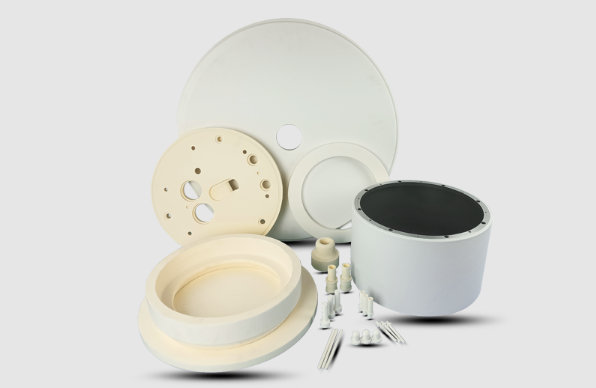
Take our products as an example, we specialize in advanced ceramic components for semiconductor and industrial applications, including:
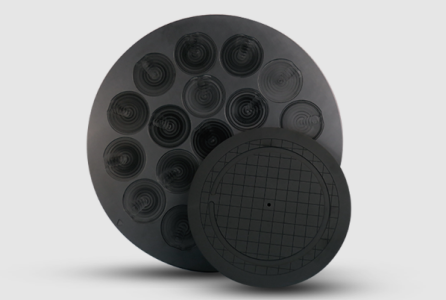
● Product 1: Ceramic Wafer Carrier: Used to support wafers during thin-film deposition, providing excellent flatness and surface quality to ensure process stability and uniform film formation.
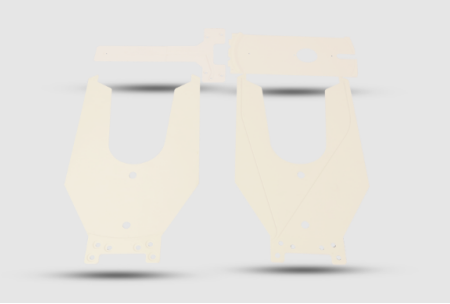
● Product 2: Ceramic End Effectors: A critical component in micro- and nano-fabrication processes, designed to perform essential operations including wafer movement, transport, and precise positioning.
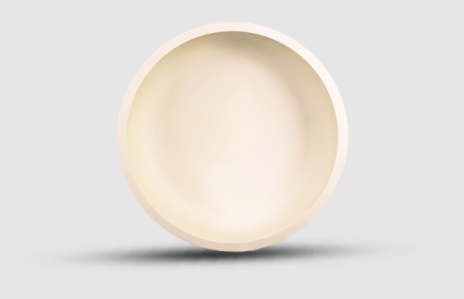
● Product 3: Ceramic Chamber Dome: A self-developed high-purity ceramic dome, widely used in thin-film deposition equipment to adsorb reaction byproducts during the manufacturing process.
In addition to standard products, we can also provide customized processing solutions based on your customers' design drawings or samples.
Raw Materials And Structural Composition
Traditional ceramics rely mainly on natural minerals—such as kaolin, quartz, and feldspar. These minerals often contain impurities and have uneven particle distribution, which can introduce variability during forming and sintering.
Advanced ceramics, in contrast, are made from high-purity, engineered synthetic powders, including:
● Alumina (Al₂O₃): Widely used in electrical insulation, abrasives, and structural ceramic components.
● Zirconia (ZrO₂): Due to its excellent toughness and heat resistance, it is widely used in bioceramics and thermal barrier materials.
● Silicon nitride (Si₃N₄): characterized by high strength and low thermal expansion, is widely used in mechanical bearings and engine components.
● Silicon carbide (SiC): Maintains excellent stability in high-temperature and highly corrosive environments, making it an ideal material for heat exchangers.
The particle size of these materials is uniform, and the impurity is less, resulting in higher consistency and engineering adaptability.
Traditional Ceramics VS Advanced Ceramics: Manufacturing Processes
Traditional ceramic production often relies on empirical techniques, including:
● Dry pressing molding and grouting molding;
● Conventional high temperature sintering;
● The glaze and decoration were applied afterwards.
Although the manufacturing process is simple, the performance is unstable and the dimensional accuracy is low because of the fluctuation of raw materials and manual deviation.
The manufacturing of advanced ceramics is more precise, and the common processes include:
● Cold Isostatic Pressing (CIP): ensures uniform density;
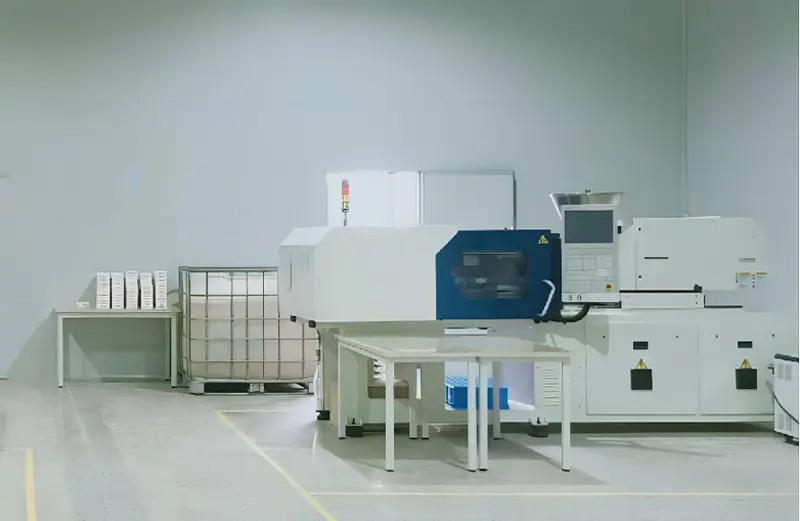
● Injection molding: suitable for mass production of complex geometric structures;
● Hot-press sintering / Hot isostatic pressing (HIP): to optimize density and reduce microporous structure;
● Pressureless sintering, microwave sintering, and laser sintering: used for specific process requirements.
● Post-processing techniques: CNC grinding, laser cutting, ultrasonic drilling—achieving micron-level tolerances.
The introduction of these technologies has made advanced ceramics have the advantages of controllable, low defect rate, and adaptability to complex structures.
 |
 |
|
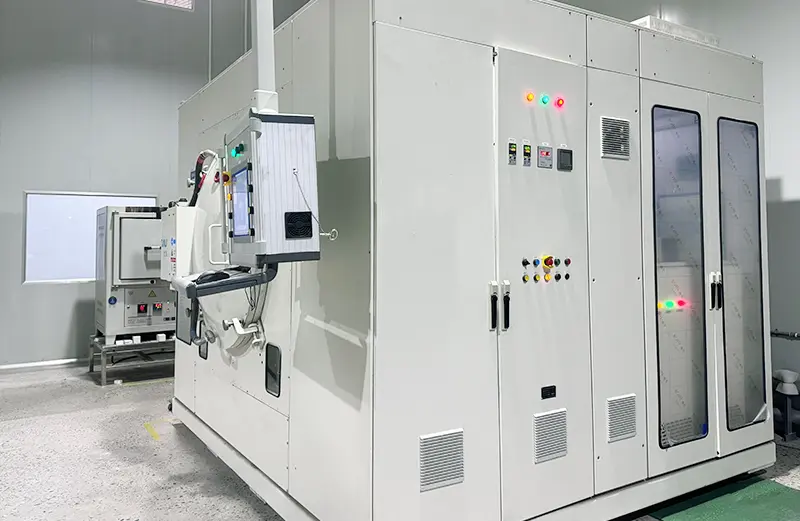
Sintering Furnace |
Injection molding machine |
Performance Comparison of Traditional vs Advanced Ceramics
|
Performance dimension |
Traditional ceramics |
Advanced ceramics |
|
Compression strength |
Medium (below 300 MPa) |
High (500~1500 MPa) |
|
Tenacity |
Fragile, poor crack resistance |
Designable enhancements (e.g., ZTA, TZP with good toughness) |
|
Melting point / Heat resistance |
Relatively low |
higher |
|
Thermal Expansion |
Relatively large, prone to thermal expansion and cracking |
Adjustable; compatible with metals and composites |
|
Chemical stability |
Susceptible to acid and alkali erosion, dependent on glaze protection |
Corrosion resistant, acid and alkali resistant, oxidation resistant |
|
Electrical insulation / Thermal conductivity |
Generally, electrically insulated and has low thermal conductivity |
Can achieve insulation, high thermal conductivity, or conductivity (e.g., aluminum nitride, silicon carbide, etc.) |
|
Advanced ceramics not only have better structural properties than traditional ceramics, but also can realize the integrated design of conductive, piezoelectric and dielectric functions, which are suitable for intelligent sensors, high frequency communication, laser devices and other fields. |
||
Applications of Technical Ceramics and Traditional Ceramics
Typical applications of traditional ceramics:
● Household items (cutlery, vases, tiles)
● Sanitary fixtures (toilet, sink)
● Building ceramics (external wall tiles, roof tiles)
● Handicrafts and cultural ceramics
Typical applications of advanced ceramics:
● Automotive industry: spark plugs, oxygen sensors, ceramic brake discs
● Medical devices: artificial hip joint, dental implant, biocompatible material
● New Energy: Solid State Battery, Ceramic Separator, and Fuel Cell Electrolyte
● Key Components of Semiconductor Equipment: plasma chambers, wafer handling components, High-frequency / Packaging / Capacitor Dielectrics
Traditional ceramics focus on decoration and use, while advanced ceramics emphasise function and technology integration, which is the key material in modern manufacturing.
Cost Structure and Manufacturing Cycle
The production equipment of traditional ceramics is low investment, short cycle, suitable for mass production of daily necessities, so the cost is low.
The advanced ceramics are expensive, with high technical requirements and a long cycle, so the cost is high, but the performance is stable, and they can replace metal, plastic, or traditional composite materials in many fields.
Especially in high-temperature, high-corrosion, high-wear scenarios, the life cycle of advanced ceramics is much higher than that of other materials, and the economic advantage is remarkable.
Traditional Ceramics VS Advanced Ceramics
|
VS |
Traditional ceramics |
Advanced ceramics |
|
Raw Materials |
Natural ore, such as kaolin and feldspar |
Synthesis of high-purity materials such as Al₂O₃、ZrO₂, 、Si₃N₄ |
|
Process Complexity |
Relatively simple and experience-driven |
Requires strict controls and precision engineering. |
|
Performance Consistency |
Low, highly influenced by raw materials |
High, dense structure, predictable performance |
|
Cost |
Low, suitable for large batches |
High, suitable for high-value-added scenarios |
|
Applications |
Daily Life, Architecture, Decoration |
Semiconductors, electronic communications, medical devices, and machinery |
|
Customization |
Limited, with significant structural limitations |
High, capable of complex and micro-structured forming |
Conclusion
Whether in terms of structural strength, corrosion resistance, thermal stability, or electrical insulation, advanced ceramics consistently outperform traditional ceramics. Driven by continuous advancements in materials technology, advanced ceramic materials and technical ceramics have become widely used in semiconductor manufacturing, electronics, energy systems, and other high-performance engineering applications.
Traditional ceramics still play a role in everyday and basic industrial uses, but their inherent limitations—such as lower mechanical strength and reduced environmental durability—make them less suitable for modern high-precision applications. Understanding the differences between traditional ceramics and advanced ceramics allows engineers and manufacturers to select the most appropriate material for performance, reliability, and cost requirements.
JFM: Integrating R&D and Manufacturing for Your Advanced Ceramics Solutions
If you are evaluating ceramic materials for your project or require customised high-performance ceramic components, JFM provides integrated solutions in R&D and manufacturing of advanced ceramics, technical ceramics, and precision ceramic machining, offering processing services for a wide range of ceramic components, including semiconductor ceramic parts and industrial ceramic structural parts.
With a mature technical team and extensive industry experience, we deliver reliable, customised advanced ceramic processing solutions to meet diverse engineering needs. Contact JFM today to discuss your ceramic requirements and start developing tailored ceramic solutions.