Ceramic Package vs. Plastic Package : Key Differences
-
2026-04-14 Industry News






Compare ceramic package vs plastic package in strength, heat resistance, durability, cost, and applications to choose the right solution for your needs.
What Is Semiconductor Package?
In modern electronic and semiconductor devices, package is not merely a "shell" that protects the chip; it is a key factor influencing device performance, thermal efficiency, and long-term reliability. Chip package (Chip Package / Semiconductor Package) is a critical process that isolates the bare die from the external environment and establishes electrical connections.
Core Functions of Semiconductor:
• Electrical Connection: Connecting the chip’s internal circuitry to the external circuit board via leads or solder balls;
• Mechanical Protection: Protects the chip from physical impact and vibration damage;
• Thermal Management: Ensuring effective heat dissipation through package materials and structures to guarantee stable device operation;
• Environmental Isolation: Shielding the chip from moisture, dust, chemical corrosion, and other external factors;
• Dimensions and Integration: The package also determines the chip’s mounting configuration, board footprint, and compatibility with other components.
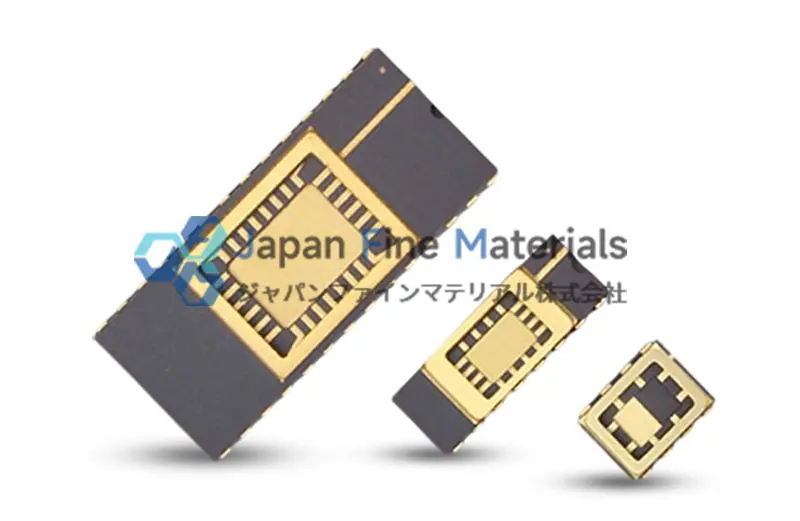
Ceramic Package
Ceramic Packages are electronic device housings formed using ceramic materials. They secure the chip and leads through mechanical pressing, sintering, or lamination, ensuring the chip remains stable during transportation and use.
Ceramic package not only provides mechanical support for the chip but also enables hermetic sealing, effectively isolating the chip from moisture, corrosion, and contamination, thereby significantly enhancing the device’s long-term stability.
• High thermal conductivity facilitates rapid heat dissipation and reduces thermal stress on the chip.
• Good electrical insulation, combined with a matched coefficient of thermal expansion, effectively reduces the risk of solder joint and package failure.
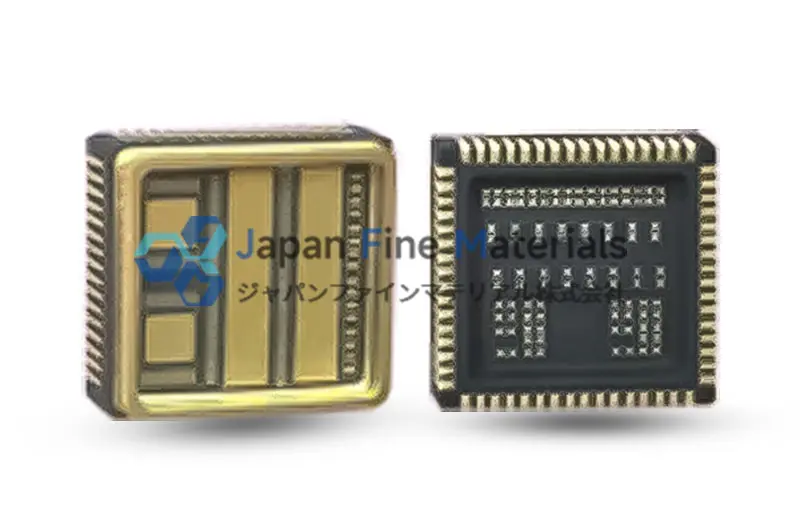
Plastic package
Plastic package (Plastic Packages) is a low-cost, mass-production-friendly package form, typically made of epoxy resin or thermosetting plastics. Through injection molding or compression molding processes, it provides basic mechanical protection and electrical insulation for the chip, while also allowing for flexible implementation of various package forms to meet the needs of consumer electronics, home appliances, and general communication equipment.
• Low cost, suitable for large-scale mass production.
• Flexible molding allows for rapid adjustments to package designs.
Material Properties and Manufacturing Processes
The materials used in ceramic package primarily include: aluminum oxide, aluminum nitride, silicon carbide, yttrium oxide, and zirconium oxide. Ceramic package is manufactured through high-temperature sintering or co-firing processes (HTCC, LTCC), ensuring high dimensional accuracy and a low coefficient of thermal expansion, while also achieving hermetic package that effectively isolates moisture and contaminants.
Plastic package primarily uses epoxy resins and thermosetting plastics, formed through injection molding or compression molding. Its advantages include low cost and production flexibility, but its temperature resistance, hermeticity, and thermal conductivity are all inferior to those of ceramic package.
|
Characteristics |
Ceramic package |
Plastic package |
|
Molding Process |
High-temperature sintering, co-firing |
Injection molding, compression molding |
|
Dimensional Stability |
High |
Moderate |
Temperature Resistance and Thermal Properties
Ceramic packages modules offer excellent temperature resistance, withstanding temperatures above 300°C, making them suitable for high-power and industrial environments. Ceramic materials have high thermal conductivity, enabling rapid heat transfer from the chip to the heat sink or external system, thereby reducing thermal stress.
• Power Modules: During prolonged high-current operation, ceramic package helps stabilize temperatures and prevent chip damage.
• RF Power Devices: High-frequency operation generates heat; ceramic package facilitates rapid heat dissipation, ensuring signal stability.
• High-performance LEDs: Designed for long-term, high-brightness operation, the package ceramiceffectively reduces heat buildup and extends service life.
Plastic packages typically have a temperature resistance not exceeding 150°C; under high-temperature conditions, they are prone to deformation, warping, and aging, and may require additional heat dissipation designs, such as heat sinks or air cooling.
|
Features |
Ceramic package |
Plastic package |
|
High-temperature resistance |
>300°C |
~150°C |
|
Thermal conductivity |
High |
Low |
|
Long-term high-temperature stability |
High |
Relatively low |
Electrical Insulation and Reliability
Ceramic packages offer excellent electrical insulation properties. Their coefficient of thermal expansion (CTE) is similar to that of the chip, which helps reduce stress caused by thermal cycling and lowers the risk of solder joint and interconnect failure.
• High electrical insulation strength: Stable operation in high-voltage environments
• Thermal Cycling Durability: Reduces cracks or open circuits caused by temperature changes
• Hermetic Sealing: Protects against moisture, dust, and chemical corrosion
• High-frequency stability: Low signal attenuation in RF or high-frequency circuits
Plastic packages have average insulation performance, and are prone to performance degradation or failure, especially under high-temperature, high-humidity, or long-term load conditions.
|
Characteristics |
Ceramic Packages |
Plastic package |
|
Dielectric Strength |
High |
Medium |
|
Thermal cycling endurance |
High |
Low |
|
Air Tightness |
Airtightness achievable |
Basically not airtight |
Different application scenarios
Ceramic Packages
• High-power electronic devices (e.g., IGBT power modules, SiC/GaN power devices)
• RF and microwave power devices
• High-end automotive electronics (e.g., EV drive modules, charging modules)
• Medical electronic devices (e.g., implantable sensors, monitoring devices)
• High-reliability industrial control equipment
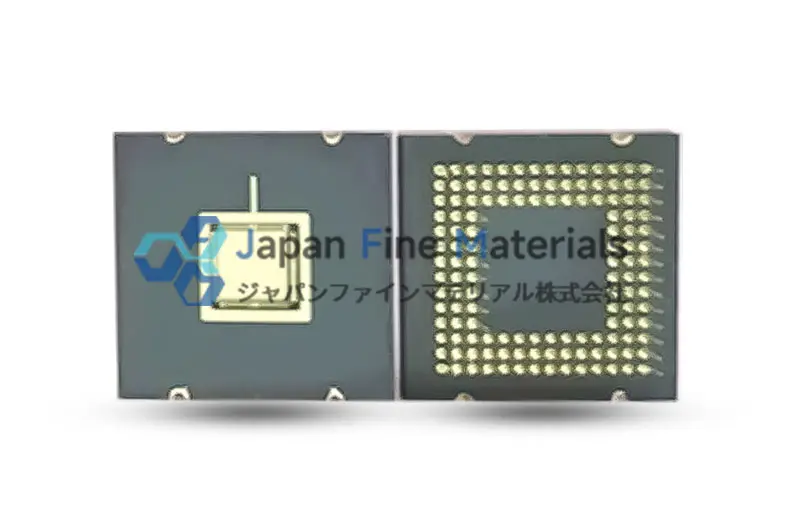
Plastic packages
• Consumer electronics (mobile phones, laptops, home appliances)
• General-purpose communication equipment (routers, switches)
• Cost-sensitive industrial or household electronic devices
• Summary: Ceramic packages emphasize high performance, high thermal dissipation, and resistance to extreme environments, while plastic packages emphasize low cost and high-volume production. The choice of package type should be based on a comprehensive assessment of the application environment, power density, and reliability requirements.
Cost and Manufacturing Considerations
Ceramic package has relatively high manufacturing costs and involves complex processes, requiring strict control over material quality, sintering temperatures, and metallization processes. "Custom ceramic package, in particular, typically requires specialized molds and longer production cycles; however, in high-power, high-reliability applications, these costs can help reduce failure risks and support longer device lifespans under appropriate operating conditions.
Plastic packages have low production costs and fast molding speeds, making them ideal for mass-produced consumer products. However, in high-temperature or high-humidity environments, plastic packages may require additional heat sinks or protective measures, which indirectly increase the overall system cost.
When selecting package materials, it is essential to consider not only the unit cost but also long-term reliability, thermal design, and environmental adaptability to ensure stable operation throughout the product’s lifespan.
Ceramic package vs. Plastic package
|
Project |
Ceramic package |
Plastic package |
|
Materials |
Ceramics such as alumina, aluminum nitride, and silicon carbide |
Epoxy resin, thermosetting plastics |
|
High-temperature resistance |
High (>300°C) |
Medium (~150°C) |
|
Thermal conductivity |
High, facilitates heat dissipation |
Low, requiring additional cooling |
|
Air-tightness |
Can achieve airtightness |
Generally cannot achieve airtightness |
|
Electrical insulation |
Excellent, high reliability |
Fair; limited in high-power environments |
|
Cost |
High |
Low |
|
Typical Applications |
Semiconductors, automotive, power modules, medical |
Consumer electronics, general communications, cost-sensitive applications |
The choice of a package type depends not only on cost, but also on the application environment, reliability requirements, and thermal design.
If your project involves high-power, high-reliability, or harsh-environment electronic components, selecting the appropriate package type is critical. Contact JFM today to obtain professional ceramic package solutions and customization services, ensuring your electronic devices run stably in challenging environments!