Design and Functionality of Ceramic Pin Grid Arrays (CPGA)
-
2026-04-03 Industry News






A detailed guide to CPGA packages covering structural design, pin grid configuration, thermal management, and their role in high-performance and high-reliability electronic systems.
Introduction
In modern electronic devices, integrated circuit (IC) packaging is a critical factor in ensuring chip performance and stable operation. As chip functionality becomes increasingly sophisticated, demands on thermal management, signal integrity, and mechanical reliability in packaging are also rising. Against this backdrop, the CPGA (Ceramic Pin Grid Array) package is a widely adopted high-performance packaging solution.Not only can it effectively address heat dissipation and electrical challenges in high-power and high-frequency environments, but it also offers excellent thermal resistance and durability, making it the packaging solution of choice for high-end processors, memory chips, and communication equipment.
Basic Structure of Ceramic Pin Grid Array (CPGA) Packages
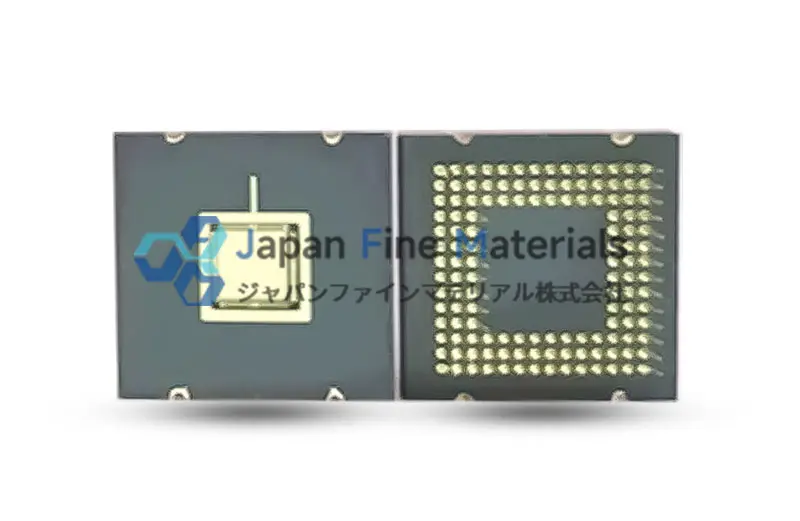
The core feature of the CPGA package lies in the pin matrix evenly arranged on the bottom, which allows each pin to form a reliable electrical connection with the substrate.
This matrix-type layout offers various advantages:
• It improves signal transmission density and meets the needs of high-pin-count chips
• Effectively reduces signal interference and crosstalk, ensuring the stability of high-speed and high-frequency circuits.
• The number of pins, spacing, and plating material directly affect soldering reliability and electrical characteristics.
As a packaging substrate, ceramic materials possess the following characteristics:
• High electrical insulation: Prevents electrical short circuits and improves system safety
• Excellent heat resistance: Withstands prolonged high-temperature operation and frequent thermal cycling.
• Low thermal expansion coefficient: Matches the silicon chip and reduces stress concentration caused by temperature changes
• Excellent thermal conductivity: Rapidly transfers heat from the chip to the heat dissipation system, maintaining a stable operating temperature.
These characteristics ensure that CPGA maintains reliable electrical and thermal performance over the long term in applications such as high-performance computing, industrial control, and communications.
Main Components
Ceramic substrate
Not only does it provide mechanical support for the chip, but it also effectively transfers heat from the chip to the heat sink or the external environment, maintaining a stable operating temperature. The substrate thickness, thermal conductivity, and surface flatness are critical parameters that affect thermal performance and soldering quality.
Chip bonding layer
Typically, conductive silver adhesive or highly thermally conductive wire paste is used to securely bond the chip to the substrate, achieving both thermal conduction and electrical connection. The thickness and uniformity of the bonding layer directly affect thermal resistance and electrical reliability, so they must be strictly controlled during the design and manufacturing processes.
Metal Pin Grid Array
Arranged in a high-density matrix, each pin corresponds to a chip electrode via wires or other internal connection methods, forming a highly reliable electrical interface. The pin material, length, spacing, and surface coating affect signal integrity, oxidation resistance, and soldering stability, making them critical design considerations for high-frequency and high-pin-count applications.
Package Cover
Typically a ceramic cover plate, it provides dust and moisture protection as well as additional mechanical strength, preventing damage to the package during handling and mounting. The thickness, material density, and internal structure of the package cover affect thermal resistance and stress distribution, so they must be designed to match the thermal performance of the substrate and chip.
Furthermore, in CPGA package design, factors such as pin pitch, pin length, coating materials, and soldering process parameters are considered to optimize soldering reliability, thermal dissipation efficiency, and signal integrity. These detailed design considerations ensure that the CPGA delivers stable electrical and mechanical performance over the long term in high-performance computing, communications, and industrial applications.
Design Advantages of CPGA Packages
Compared to other package types, the CPGA offers significant advantages in many respects and plays a crucial role in high-performance electronic devices.
Excellent Thermal Management Capabilities
Ceramic materials have high thermal conductivity, effectively transferring heat generated by the chip to heat sinks or heat spreaders to prevent localized overheating. Additionally, since the thermal expansion coefficient of ceramics is similar to that of silicon chips, mechanical stress caused by temperature changes is reduced, extending the overall lifespan of the package. This thermal management advantage is particularly critical for high-power processors and equipment operating for extended periods.
Superior Signal Integrity
The uniform pin matrix design ensures stable signal transmission paths, reducing interference and electromagnetic interference (EMI). In high-frequency and high-speed data transmission scenarios such as computer boards, high-speed storage chips, and communication equipment, the CPGA enables low-latency, low-noise signal transmission, maintaining the overall system performance.
High Mechanical Reliability
The ceramic package itself is highly rigid and resistant to bending and impact, ensuring a secure connection between the pins and the chip even during vibration or transportation. In industrial control devices and communication modules that operate for extended periods, this mechanical reliability significantly reduces failure rates caused by physical stress.
High Pin Count and Design Flexibility
CPGAs support dozens to hundreds of pins, enabling layouts customized to the chip’s functions and electrical requirements. Pin spacing can be flexibly selected to ensure the stability of each signal path while keeping the package compact. Additionally, the matrix layout facilitates automated soldering and assembly, improving production efficiency.
Excellent Environmental Adaptability
Ceramic encapsulation offers excellent resistance to high temperatures, humidity, and chemical corrosion, ensuring stable operation even in harsh environments. Whether in industrial equipment operating at high temperatures or communication terminals in humid and hot environments, the CPGA maintains reliable performance and reduces maintenance and replacement costs.
Long-Term Performance Stability
Since ceramic materials are resistant to degradation, CPGA packaging ensures that their electrical and mechanical properties are maintained over the long term. This is particularly important for high-reliability systems—such as servers, data centers, and critical control systems—that require stable, long-term operation.
Overall, CPGA packages not only improve chip thermal management and signal stability but also deliver superior performance in terms of mechanical strength, environmental adaptability, and long-term reliability, providing a solid foundation for high-performance electronic designs.
Applications of CPGA Packages
Due to their stability and high-reliability performance, CPGA packages are widely adopted in various high-end electronics fields.
• High-performance computer processors: CPGA packages provide stable electrical connections and excellent heat dissipation, allowing processors to maintain stable performance even during high-frequency computing.
• High-capacity storage chips: These include DRAM and flash memory. The high pin density of CPGA allows it to meet complex data transfer needs and ensures stable high-speed memory read/write operations.
• Communication network equipment: In routers, switches, and optical communication modules, the CPGA offers the advantages of low crosstalk and low signal delay, contributing to improved signal transmission quality.
• Industrial control and precision equipment: CPGA packages offer excellent heat resistance and vibration resistance, making them suitable for long-term, stable operating environments such as industrial automation equipment and precision measurement instruments.
• Avionics and research equipment: In fields requiring extremely high reliability, the mechanical strength and thermal stability of CPGAs ensure the reliability of complex circuit systems.
Furthermore, the flexible pin layout and customization capabilities of the CPGA make it suitable for emerging high-performance AI chips and FPGA designs, improving the integration and stability of electronic systems.
Conclusion
Ceramic Pin Grid Array (CPGA) features a unique pin matrix design, excellent thermal performance, and high mechanical stability, providing a robust and reliable foundation for electronic devices. In addition to improving chip performance, it ensures stable, long-term operation even under high-temperature, high-frequency, and complex operating conditions.It is an ideal solution for achieving high-density pin placement and high reliability across various fields, including high-performance computers, communication equipment, and industrial control systems.
If you are looking for a highly reliable packaging solution for your products or wish to optimize the performance and lifespan of your existing electronic components, please contact JFM immediately. We provide expert CPGA packaging consulting and custom services to offer reliable packaging support for your electronic designs!
FAQ
1. What is the difference between CPGA and PGA?
CPGA is a ceramic pin array package, whereas standard PGA uses a plastic package. Ceramic packages offer superior heat resistance and high thermal conductivity, making them suitable for high-performance, high-reliability chips. On the other hand, plastic packages are suitable for general-purpose applications where cost is a key consideration.
2. What operating temperature range can CPGA withstand?
Due to the properties of ceramic materials, CPGA packages generally operate stably within a range of -55°C to 150°C, and some high-performance custom models can withstand even higher temperatures.
3. Are the pins on CPGA packages prone to bending or breaking?
Ceramic packages themselves have high mechanical strength, but care must be taken when attaching or removing pins. Use specialized tools during insertion, removal, and soldering to avoid pin deformation caused by excessive torque.
4. What types of chips are CPGA packages suitable for?
CPGA packages are widely used for high-performance processors, storage chips, and communication chips, and are particularly suitable for chips with a high pin count, high operating frequencies, and demanding thermal dissipation requirements.