Comprehensive Guide to Ceramic Quad Flat Packages (CQFP)
-
2026-04-03 Industry News






A comprehensive guide to CQFP packages covering design features, thermal performance, reliability benefits, and their role in advanced electronic and semiconductor systems.
Introduce
Throughout the evolution of integrated circuit packaging technology, packaging designs have continuously evolved to address reliability, thermal management, size, and long-term stability.For electronic systems operating in harsh environments, traditional plastic packages may struggle to meet the demands of certain high-reliability applications, whereas ceramic packages are often considered a more suitable solution in these scenarios. Among these, the Ceramic Quad Flat Package (CQFP) is a ceramic packaging form widely used in industrial electronics, high-reliability equipment, and high-performance electronic systems.
This article provides a systematic overview of the CQFP package, covering its structural characteristics, performance advantages, and application areas.
What Is a Ceramic Quad Flat Package (CQFP)?
The Ceramic Quad Flat Package, abbreviated as CQFP, is a surface-mount integrated circuit package that uses ceramic material as the housing and features a four-sided lead structure. Its basic structure consists of a rectangular or square package body with leads (gull-wing leads) distributed along all four edges, allowing it to be directly soldered onto the surface of a PCB.
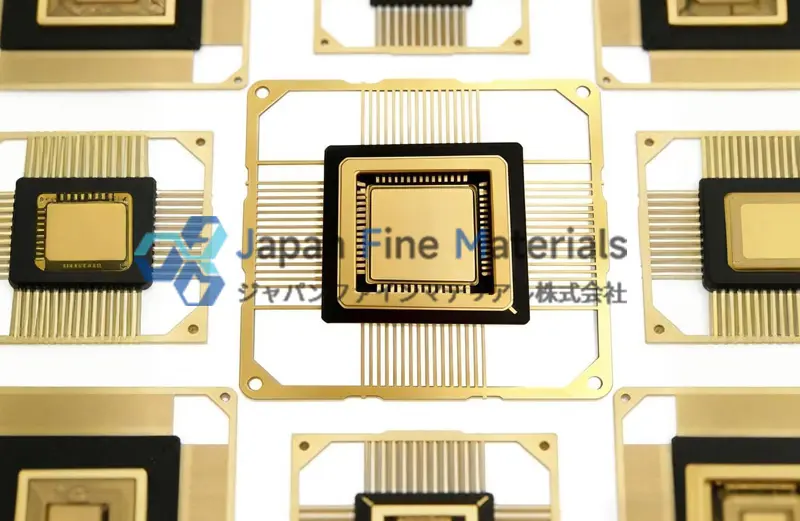
A CQFP package typically consists of the following components:
• Ceramic Body: This is the main structural component of the package, usually made of high-purity alumina ceramic, which serves to support the chip and internal circuitry. The ceramic material provides excellent mechanical strength and thermal stability.
• Metal Lead Frame: The lead frame is located around the perimeter of the package and connects the chip’s signals to external circuits. CQFP typically features a four-sided lead design to facilitate surface-mount soldering.
• Die Attach Area: This area secures the semiconductor die, typically using conductive adhesive or solder. A stable die attachment structure helps improve device reliability and thermal performance.
• Ceramic or Metal Lid: The lid seals the internal cavity of the package and is applied after the chip is mounted and bonded. It helps minimize the impact of the external environment on the internal chip and connection structures.
• Hermetic Seal: The hermetic seal ensures an airtight enclosure, reducing the risk of moisture or contaminants entering the package. Stable sealing performance is critical for long-term reliable operation.
Structural Design Features of CQFP
In terms of structural design, the CQFP balances the requirements of high-reliability packaging and high-pin-density packaging; therefore, it typically exhibits the following characteristics during design.
Four-Side Pin Configuration
The CQFP adopts a typical square flat structure, with pins evenly distributed along all four edges. This design offers significant advantages:
• The number of pins can be significantly increased
• Suitable for high-I/O chip packaging
• Facilitates high-density PCB layout
• Supports surface mount technology (SMT)
In practical applications, the number of pins on a CQFP typically ranges from 32 to over 200.
Ceramic package body
The CQFP package body is generally manufactured using highly reliable ceramic materials, such as:
• alumina
• Aluminum nitride
• Multilayer ceramic structures
Ceramic materials possess excellent physical properties, such as:
• Low thermal expansion coefficient
• Excellent electrical insulation properties
• High mechanical strength
• Excellent high-temperature resistance
These characteristics enable CQFP to remain stable in environments with significant temperature fluctuations.
Hermetically Sealed Packaging Structure
Many CQFP packages employ an airtight sealing design. Once the package is completed, the internal chip is completely sealed within the ceramic cavity, effectively preventing:
• Moisture ingress
• Gas contamination
• External corrosion
For electronic systems requiring long-term stable operation, this packaging structure helps enhance the device’s reliability in long-term operating environments.
CQFP Manufacturing Process
The production of CQFP packages typically involves multiple precision manufacturing stages, and the process complexity is significantly higher than that of ordinary plastic packages. A typical manufacturing process includes the following steps.
Ceramic Substrate Fabrication
First, the package body must be manufactured using a ceramic forming process, such as:
• Ceramic Powder Formulation
• Pressing and Molding
• High-temperature sintering
• Surface metallization
If a multilayer ceramic structure is used, multilayer ceramic stacking and sintering are also required.
Die Attach
A die attachment position is established in the central area of the ceramic substrate, and the die is secured using the following methods:
• Bonding with conductive adhesive
• Eutectic bonding
• Metal solder bonding
This step directly affects the chip’s thermal conductivity and mechanical stability.
Wire Bonding
Electrical connections between the chip leads and the package leads are typically established through gold or aluminum wire bonding.
Common processes include:
• Gold Ball Soldering
• Wedge bonding
Bonding quality directly affects the electrical reliability of the device.
Cover-mount packaging
After internal connections are completed, a ceramic or metal cover must be mounted onto the package.
Common packaging methods include:
• Gold-tin solder sealing
• Glass brazing
• Metal-to-metal welded seal
This step determines the hermeticity rating of the package.
Lead forming and surface treatment
Finally, the external leads must be processed, for example:
• Lead shaping
• Gold or tin plating
• Electrical Testing
Once these steps are completed, the CQFP-packaged device is ready for final testing and application.
Key Advantages of CQFP Packaging
Higher reliability
Ceramic materials offer superior stability and are less susceptible to environmental factors, so CQFP packages typically demonstrate excellent stability in long-term operating environments.
Excellent Thermal Dissipation
Ceramic materials generally possess superior thermal conductivity, facilitating heat transfer more effectively than common plastic packaging materials. This helps:
• Improve chip cooling efficiency
• Lower junction temperature
• Improve the device’s reliability under long-term operating conditions
This is particularly important for high-power chips.
Greater environmental adaptability
CQFP packages typically exhibit good adaptability under environmental conditions such as high temperatures, thermal cycling, or vibration, for example:
• High-temperature environments
• Temperature cycling environments
• High-humidity environments
• Vibration environments
This is also a key reason why ceramic packages are widely used in high-reliability electronic devices.
Superior Electrical Performance
Ceramic materials have a low dielectric constant and stable electrical properties, which help improve signal integrity and reduce signal interference.
Typical Application Areas for CQFP
Industrial Electronic Equipment
Industrial control systems typically require long-term stable operation, such as automated control equipment, industrial drive systems, and process control equipment. CQFP packaging provides stable electrical connections and excellent environmental adaptability, making it widely adopted in industrial electronics.
Communication Equipment
In communication systems, certain signal processing chips, interface chips, or control chips require a stable packaging environment. The excellent electrical performance and reliability of CQFP packaging enable it to meet the long-term, stable operation requirements of communication equipment.
High-Performance Computing Equipment
Certain high-performance processors, control chips, or application-specific integrated circuits (ASICs) generate significant heat during operation, necessitating specific thermal management requirements for their packaging. Ceramic CQFP packaging offers superior thermal stability, thereby enhancing the reliability of chip operation.
Test and Measurement Equipment
Precision test instruments and measurement equipment typically need to maintain a stable operating state over extended periods. The hermetic structure and stable material properties of CQFP packaging provide a protective environment for the internal chips, helping to ensure consistent and stable device performance.
Differences Between CQFP and Plastic Packages
In integrated circuit packaging, plastic packaging is a very common form alongside ceramic packaging. Although the two may appear similar in structure, there are significant differences in material properties, reliability, and suitable operating environments.
|
Comparison Criteria |
CQFP (Ceramic Packaging) |
Plastic QFP Packaging |
|
Package Material |
Ceramic materials (e.g., alumina) |
Epoxy resin |
|
Package Structure |
Typically hermetically sealed |
Non-hermetic packaging |
|
Heat dissipation performance |
Good thermal conductivity |
Relatively poor heat dissipation |
|
Environmental adaptability |
Can withstand high temperatures and harsh environments |
Suitable for general commercial environments |
|
Long-term stability |
Higher long-term reliability |
Relatively lower long-term stability |
Overall, CQFP packaging is typically used in applications with high requirements for reliability and environmental stability, making it suitable for scenarios where electronic component performance and lifespan are critical. Plastic packaging, on the other hand, prioritizes cost and mass production, making it more widely used in consumer electronics and general commercial electronic products.
In actual electronic product design, engineers typically select the appropriate packaging type based on cost, operating environment, and reliability requirements.
Conclusion
The Ceramic Quad Flat Package (CQFP) is a ceramic integrated circuit packaging format that combines high reliability, excellent thermal dissipation, and high pin density. Thanks to the stable properties of ceramic materials and its hermetically sealed structure, it continues to play a vital role in many high-demand electronic systems.
As electronic technology continues to advance, the demand for highly reliable packages continues to grow, and the CQFP will continue to hold an important position in the future of electronic packaging.
Get High-Quality Ceramic IC Packages from JFM
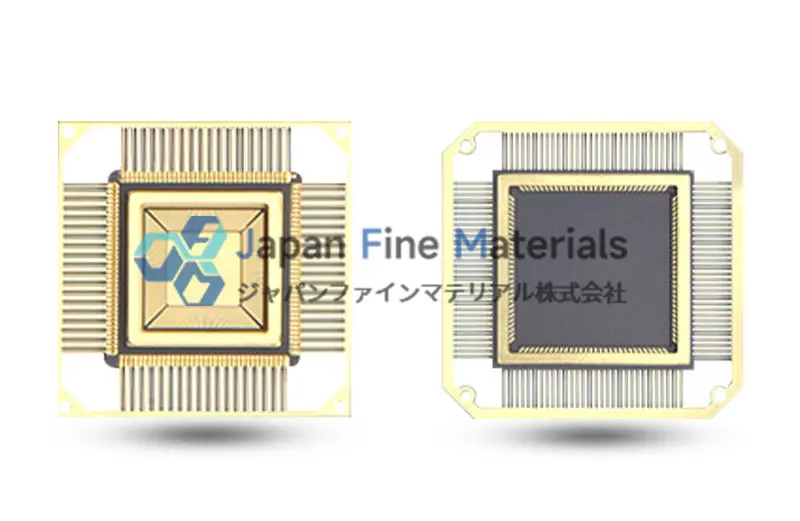
If you are seeking highly reliable ceramic integrated circuit packaging solutions, JFM offers a wide range of ceramic IC packaging products, including CQFP, CDIP, CPGA, and other customized ceramic packages.
Our products are manufactured using high-quality electronic ceramic materials and undergo strict quality control to ensure stable performance across various electronic application environments.
Please contact JFM for more product information; we can provide ceramic packaging products and related technical support tailored to your project requirements.
FAQ
Q1: Is there a significant price difference between CQFP and standard plastic QFP?
A: Due to the higher costs of ceramic materials and hermetic packaging processes, CQFP is typically more expensive than plastic QFP. However, it offers higher reliability and environmental resistance, making it suitable for critical electronic equipment.
Q2: Is CQFP suitable for high-temperature environments?
A: Yes, CQFP uses ceramic packaging, which offers excellent high-temperature resistance and thermal stability, allowing it to operate long-term in high-temperature environments such as industrial, telecommunications, or high-performance computing equipment.
Q3: Is there a limit to the number of pins in a CQFP?
A: CQFP packages can be designed with anywhere from several dozen to over two hundred pins, making them suitable for high-I/O chip packaging. The specific number of pins depends on the package size and PCB layout requirements.
Q4: Does the CQFP package support surface mount technology (SMT)?
A: Yes. CQFP uses a four-sided lead design, making it suitable for SMT processes, while also enabling highly reliable connections via soldering.
Q5: Does the CQFP package have a longer lifespan than plastic packages?
A: Generally speaking, CQFP offers higher long-term reliability. Ceramic materials and hermetic packaging effectively protect against moisture and contamination, helping to enhance the reliability of the chip and package under long-term operating conditions.