Why Alumina (Al₂O₃) is the Preferred Choice for Industrial Chambers & Domes
-
2026-01-16 Industry News






Alumina ceramics offer exceptional thermal stability, chemical resistance, and electrical insulation. These properties ensure long-lasting, high-performance chambers and domes for semiconductor manufacturing and plasma etching.
Introduction
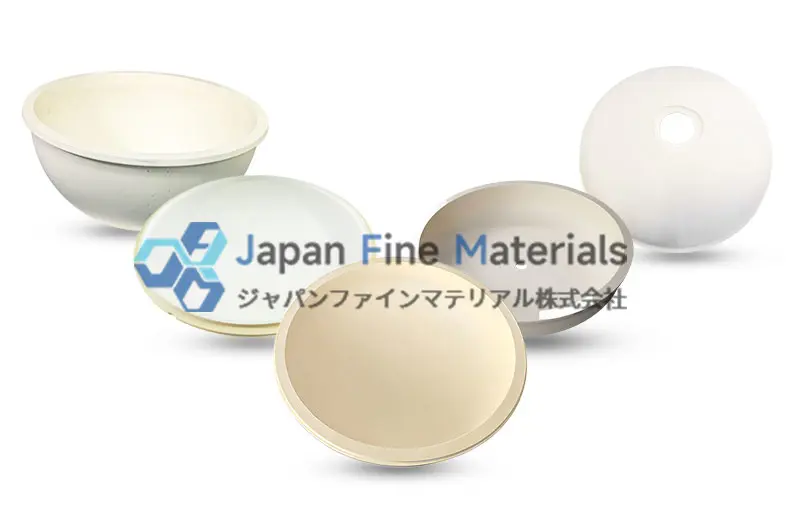
In advanced industrial fields such as semiconductor wafer processing, optical coating, plasma etching, and high-temperature chemical reaction equipment, chambers and domes (ceramic dome chambers) are critical components that support core process environments involving high temperatures, high vacuums, corrosive gases, and high-energy plasma. Material selection not only directly affects the performance and lifespan of the equipment but also determines the quality of the final product and process stability. Among various materials, Alumina Ceramics (Al₂O₃) are widely adopted for industrial chamber and dome components due to their excellent physical and chemical properties.
Excellent Thermal Performance
Alumina ceramics exhibit outstanding stability in high-temperature environments, making them a leading material for industrial chambers and domes. In high-temperature processes such as PVD and CVD, temperature uniformity is extremely important for film thickness and quality. Alumina ceramics not only withstand high-temperature conditions over the long term but also maintain structural integrity during rapid heating and cooling, effectively suppressing the occurrence of cracks.
● Excellent Dimensional Stability: A low coefficient of thermal expansion suppresses the deformation of chambers and domes under high temperatures.
● Supports Process Consistency: Good temperature uniformity contributes to the stable maintenance of film thickness and wafer quality.
● High Thermal Shock Resistance: They are resistant to thermal shock under typical heating and cooling process conditions, ensuring structural integrity.
This high-temperature stability enhances equipment operational safety and process reliability, while also leading to improved productivity and product yield.
Superior Chemical Stability
In industrial chamber applications, equipment is often exposed to highly corrosive gases, plasma, or highly reactive chemical media. High-purity alumina ceramics exhibit excellent chemical stability in neutral and many inorganic acid environments, reacting very little with most acids except for hydrofluoric acid (HF). Therefore, they easily maintain structural and surface integrity over long periods, reducing contamination risks inside the chamber while contributing to process stability and product quality assurance.
● Excellent Chemical Stability: Suitable for process environments that do not contain fluorine or have low halogen activity.
● High Process Reliability: Under compatible chemical environments, the chamber material is prevented from participating in side reactions, contributing to the consistency (uniformity) of semiconductor and optical thin films.
● Reduced Maintenance Costs: Suppresses downtime and component replacement frequency, improving continuous production operability.
Outstanding Electrical Insulation
Alumina ceramics possess high dielectric strength (breakdown strength). By effectively insulating electrodes from plasma in high-voltage conditions or plasma processes, they can suppress the impact of leakage currents or micro-discharges on precision processes. This is particularly important in high-precision thin-film deposition and etching steps, contributing to the assurance of film quality and maintenance of processing consistency.
● High Dielectric Strength: Maintains stable insulation even under harsh electrical environments such as high temperatures, vacuums, and RF (radio frequency), supporting safe process operations.
● Process Stability: Uniformity of the electric field distribution assists in maintaining plasma stability and film thickness uniformity.
● Equipment Protection: Reduces the risk of leakage, short circuits, and arcing, contributing to the extension of equipment lifespan.
High Mechanical Strength and Wear Resistance
Although ceramic materials are generally brittle, alumina ceramics possess high hardness and high compressive strength. Consequently, they exhibit good mechanical stability in industrial environments dominated by static loads, compressive stress, or low impacts. Even under conditions involving high-frequency vibration or particle friction, chambers and domes easily maintain structural integrity, making them effective in reducing the risk of failure due to wear.
● High Hardness and Strength: Features high Vickers hardness and compressive strength, suitable for harsh wear environments.
● Excellent Wear Resistance: Maintains good surface conditions even under long-term friction or particle erosion, contributing to a reduction in component replacement frequency.
● High Structural Reliability: When combined with high-density sintering processes, density and crack resistance are further improved, making them suitable for long-term stable operation.
Adaptability to Custom Machining and Complex Structures
Alumina ceramics not only have excellent properties but also can meet diverse requirements for chambers and domes in modern industry through high-precision custom machining. Even for designs integrating hemispherical domes, irregular chambers, internal flow paths, or support structures, it is easy to ensure dimensional stability, geometric accuracy, and sealing reliability.
Through machining design, gas flow and heat conduction within the chamber can be optimized and local stress can be reduced, contributing to the maintenance of process stability even under high-temperature, high-vacuum, and plasma environments. This is effective for uniform film thickness, reducing surface defects, and improving process reproducibility in semiconductor and optical coating equipment. Furthermore, due to corrosion resistance and high hardness, performance is maintained even over long periods of use, contributing to the extension of maintenance cycles and reduction of downtime.
Additionally, alumina ceramics can be adjusted according to process requirements as follows:
● Thickness and Density: Optimized according to temperature, vacuum, and chemical environments.
● Sintering Conditions (Sintering Grades): Aimed at improving the strength of structural members.
● Structural Design: Accommodates complex shapes such as internal flow paths, support structures, and irregular interfaces.
Through high-precision custom machining, alumina ceramics are a powerful material that contributes to improved process stability and yield, and reduced maintenance costs, while meeting complex shape requirements.
Industrial Applications
Semiconductor Manufacturing Equipment
● Used in PVD and some CVD equipment as wafer support members, electrostatic chuck (ESC) bases, or chamber structural components. They exhibit excellent heat resistance and chemical stability in process environments that are not halogen-based or strongly alkaline.
● Contributes to improved wafer yield and reduced equipment downtime and maintenance frequency by lowering metal contamination.
Optical Coating and Precision Thin-Film Manufacturing
● Ceramic domes maintain a stable vacuum and thermal environment, supporting uniform film deposition by suppressing particle flaking and thermal deformation.
● Ensures transmittance and reflection characteristics of optical components and reduces surface defects caused by the process.
Plasma Etching / High-Energy Gas Processing Equipment
● In non-halogen or low-corrosion plasma processes, ceramic chambers effectively isolate metal components, proving effective in avoiding metal contamination and providing a chemically inert barrier.
● In highly reactive etching environments using fluorine/chlorine systems, selection of materials with even higher corrosion resistance is required.
High-Temperature Industrial Furnaces and Chemical Reaction Vessels
● Widely used for applications such as ceramic sintering and heat treatment of materials, contributing to the maintenance of good temperature uniformity.
● High hardness, wear resistance, and chemical inertness toward many gases/melts extend component life and lead to reduced maintenance costs.
Conclusion
Alumina ceramic chambers and domes achieve long life and low maintenance loads in neutral, acidic, and non-halogen plasma process environments, backed by excellent high-temperature stability, wear resistance, and good chemical inertness. Under compatible operating conditions, performance can be stably maintained by centering routine maintenance on the regular removal of surface deposits and adherence to standard operating procedures (SOP), reducing the need for frequent disassembly and replacement.
In terms of cost, although alumina ceramics have a slightly higher initial investment compared to conventional metal materials, the total cost of ownership (TCO) can be reduced due to long life and low maintenance. This also contributes to ensuring continuous production operability and process stability.
Contact JFM to receive proposals for highly reliable and efficient custom solutions that precision alumina ceramic chambers/domes can provide, tailored to your process conditions, to assist in improving productivity and yield.