Porous Ceramics Applications: From Industry to Advanced Tech
-
2026-04-30 Industry News






Explore how porous ceramics are used across industries and advanced technologies, covering their roles in filtration, thermal management, and high-performance engineering applications.
What Are Porous Ceramics?
In modern industrial and precision manufacturing systems, porous ceramics—as functional materials with unique pore structures—are increasingly playing a vital role in multiple critical process stages. Their controllable internal pore structures provide greater flexibility for media transport, filtration and separation, as well as process control.Porous ceramics are typically prepared from alumina, silicon carbide, zirconia, and certain composite ceramic systems through forming and high-temperature sintering processes. Different materials exhibit varying performance characteristics in terms of temperature resistance, chemical stability, and mechanical properties.
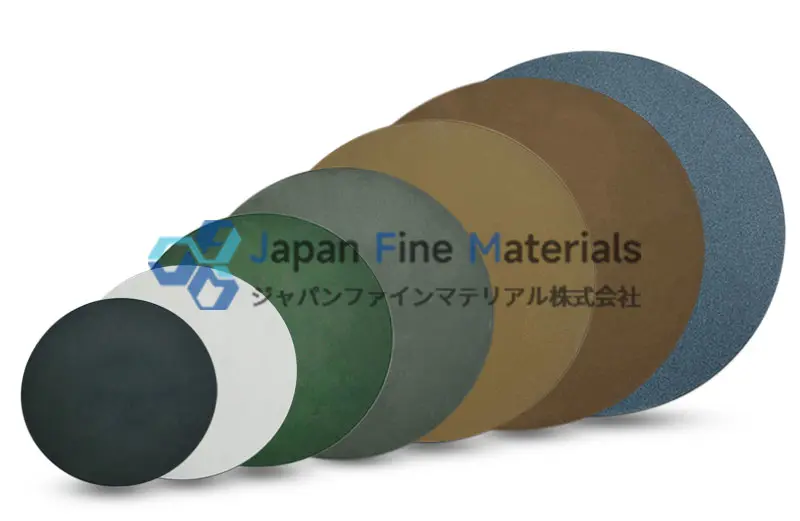
Particularly in fields with stringent process control requirements—such as semiconductors, energy and chemical engineering, and high-purity fluid processing—the application of porous ceramics is evolving from auxiliary components to critical functional units, supporting the stable operation of process environments and the precise implementation of system control. As application scenarios continue to diversify, the value of these materials is no longer limited to single functions but is increasingly reflected in their overall adaptability to complex industrial processes.
Core Characteristics of Porous Ceramics:
• Designable pore structure: Pore size, porosity, and connectivity can be adjusted according to application requirements
• Strong environmental adaptability: Possesses a certain degree of high-temperature resistance and chemical corrosion resistance
• Good structural stability: Maintains basic structural integrity and performance stability under various operating conditions
• Functionality Depends on Structural Properties: Performance in filtration, diffusion, and thermal management is directly determined by the pore structure
From an application perspective, porous ceramics do not rely on a single property to function; rather, they achieve a combination of different engineering functions through the design of their pore structure, such as particle filtration, optimized fluid distribution, and thermal conduction control.
Semiconductor Industry
In semiconductor manufacturing systems, there are high requirements for material cleanliness, particle control capabilities, and chemical stability. Porous ceramics are used as functional materials in multiple critical process steps to support stable process operations in high-purity environments.
1. Filtration of High-Purity Gases and Chemicals
During wafer manufacturing, high-purity gases (such as nitrogen and argon) and various process chemicals typically require multi-stage filtration to reduce the risk of particle contamination. Porous ceramic filter elements can trap micron- and even submicron-sized impurities, thereby optimizing the uniformity of thin-film deposition to a certain extent.
2. Wet Processes and Cleaning Systems
In wafer cleaning, etching, and wet processes, porous ceramics can be used in liquid distribution and filtration modules to facilitate more uniform diffusion and distribution of fluids within the system, thereby ensuring greater consistency in the cleaning or processing steps.
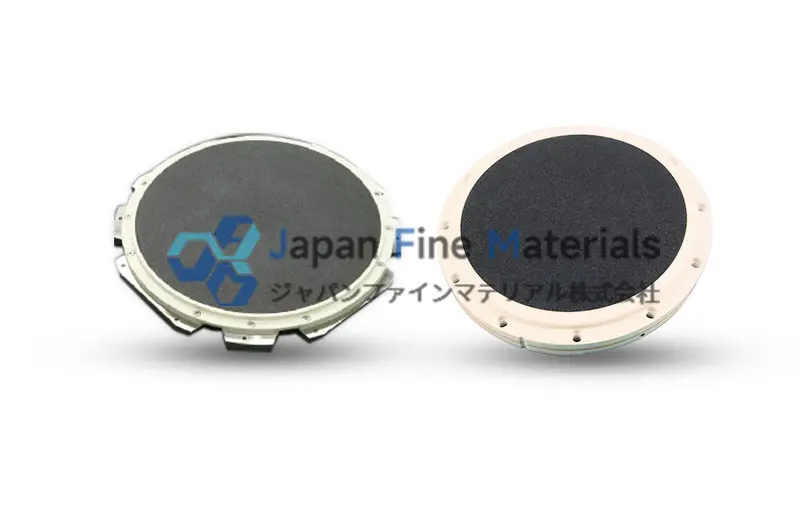
In certain structural designs, porous ceramic discs are employed as key distribution or filtration components to achieve uniform fluid control in localized areas.
3. Process Gas Distribution and Diffusion Components
In certain deposition and reaction chambers, porous ceramics can serve as gas diffusion media, allowing process gases to enter the reaction zone more uniformly, thereby improving the uniformity of film deposition to a certain extent.
In semiconductor-related applications, these materials typically place greater emphasis on cleanliness control, structural stability, and particle management capabilities, rather than merely serving a single filtration function.
Medical Devices and Bioengineering
In the fields of medical and biomaterials, porous ceramics are commonly used in structural support and tissue engineering applications. For example, in bone repair materials, their pore structure not only provides the spatial conditions necessary for cell growth but also influences the stability of tissue permeation and interfacial bonding to a certain extent, thereby creating a relatively favorable environment for integration between the material and human tissue.
In this field, porous ceramics typically serve the following functional roles:
• Tissue Support and Structural Filling
• Providing space for cell growth
• Assisting in medium permeation and exchange
Additionally, in certain medical device filtration systems, porous ceramics can be used for liquid purification and the separation of biological media, making them suitable for processing stages that require strict control of particulate matter and high media purity. In both continuous and batch medical processes, their structural stability also helps maintain consistent performance during filtration.
Food and Agriculture
In food processing and agricultural technology, porous ceramics are primarily used for liquid filtration and medium purification, such as in drinking water treatment, fermentation liquid filtration, and impurity control and pretreatment in agricultural irrigation systems.
Common applications include:
• Drinking Water and Process Water Filtration
• Purification of fermentation and food processing liquids
• Impurity control in agricultural irrigation systems
In practical applications, these materials are typically used to remove suspended particles or reduce the impurity content in media, helping to enhance the stability of subsequent process steps. At the same time, their corrosion resistance and durability during cleaning allow them to maintain relatively stable filtration performance even in systems subject to repeated use or long-term operation, making them suitable for certain standardized production processes.
Petrochemicals
In petrochemical and chemical processes, porous ceramics are commonly used in filtration and separation systems operating under high-temperature or corrosive conditions, such as pre-catalytic filtration, acid-base gas treatment, and liquid purification.
These applications are primarily concentrated in the following areas:
• Pre-catalytic Reaction Impurity Filtration
• Treatment of corrosive gases and liquids
• Process Fluid Purification and Protection Systems
Since chemical media often have complex compositions or strong corrosive properties, porous ceramics primarily serve physical separation and particle retention functions in such environments. Their structural stability allows them to maintain relatively consistent filtration efficiency to a certain extent even under fluctuating operating conditions. Additionally, in some continuous chemical processes, they are frequently used to protect downstream equipment and minimize the impact of impurities on the system.
Energy Sector
In energy-related systems, porous ceramics are frequently used as functional structural materials or reaction carriers. For example, in fuel processing, gas conversion, and certain energy storage and thermal management systems, their porous structure supports mass transfer processes or enhances contact efficiency at reaction interfaces.
In energy systems, their applications typically focus on:
• Gas and Fuel Medium Processing
• Optimization of mass transfer and contact in reaction processes
• Structural and fluid support in high-temperature environments
In high-temperature energy equipment, this material can also be used to regulate gas distribution and optimize local thermal field uniformity, thereby improving internal energy transfer pathways to some extent and contributing to the relative equilibrium of reaction or heat transfer processes. Additionally, in certain novel energy processes, its structural properties are utilized to serve as a stable support medium.
Mechanical Equipment and Industrial Systems
In the field of machinery and equipment manufacturing, porous ceramics are primarily used as functional components in filtration systems, gas regulation devices, and equipment operating under high-temperature conditions.
Typical application functions include:
• Industrial Gas Filtration and Purification
• Impurity control in compressed air systems
• Fluid Distribution and Homogenization
For example, in compressed air systems or industrial gas processing units, their structure can be used to trap microscopic particulate impurities and assist in achieving a more uniform flow distribution within the system. In certain continuous-operation equipment, these structural characteristics help mitigate the impact of localized flow irregularities on system stability, thereby supporting smoother operation.
Electronics and Precision Industries
In electronics manufacturing and precision industrial systems, porous ceramics are commonly used for gas diffusion, filtration, and as structural support components.
The primary applications can be summarized as follows:
• High-Purity Gas Diffusion and Distribution
• Particle Filtration and Cleanliness Control
• Precision Structural Support Components
In processes related to high-purity environmental control, this material can be used to reduce the risk of particulate contamination and, to a certain extent, improve the uniformity of gas or medium distribution. Its structural stability and controllable pore characteristics enable it to be adapted to manufacturing stages with high requirements for cleanliness, repeatability, and process stability, thus playing a supportive role in precision industrial systems.
Conclusion
Thanks to their adjustable pore structures and stable material properties, porous ceramics are playing an increasingly important role in various industrial systems. Particularly in high-precision manufacturing sectors such as semiconductors, their application value is garnering significant attention within relevant fields.
If you are seeking porous ceramic solutions for filtration, distribution, or high-purity process systems, JFM can provide tailored material selection and technical support based on your specific application needs. We welcome further communication and collaboration.