Alumina and Zirconia Ceramics: Finding the Right Ceramic Material
-
2026-04-14 Industry News






Compare alumina vs zirconia ceramics, including strength, toughness, thermal resistance, and wear performance, to choose the right material for industrial use.
Introduction
In the field of high-performance ceramics, alumina (Al₂O₃) and zirconia (ZrO₂) ceramics are two of the most widely used materials. Thanks to their high hardness, excellent wear resistance, corrosion resistance, and good chemical stability, they play a vital role in numerous industries, including semiconductors, medical devices, flat-panel displays, petrochemicals, energy, machinery and equipment, electronics and telecommunications, and food and agriculture.However, a detailed comparison reveals significant differences between these two materials in terms of mechanical properties, thermal properties, fracture toughness, cost, and applicable scenarios. This article will compare their characteristics from multiple perspectives to help readers make more informed material selections for specific applications.
I. Comparison of Mechanical Properties: Hardness vs. Toughness
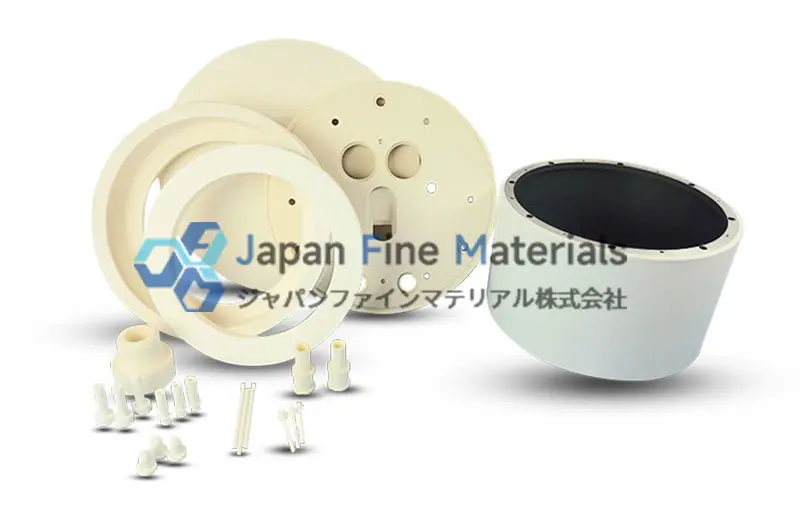
Alumina (Al₂O₃) ceramics typically exhibit high hardness and excellent wear resistance. Their densified microstructure ensures stable performance under wear conditions such as continuous friction and particle erosion. However, the fracture toughness of alumina is relatively low among common structural ceramics, making it more prone to brittle fracture when subjected to impact loads or localized stress concentrations.Therefore, alumina ceramics are more suitable for components subjected primarily to static or low-impact conditions, such as ceramic chambers/domes, ceramic nozzles, ceramic vacuum cups, ceramic end effectors, ceramic insulators, ceramic air-bearing stages, and ceramic blades.
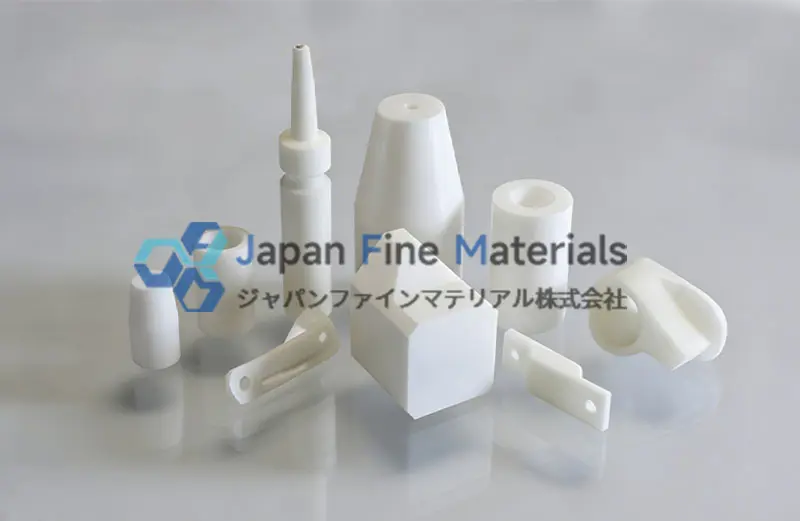
In contrast, zirconia (ZrO₂) ceramics have a hardness slightly lower than that of alumina, but their fracture toughness is often higher. This is primarily due to a special “phase transformation toughening” mechanism—when microcracks appear within the material, the crystal structure undergoes a local phase transformation that absorbs energy, thereby inhibiting crack propagation.This characteristic makes zirconia more advantageous in environments subject to dynamic loads, vibrations, or frequent impacts, and it is commonly found in components such as zirconia pistons, lifting cups, ceramic blades, and ceramic bearings.
|
Performance Specifications |
Alumina Ceramics |
Zirconia Ceramics |
|
Vickers Hardness (HV) |
Higher |
Lower |
|
Compressive strength (MPa) |
Lower |
Higher |
|
Fracture toughness KIC (MPa·m^0.5) |
Lower |
Higher |
|
Brittle behavior |
Higher, with limited impact resistance |
Moderately low, with phase transformation toughening mechanism |
II. Thermal Properties: High-Temperature Stability vs. Thermal Shock Resistance
Alumina (Al₂O₃) typically exhibits good high-temperature structural stability and is suitable for high-temperature process components and structural parts in thermal environments. Its high thermal conductivity aids in rapid heat dissipation from equipment, preventing localized overheating. However, its low coefficient of thermal expansion makes it prone to cracking under thermal shock conditions; therefore, special attention must be paid to temperature control in industrial environments involving rapid cooling and heating.
Zirconia has a lower thermal conductivity and serves as an excellent structural thermal insulation material, commonly used in heat-blocking components such as insulation pads and thermal rings. Its high coefficient of thermal expansion, combined with a phase-transition toughening mechanism, provides outstanding crack resistance in environments with rapid temperature changes, making it suitable for pump shafts, valve cores, and mechanical parts subjected to severe thermal shock loads.
• Alumina: Good high-temperature adaptability and relatively high thermal conductivity; thermal stress and structural details must be considered under rapid temperature changes
• Zirconia: Lower thermal conductivity, relatively high fracture toughness; generally more advantageous in thermal shock and load fluctuation scenarios
|
Thermal Performance Dimensions |
Alumina (Al₂O₃) |
Zirconia (ZrO₂) |
|
Recommended long-term operating temperature |
Higher |
Lower |
|
Coefficient of thermal expansion |
Low |
Higher |
|
Thermal conductivity |
Higher |
Lower |
|
Thermal shock resistance |
Lower; prone to cracking under rapid cooling or heating |
Higher, strong resistance to cracking |
III. Comparison of Electrical Properties: High-Frequency Insulation vs. Ion Insulation
Alumina (Al₂O₃) is an insulating ceramic material widely used in the electronics industry. It features high volume resistivity and excellent dielectric strength, effectively preventing breakdown, leakage, and short circuits in high-voltage environments to ensure the safe operation of equipment.In addition, alumina features low dielectric loss and good high-frequency characteristics, making it an ideal choice for high-frequency circuit substrates, microwave component windows, high-voltage vacuum feedthroughs, and precision sensor packaging.
Zirconia is an insulator by nature, but through doping (such as with Y₂O₃ or CaO to stabilize the zirconia), it can be transformed into an oxygen-ion conductor, achieving high ionic conductivity. This property has led to the widespread application of zirconia in solid oxide fuel cells (SOFCs), oxygen sensors, gas separators, and new energy electrochemical devices.At the same time, zirconia has a high dielectric constant, making it suitable for use in capacitors or specialized electronic components, where it offers both structural strength and superior electrical performance.
Zirconia (ZrO₂) also exhibits good insulating properties at room temperature, but its electrical characteristics are more distinctive. First, zirconia has a higher dielectric constant than alumina, giving it potential advantages in certain specialized capacitor components or shielding applications; however, it is not typically used as a high-frequency substrate material where low signal delay is a priority.Second, zirconia doped with specific elements exhibits unique oxygen ion conductivity at high temperatures. This property makes it essential in electrochemical fields such as solid oxide fuel cells (SOFCs), high-temperature oxygen sensors, and metallurgical oxygen probes.
Selection Recommendations:
• High-voltage insulation or high-frequency components: Prioritize alumina to achieve more stable insulation and dielectric performance.
• Oxygen ion conduction or electrochemical applications: Select stabilized doped zirconia (such as the YSZ system) to meet the combined requirements of ionic conductivity and mechanical reliability.
|
Electrical Performance Specifications |
Alumina Ceramics (Al₂O₃) |
Zirconia Ceramics (ZrO₂) |
|
Volume resistivity |
Typically high, exhibiting good electrical insulation |
Intrinsically insulating; depending on formulation and doping, some systems exhibit ionic conductivity at certain temperatures. |
|
Dielectric strength |
Relatively high |
Generally |
|
Dielectric loss (high frequency) |
Low |
High (depending on the doping system) |
|
Insulation stability (high temperature) |
Fairly stable; performance remains stable under temperature rise |
Good; phase stability must be monitored at high temperatures |
IV. Comparison of Wear Resistance: High-Hardness Wear Resistance vs. High-Toughness Wear Resistance
In terms of wear resistance, the advantage of alumina (Al₂O₃) ceramics lies primarily in their high hardness, which provides excellent resistance to wear. With a high surface hardness, alumina typically maintains low wear rates under conditions of prolonged sliding friction, particle erosion, and continuous operation. As a result, it is commonly used in components such as nozzles, wear-resistant liners, sealing rings, and grinding media.Under relatively stable operating conditions and provided the structure avoids stress concentration, its service life is typically consistent.
Zirconia (ZrO₂) ceramics have slightly lower hardness but greater fracture toughness, making them less prone to cracking due to localized stress or minor impacts in practical applications. Consequently, in wear conditions involving vibration, off-center loading, dynamic fatigue, or intermittent impacts, zirconia offers higher overall reliability and a lower risk of failure.This is why zirconia is often selected for dynamic core components such as precision plungers, valve spools, and bearing balls.
Selection Recommendations:
• If wear is the primary concern and operating conditions are stable, alumina is more suitable.
• If wear is accompanied by impact or load fluctuations, zirconia is more reliable.
|
Wear-Related Specifications |
Alumina Ceramics (Al₂O₃) |
Zirconia Ceramics (ZrO₂) |
|
Surface hardness |
Higher |
Higher (typically slightly lower than alumina) |
|
Wear Mechanism |
Commonly involves abrasive wear, micro-cutting, and grooving |
Commonly involves a combination of adhesive/micro-wear and surface damage; crack propagation can be suppressed through mechanisms such as phase transformation toughening |
|
Behavior under impact wear |
Sensitive to notches and impact; risk of brittle fracture |
Relatively higher fracture toughness, offering better resistance to chipping and cracking |
|
Long-term stable wear conditions |
Good (suitable for continuous, stable friction conditions) |
Fair (suitable for dynamic, complex friction conditions) |
V. Comparison of Chemical Stability
In terms of chemical stability, alumina (Al₂O₃) ceramics exhibit relatively stable performance in many neutral and some acidic media, and can maintain good structural integrity and performance even under high-temperature conditions. As a result, they are widely used in semiconductor equipment, chemical processing components, and high-purity process systems.It should be noted that the chemical resistance of alumina is strongly dependent on the specific medium; its corrosion resistance may be limited in the presence of fluorinated chemicals (e.g., HF-related systems) or under certain strong alkaline or high-temperature corrosive conditions. Selection typically requires evaluation based on specific chemicals and process parameters.
Zirconia (ZrO₂) also exhibits good chemical stability in conventional acidic and neutral environments. However, under high-temperature strong acid (e.g., concentrated sulfuric acid, hydrofluoric acid) or high-temperature strong alkali conditions, its corrosion resistance is generally slightly inferior to that of high-purity alumina. Additionally, zirconia may undergo low-temperature aging in high-temperature steam environments, leading to a decrease in strength; this requires special attention when selecting materials for humid and hot environments.
Selection Recommendations:
• For highly corrosive or high-purity process environments, alumina is generally the safer choice.
• In special operating atmospheres or scenarios requiring high toughness, zirconia offers distinct advantages.
|
Chemical/Operating Environment |
Alumina Performance |
Zirconia Performance |
|
Strong Acid Environments (Room Temperature/Heated) |
Relatively stable in most acidic media; fluorinated systems require careful evaluation |
Generally stable in most acidic media; formulation and stabilization systems may affect resistance |
|
Strongly alkaline environments (heated/high temperature) |
Suitable under certain alkaline conditions, but verification is still required under high-temperature, strong alkaline conditions |
Exercise caution and perform compatibility testing in high-temperature, strong alkaline environments |
|
Semiconductor plasma environments |
Depends on the gas system; highly corrosive systems containing fluorine or chlorine require evaluation or selection of more corrosion-resistant materials |
Depends on the gas system; usable under certain conditions, but evaluation is required in conjunction with the doping system and corrosion mechanism |
|
High-velocity fluid + particle erosion |
Good wear resistance; risk of chipping or brittle fracture under impact or stress concentration |
Relatively higher toughness, offering better resistance to chipping; wear resistance depends on operating conditions and the mating material |
VI. Application Scenarios
Examples of Aluminum Oxide Applications:
• Semiconductor Equipment: Etching chambers/domes, wafer vacuum chucks, insulating rings, insulators, air-bearing guides, ceramic arms
• Chemical processing equipment: Ceramic nozzles, wear-resistant liners, wear-resistant pipe fittings
• Precision machinery: pulleys, bearings, grinding media (grinding balls)
• Electronic Components: Insulators, Circuit Boards, Ceramic Components for Packaging
• Food and Agriculture: Ceramic blades
Examples of zirconia applications:
• Medical Devices: Ceramic plungers, ceramic dilators, artificial joints, dental restorations
• Precision mechanical parts: Pump shafts, valve spools, seals
• Industrial cutting tools: Impact-resistant cutting blades
• High-End Consumer Goods: Ceramic watch cases, jewelry
VII. Comparison of Processing Technologies and Costs
Alumina (Al₂O₃)
• Raw Material Cost: Widely available and relatively inexpensive, making it suitable for large-scale mass production.
• Machining Characteristics: High hardness but high brittleness. During precision grinding after sintering, chipping or microcracks are prone to occur, thus requiring extremely high stability in the grinding process.
• Suitable Processes: Mature processes such as dry pressing, compacted injection molding (CIM), and tape casting, suitable for manufacturing components with relatively simple structures.
Zirconia (ZrO₂)
• Raw Material Cost: Raw material prices are typically significantly higher than those of alumina, and strict requirements exist regarding particle size and stabilizer distribution.
• Machining Characteristics: Slightly lower hardness but excellent toughness. Complex shapes can be easily machined in the green compact stage (before sintering); although chipping is less likely after sintering, the material’s high density and toughness can cause grinding wheel clogging, resulting in relatively low machining efficiency.
• Suitable Processes: Isostatic pressing, Compaction Injection Molding (CIM), and CNC machining (soft machining followed by sintering), which is widely used in the medical field.
VIII. Alumina Ceramics vs. Zirconia Ceramics: Selection Summary
|
Performance Dimensions |
Alumina Characteristics |
Zirconia Characteristics |
|
Hardness |
Higher |
Lower |
|
Fracture toughness |
Low |
Higher |
|
Thermal properties |
Good thermal conductivity, higher temperature resistance |
Good thermal insulation, good thermal shock resistance |
|
Electrical properties |
High insulation |
Capable of oxygen ion conduction |
|
Abrasion resistance and chemical resistance |
Suitable for severe corrosion and steady-state wear |
Suitable for impact wear and fatigue conditions |
|
Processing and Cost |
Mature processes with multiple mass production pathways; overall costs are typically more controllable |
Higher requirements for raw materials and manufacturing control; costs are often higher in high-precision/high-consistency applications |
• Alumina: Higher hardness, more stable insulation, excellent high-temperature resistance, and lower cost; suitable for static, high-wear, and insulating components.
• Zirconia: High toughness, high strength, and excellent thermal insulation; suitable for dynamic, impact, and complex stress applications, as well as thermal barrier layers.
In summary, while both alumina and zirconia are advanced ceramic materials, they differ in their performance priorities and suitable operating conditions. Understanding the differences between the two in terms of mechanical, thermal, electrical, and chemical compatibility helps minimize material selection errors and achieve a more appropriate balance between performance and cost.
If you require assistance with material selection or wish to obtain samples for performance verification, please contact JFM. JFM has a team of technical experts who can provide tailored ceramic material recommendations and process solutions based on your specific operating conditions and design requirements.