Ceramic Sintering Process Explained: From Green Body to Finished Ceramic
-
2026-08-16 Industry News






Learn how the Ceramic Sintering Process transforms a green body into a finished ceramic, including key stages, materials, temperatures, and quality factors.
Introduction
In the manufacturing of advanced ceramics, the ceramic sintering process is a critical manufacturing step that determines the final structure and performance of the product. Whether it is alumina ceramics, zirconia ceramics, aluminum nitride ceramics, or engineering ceramics such as silicon carbide and silicon nitride, all must undergo a sintering process to transform loose ceramic particles into ceramic products with a certain degree of density and mechanical properties.
For procurement personnel, product engineers, and equipment designers, understanding the ceramic sintering process s not only helps in comprehending how product quality is formed but also facilitates the selection of more suitable ceramic materials and manufacturing solutions based on actual application requirements. This article will introduce the entire sintering process from green body to finished ceramic and analyze the main factors affecting sintering quality.
What Is the Ceramic Sintering Process?
The ceramic sintering process refers to the manufacturing process in which formed ceramic green bodies are placed under appropriate temperature and atmospheric conditions, allowing the originally loose powder particles to gradually bond through diffusion and interparticle bonding, thereby forming ceramic products with a certain degree of density and mechanical properties.
Unlike metal casting, ceramic sintering typically does not involve completely melting the material but instead takes place at temperatures below the materials melting point. As the temperature rises, bonds gradually form between ceramic particles, internal porosity continuously decreases, the product undergoes a certain degree of shrinkage, and the microstructure gradually evolves, ultimately forming a ceramic structure that meets application requirements.
For advanced ceramics, the ceramic sintering process is not only a critical step in the manufacturing workflow but also one of the key processes influencing product quality. During sintering, factors such as temperature, holding time, heating rate, sintering atmosphere, and raw material properties all affect the products microstructure, dimensional changes, and subsequent machining performance. Therefore, even when using the same ceramic materials, different sintering processes may result in products with distinct characteristics.
Core Principles of the Ceramic Sintering Process
From the perspective of material transformation, the ceramic sintering process is not a simple heating process but rather a comprehensive manufacturing workflow encompassing multiple stages, including powder processing, forming, debinding, sintering, and post-processing. Each step influences subsequent processing, and the sintering stage is the critical phase in which the green body is gradually transformed into a ceramic product with a certain degree of density and functional performance.
The essence of ceramic sintering lies in the continuous diffusion and bonding between particles. As sintering progresses, sintering necks gradually form between particles, internal porosity continuously decreases, material density gradually increases, and grains grow accordingly. These changes collectively influence the microstructure and final properties of the ceramic product.
Since different materials exhibit distinct sintering characteristics, materials such as alumina ceramics, zirconia ceramics, aluminum nitride ceramics, and silicon carbide ceramics typically require the selection of appropriate sintering temperatures and process parameters based on their respective material systems to meet the manufacturing requirements of different products.
Step 1: Preparation of Ceramic Powders
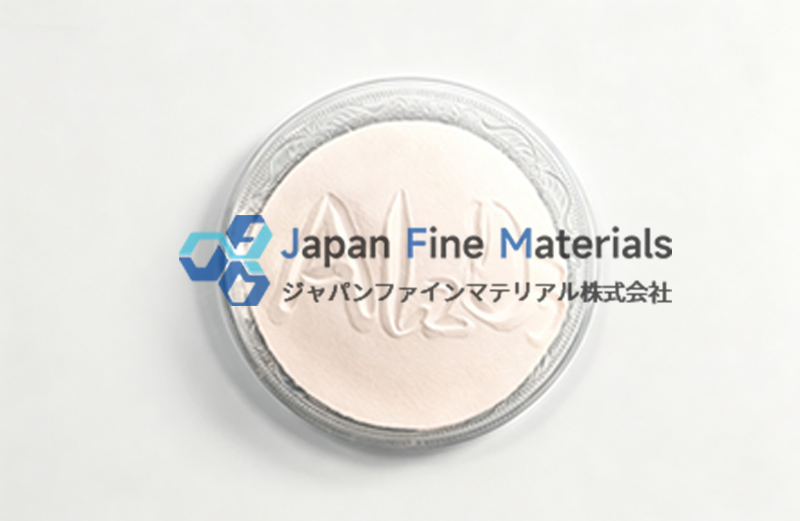
Ceramic manufacturing typically begins with ceramic powders. Unlike metallic materials, the performance of ceramic products is largely dependent on the characteristics of the raw powder, such as purity, particle size distribution, particle morphology, and chemical composition.
Before entering the forming process, ceramic powders typically undergo a series of pretreatments to ensure they meet subsequent manufacturing requirements.
Powder Mixing
Depending on the ceramic material, sintering aids, stabilizers, or other functional additives may need to be incorporated. Uniform mixing ensures that all components are thoroughly combined. For example:
• Zirconia ceramics typically incorporate stabilizers to regulate the materials phase structure;
• Aluminum nitride ceramics may incorporate sintering aids to improve densification behavior during sintering;
• Silicon carbide ceramics typically require specific processes to facilitate sintering.
The uniformity of mixing affects the consistency of the materials microstructure during the subsequent sintering process.
Ball Milling
Ball milling is a common method in ceramic powder processing, primarily used to reduce agglomeration and improve particle size distribution.
Through mechanical action, larger powder particles can be further refined, making the powder more suitable for subsequent forming and sintering.
However, the ball milling time, milling media, and equipment parameters must be adjusted according to the material system to avoid introducing additional impurities or affecting the powder properties.
Addition of Binders and Dispersants
Due to the limited flowability and formability of ceramic powders, certain forming processes typically require the addition of a specific proportion of organic additives.
• Binders help powder particles maintain a certain structural strength after forming;
• dispersants help improve the dispersion of the powder in the slurry;
• plasticizers can adjust the materials processability.
These additives are gradually removed during the subsequent degreasing stage.
Granulation
For processes such as dry pressing, ceramic powders typically require granulation.
Granulation improves the flow properties of the powder, making it easier to fill molds, while also helping to enhance uniformity during the forming process.
After powder preparation, the ceramic raw materials are in a state suitable for processing, providing the foundation for the next stage of green body forming.
Step 2: Green Body Forming
After powder processing is complete, the ceramic powder must be processed through a forming process to create green bodies with the desired shape.
At this stage, the green body already has the general shape of the final product, but it still contains some internal porosity, and the particles are primarily held together by mechanical pressure and organic additives; therefore, a subsequent sintering process is required to achieve densification.
Depending on the products structure, dimensions, precision, and production requirements, common forming methods include:
Dry Pressing
Dry pressing is one of the most common methods in industrial ceramic manufacturing. This process applies pressure to the ceramic powder using a mold to form the powder into a specified shape.
• The process flow is relatively simple
• Suitable for parts with regular shapes
• Suitable for mass production
Common products include ceramic rings, ceramic discs, and ceramic substrates.
Cold isostatic pressing
Cold isostatic pressing applies uniform pressure to the powder through a liquid medium, compressing the material in multiple directions.
Compared to unidirectional compaction, this method improves the density distribution of large or complex structural products and is therefore commonly used in the manufacture of large-sized engineering ceramic components.
Ceramic Injection Molding
Ceramic injection molding is similar to the plastic injection molding process, in which a mixed ceramic material is injected into a mold to form complex structures. This method is suitable for:
• Small, precision ceramic parts
• Products with complex structures
• Mass production
Cast Forming
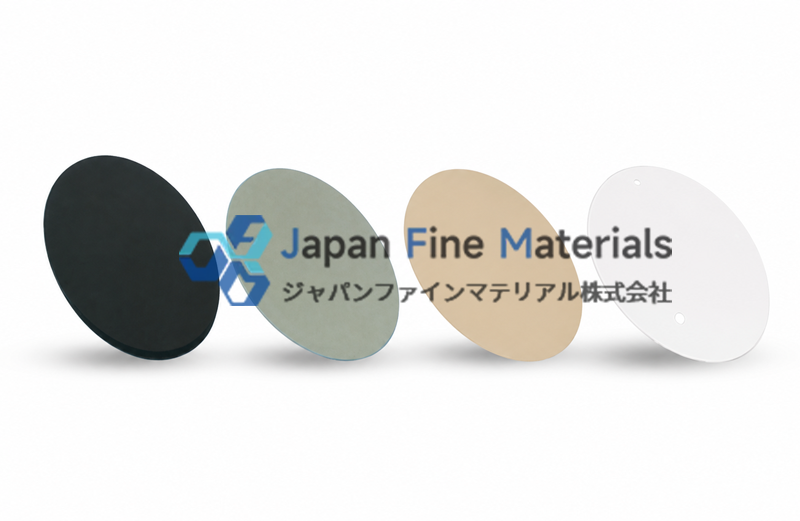
Cast forming is primarily used to manufacture thin-sheet ceramic products, such as:
• Ceramic substrates
• Electronic ceramic materials
• Thin-film ceramic components
By controlling the slurry thickness, thin and uniform ceramic sheets can be formed.
Extrusion Molding
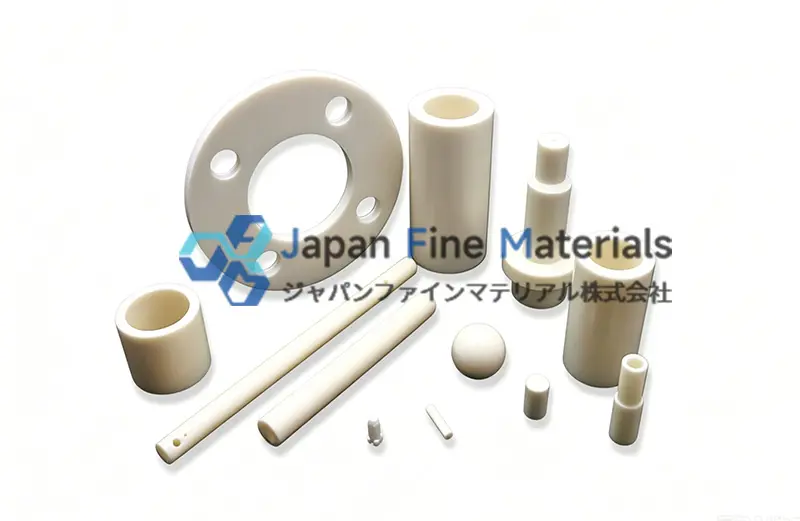
Extrusion molding is primarily suitable for ceramic products with continuous cross-sections, such as:
• Ceramic tubes
• Honeycomb-structured ceramics
• Ceramic parts with special cross-sections
Step 3: Degreasing
Molded green bodies typically contain a certain proportion of binders, lubricants, and other organic additives, which must be removed prior to sintering.
The degreasing process can be carried out through methods such as thermal degreasingand solvent degreasing , causing the organic components to be gradually decomposed , leached out, or expelled.
Since the internal structure of green bodies is relatively sensitive, the degreasing rate typically needs to be adjusted based on product dimensions, wall thickness, binder type, and forming method.
If the degreasing process is not properly controlled, problems such as cracking, deformation, or internal defects may occur; therefore, this stage plays a crucial role in the entire ceramic sintering process.
Step 4: High-Temperature Sintering
After degreasing is complete, the product enters the high-temperature sintering stage.
During sintering, ceramic particles gradually bond through atomic diffusion, forming sintered bridges between the particles. Internal porosity is continuously reduced, and the material gradually becomes denser.
The sintering stage typically involves:
• Heating process
• Holding phase
• Cooling process
• Sintering Atmosphere Control
Depending on the material characteristics, different sintering methods can be employed, such as:
|
Sintering Method |
Pressure Applied |
Common Atmospheres |
Suitable Materials |
|
Pressureless Sintering |
No |
Air, nitrogen, etc. |
Al₂O₃, ZrO₂, certain SiC, Si₃N₄ |
|
Hot-press sintering |
Yes |
Vacuum or protective atmosphere |
Engineering ceramics such as SiC, BN, and AlN |
|
Hot isostatic pressing |
Yes (isotropic) |
High-pressure inert gas |
High-density engineering ceramics |
|
Vacuum sintering |
No |
Vacuum environment |
Electronic ceramics, certain specialty ceramics |
|
Atmospheric Sintering |
No |
Nitrogen, argon, etc. |
AlN, Si₃N₄, etc.—ceramics with specific sintering environment requirements |
Different sintering methods are suitable for different material systems and should be selected based on the product structure and application requirements.
Step 5: Cooling and Post-Processing
After sintering is complete, the ceramic product must be cooled according to the specified process.
Because ceramic materials have low thermal expansion and high hardness, temperature changes during cooling can affect the distribution of internal stresses; therefore, a reasonable cooling profile is typically required.
After sintering, ceramic products may undergo further processing depending on application requirements, such as:
• Precision grinding
• CNC machining
• Laser processing
• Polishing
• Metallization
• Surface Treatment
• Dimensional Inspection
• Performance Testing
After completing the entire manufacturing process, ceramic products enter the final inspection, packaging, and delivery stages.
What microscopic changes occur during the sintering process?
Although sintering occurs in a high-temperature environment, it is essentially a process of continuous internal transformation within the material, primarily comprising the following stages:
Initial Stage
Ceramic particles begin to come into contact with one another, forming sintering necks.
Connections gradually form between the particles, laying the groundwork for subsequent densification.
Intermediate Stage
As diffusion continues, the particles bond more tightly.
A large number of open pores begin to shrink, and the product density continues to increase.
Late stage
The remaining pores are further reduced.
The grains gradually grow, the microstructure stabilizes, and a relatively complete ceramic microstructure is ultimately formed.
There are certain differences in sintering rates and microstructural changes among different materials; therefore, process parameters typically need to be adjusted based on the specific material.
Conclusion
The ceramic sintering process is an indispensable and critical step in the manufacturing of advanced ceramics. From powder preparation, green body forming, debinding, and high-temperature sintering to cooling and post-processing, each step influences the products microstructure, dimensional changes, and final performance.
With the continuous development of fields such as semiconductor equipment, new energy, electronic packaging, medical devices, and industrial manufacturing, ceramic sintering technology is also evolving. A thorough understanding of the sintering process and its influencing factors helps companies make decisions that better align with application requirements during material selection and product development.
Contact JFM for Professional Advanced Ceramic Solutions
If you are seeking advanced ceramic products for the semiconductor, electronics, electrical, and industrial equipment sectors, JFM offers manufacturing services covering a wide range of materials, including alumina ceramics, zirconia ceramics, aluminum nitride ceramics, and silicon carbide ceramics. We can provide tailored material selection and manufacturing recommendations based on your product design, application scenarios, and processing requirements.
Please feel free to contact JFM to discuss your project requirements with our technical team and explore advanced ceramic solutions tailored to your specific application.