Ceramic Vacuum Chucks: Alumina or Aluminum Nitride?
-
2026-10-30 Industry News






Compare alumina and aluminum nitride ceramic vacuum chucks by thermal, electrical, mechanical, and processing properties to guide material selection.
Introduction
Ceramic vacuum chucks are critical load-bearing components in wafer processing, inspection, and other precision equipment. The material of the chuck affects thermal conductivity, electrical insulation, thermal expansion, chemical stability, and manufacturing methods; therefore, material selection is typically one of the key factors to consider when selecting a ceramic vacuum chuck.
Alumina and aluminum nitride are both common ceramic materials, but their material properties differ. For equipment requiring wafer clamping, temperature control, or precision positioning, the choice between these materials must be determined based on specific operating conditions and equipment design.
So, should you choose an alumina or an aluminum nitride ceramic vacuum chuck? Below is a comparison based on several key aspects.
Alumina Ceramic Vacuum Chuck vs. Aluminum Nitride Ceramic Vacuum Chuck
Both alumina and aluminum nitride can be used to manufacture ceramic vacuum chucks, but there are certain differences between them in terms of thermal conductivity, thermal expansion characteristics, electrical properties, and material cost.
|
VS |
Alumina Ceramics |
Aluminum Nitride Ceramic |
|
Key Features |
Good electrical insulation, hardness, and chemical stability |
Outstanding thermal conductivity combined with electrical insulation |
|
Thermal conductivity |
Relatively low |
Relatively high |
|
Coefficient of thermal expansion |
Typically about 7–8 × 10⁻⁶/K |
Typically about 4–5 × 10⁻⁶/K |
|
Electrical Properties |
Has good insulating properties |
Has good insulating properties |
|
Processing Characteristics |
Mature manufacturing processes; widely used in various applications |
The material has high hardness, which places high demands on the machining process |
|
Common Considerations |
General-purpose wafer handling, insulation, and precision positioning |
Temperature control, heat transfer, and heat-sensitive processes |
It should be noted that specific material parameters are influenced by factors such as purity, sintering processes, material formulations, and product structures; therefore, actual product selection should still be based on the material data and product specifications provided by the supplier.
Features of Aluminum Oxide Ceramic Vacuum Chucks
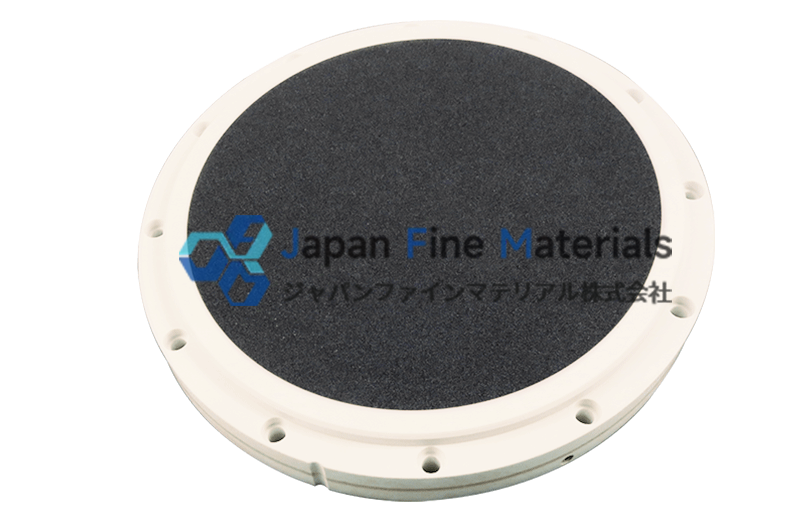
Alumina is a widely used material in the field of precision ceramics. For ceramic vacuum chucks, its hardness, electrical insulation, and chemical stability make it suitable for a variety of wafer-holding and precision machining applications.
Electrical Insulation Properties
Alumina possesses excellent electrical insulation properties, making it suitable for equipment designs that require vacuum clamping of workpieces while also necessitating electrical isolation.
In semiconductor equipment, if a vacuum chuck not only supports and positions wafers but is also located within an active area containing electric fields or electrical components, alumina can be considered as a suitable ceramic insulating material.
Thermal Properties and Dimensional Control
Aluminum oxide has a lower thermal conductivity than aluminum nitride, resulting in different heat transfer characteristics. In processes with significant temperature fluctuations, an evaluation must be conducted in conjunction with the equipment’s heating, cooling, and wafer temperature control methods.
Additionally, since the coefficient of thermal expansion of alumina is generally higher than that of aluminum nitride, the thermal expansion characteristics of the two materials should be compared when the equipment is sensitive to dimensional changes caused by temperature variations.
Chemical Stability
Semiconductor processing may involve exposure to various gases, chemical media, and process environments. Aluminum oxide possesses good chemical stability and can therefore be used in a wide range of equipment components.
However, to determine whether it is suitable for a specific process environment, a material compatibility assessment must be conducted based on actual conditions such as the medium, temperature, and exposure time.
Features of Aluminum Nitride Ceramic Vacuum Chucks
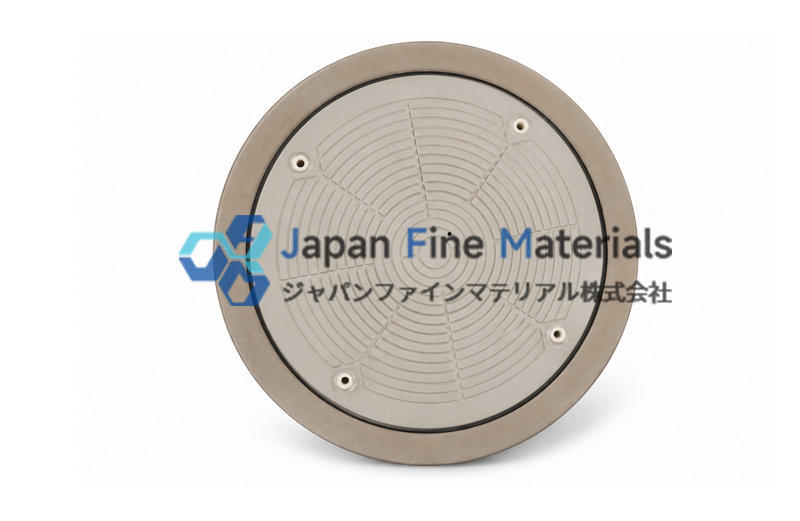
Compared to alumina, a notable characteristic of aluminum nitride is its higher thermal conductivity. Therefore, when a ceramic vacuum chuck needs to serve both wafer support and heat transfer functions, aluminum nitride is a material worth considering.
High Thermal Conductivity
The thermal conductivity of aluminum nitride is typically significantly higher than that of alumina, making it valuable for use in equipment designs that require heat transfer.
For example, in processes requiring the heating or cooling of wafers, the heat transfer capability of the chuck material itself affects the transfer of heat from the equipment structure to the wafer. Therefore, if the equipment design prioritizes heat transfer efficiency, aluminum nitride should be included in the material comparison.
However, actual temperature uniformity is not determined solely by the material; it is also related to the chuck’s thickness, internal structure, heating method, cooling method, vacuum zone, and the equipment’s overall thermal design.
Low Coefficient of Thermal Expansion
The coefficient of thermal expansion of aluminum nitride is typically lower than that of aluminum oxide, at approximately 4–5 × 10⁻⁶/K.
In wafer processing operations involving temperature fluctuations, material thermal expansion can affect component dimensional changes as well as the thermal matching between the chuck and the wafer. Therefore, in equipment that is sensitive to thermal dimensional changes, this material property of aluminum nitride is worth considering.
Electrical Insulation Properties
Although aluminum nitride has high thermal conductivity, it retains the electrical insulation properties of ceramic materials. Therefore, aluminum nitride has potential applications in equipment designs that require both heat transfer and electrical isolation.
Which Material Is More Suitable for Ceramic Vacuum Chucks?
This question cannot be answered based on a single material parameter alone. The actual selection typically depends on the equipment’s operating conditions.
If the application places greater emphasis on the following factors, alumina should be evaluated first:
• Electrical insulation requirements
• Conventional wafer handling and positioning
• Compatibility with chemical environments
• Material cost and availability
• Standard precision ceramic machining requirements
If the equipment places greater emphasis on heat transfer and temperature changes, aluminum nitride should be prioritized for evaluation:
• Wafer heating or cooling
• Rapid heat transfer
• Dimensional control under temperature variations
• Equipment structures that are sensitive to thermal expansion characteristics
• Applications requiring both thermal conductivity and electrical insulation
This does not mean that a single material is limited to a specific type of application. The selection of an actual product requires a comprehensive evaluation that takes into account the vacuum suction method, suction cup size, wafer specifications, temperature range, and equipment structure.
The structural design of vacuum chucks is equally important
Materials are just one aspect of ceramic vacuum chuck design.
For vacuum chucks, the suction holes, vacuum channels, suction area, wafer contact surface, and bottom interface must all be designed in conjunction with the equipment structure.
For example, porous ceramic vacuum chucks form gas channels through the microporous structure within the material, whereas traditional designs may utilize machined vacuum chambers or channels.
Different structures affect:
• Vacuum distribution
• Wafer contact conditions
• Suction area design
• Gas flow paths
• Surface flatness
• Cleaning and Usage Requirements
Therefore, even when using the same ceramic material, different structural designs may correspond to different application scenarios.
Alumina or Aluminum Nitride: How to Choose?
If we simply compare the materials themselves, it is difficult to arrive at a single answer that applies to all equipment. A more reasonable approach is to select materials based on actual process requirements.
You can make a preliminary assessment based on the following approach:
Step 1: Confirm the temperature conditions
Determine the suction cup’s operating temperature, the method of heating and cooling, and whether the wafer requires active heating or cooling.
Step 2: Evaluate Heat Transfer Requirements
If heat transfer is a primary concern for the equipment, focus on comparing the thermal conductivity of aluminum nitride; if heat transfer is not a core requirement, further evaluate the overall material properties of aluminum oxide.
Step 3: Confirm Electrical Requirements
If the equipment design requires good electrical insulation, compare the electrical properties of both ceramic materials under actual operating conditions.
Step 4: Determine the Suction Structure
Select a grooved, porous, or partitioned adsorption structure based on wafer size, vacuum system, and process requirements.
Step 5: Verify Processing and Assembly Requirements
Finally, it is necessary to confirm requirements such as the dimensional accuracy, surface finish, mounting holes, and vacuum interfaces of the suction cup to ensure that the material selection aligns with the overall product design.
Conclusion
Both alumina and aluminum nitride can be used for ceramic vacuum chucks, but the two materials have different performance priorities. Alumina has a broader application base in terms of electrical insulation, chemical stability, and conventional ceramic applications; aluminum nitride, on the other hand, offers high thermal conductivity and a low coefficient of thermal expansion, making it valuable for equipment where heat transfer and temperature changes are critical considerations.
For specific ceramic vacuum chuck projects, a comprehensive evaluation must be conducted that takes into account the material, adhesion structure, dimensional accuracy, vacuum system, and equipment processes.
JFM specializes in the R&D and supply of precision ceramic components integrated services , providingto assist with solution planning and product development based on customers’ material requirements, product structures, and equipment application conditions. If you are evaluating aluminum oxide or aluminum nitride ceramic vacuum chucks, please feel free to contact us for further discussion.