How to Choose a Reliable Advanced Ceramics Manufacturer
-
2026-08-16 Industry News






Find out what to look for in advanced ceramics manufacturers, including quality, experience, and manufacturing strength.
Introduction
Advanced ceramics are increasingly being used in semiconductors, new energy, medical devices, electronic packaging, mechanical seals, and high-temperature industrial applications. Compared to traditional ceramics, advanced ceramics place higher demands on raw material purity, dimensional accuracy of finished products, densification sintering processes, and long-term stability under operating conditions.
For buyers, the real challenge is not finding an advanced ceramics manufacturer, but rather identifying one capable of providing long-term, stable collaboration and possessing genuine engineering capabilities.
Many companies appear to perform well during the initial prototyping phase, but issues often surface during mass production regarding dimensional consistency, material stability, or delivery schedule management. Therefore, when selecting an advanced ceramics manufacturer, one must look beyond price alone and conduct a comprehensive evaluation of both supply chain capabilities and technical expertise.
Key Challenges in Selecting an Advanced Ceramics Manufacturer
Advanced ceramics is a quintessentially technology-driven manufacturing industry, and performance varies significantly between different materials. For example:
• Alumina ceramics
• Zirconia ceramics
• Silicon carbide ceramics
• Silicon nitride ceramics
• Porous ceramics
Different types of advanced ceramics exhibit distinct characteristics in terms of wear resistance, electrical insulation, thermal conductivity, thermal shock resistance, and mechanical strength. Therefore, a manufacturer of advanced ceramics with a mature technical system must not only be capable of production but also possess:
• An understanding of materials
• Process optimization capabilities
• Process control capabilities
• Industry application experience
• The ability to deliver consistently high-quality products in volume
Determining Whether a Company Is a Professional Advanced Ceramics Manufacturer
First confirm the counterpart ,whether , or one that primarily engages in trading, agency work, or outsourcing. is a manufacturer with genuine production capabilities for This point is very easily by overlooked procurement personnel , and it directly impacts subsequent process communication and quality control.
Advanced ceramics manufacturers that are truly focused on this field typically exhibit the following characteristics:
A comprehensive product portfolio, such as:
• Alumina ceramic parts
• Zirconia structural components
• Ceramic seals
• Ceramic insulators
• Ceramic substrates
• Ceramic Plungers
• Precision Ceramic Machined Parts
This indicates that its manufacturing process system is relatively mature. Possesses material R&D capabilities and process expertise.
Advanced ceramics are not simply fired products.
From powder particle size and purity control, forming methods (dry pressing, isostatic pressing, injection molding, cast film, etc.) , to sintering temperature curves and atmosphere control, different products require corresponding process solutions.
If a manufacturer can only provide standard parts and is unable to adjust the forming process, sintering curve, or machining plan according to the application scenario, then its subsequent customization capabilities are often limited.
Manufacturers Material Capabilities
Many procurement projects involve price comparisons in the early stages, but the core of advanced ceramic products actually lies in the stability of the material system. For example, even for 95% alumina ceramics, differences may still exist between different manufacturers:
• Different raw material sources
• Different particle size control
• Different sintering densities
• Differences in microstructure
• Different surface treatments
All of these factors affect the final performance.
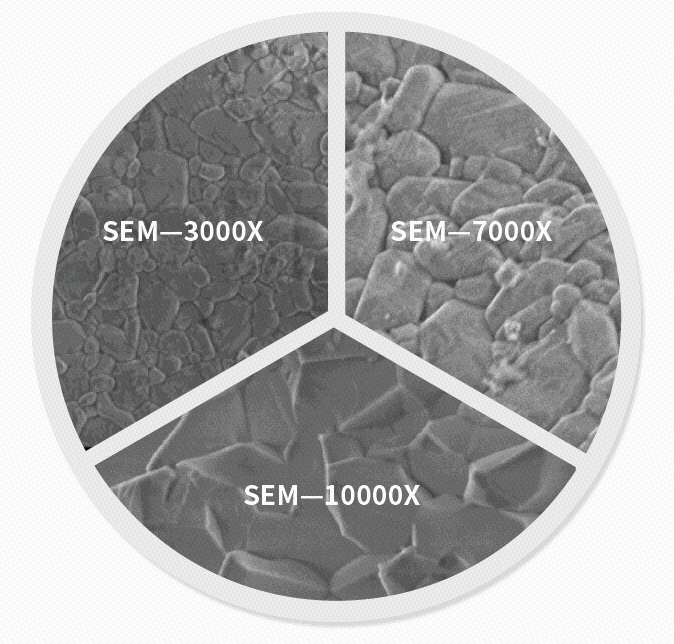
Therefore, when selecting an advanced ceramics manufacturer, it is recommended to focus on verifying whether the material parameters are clearly defined:
• Material data sheets
• Density parameters
• Hardness Parameters
• Thermal conductivity data
• Dielectric Properties
• Coefficient of Thermal Expansion
• Temperature Resistance Range
If a supplier can only provide vague descriptions such as "high-temperature resistance" or "high strength" without specific data, one should exercise caution regarding the supplier’s technical documentation capabilities and process control standards during the evaluation.
Manufacturing Capabilities
Advanced ceramics are difficult to process, particularly precision ceramic parts. After sintering, they have very high hardness and typically require high-precision equipment for secondary machining. Therefore, when procuring these materials, it is essential to verify the following capabilities:
Precision Machining Capabilities
• CNC Machining
• Internal and External Cylindrical Grinding
• Flat Grinding
• Mirror-finish machining
• Laser Machining
• Micro-hole Machining
If a product involves processes such as high-precision tolerances, complex structures, ultra-thin-walled designs, or micro-holes, then machining capabilities will directly affect the products yield rate.
Dimensional Consistency Control Capabilities
The engineering challenge with many advanced ceramic products is not that individual samples fail to meet specifications, but rather how to control mass production the fluctuations . dimensionalcaused by sintering shrinkage during Professional advanced ceramics manufacturers typically need to:
• Establish a sintering compensation database
• Control the shrinkage ratio
• Optimize mold parameters
• Implement batch tracking and management
This kind of process expertise is often more important than the equipment alone.
Industry Experience
The advanced ceramics industry is application-driven, and material requirements vary significantly across different application scenarios.
Semiconductor Industry
Focuses more on:
• High-purity and trace metal control
• Low contamination
• Dimensional stability
• Adaptability to vacuum environments
New Energy Industry
Additional Focus:
• Insulation Properties
• Corrosion resistance
• Thermal Management Capabilities
Medical Device Industry
Key Focus Areas:
• Biocompatibility
• Surface Finish
• Long-term Stability
Therefore, when selecting a manufacturer, it is essential to verify whether they have actually completed relevant industry projects, rather than merely being capable of production.
Delivery reliability is more important than low prices
When switching supply chains, many companies tend to focus solely on unit price . However, once advanced ceramic products are integrated into equipment systems, the cost of subsequently switching suppliers is often very high ; if a supplier experiences unstable delivery times, batch-to-batch variations , or material fluctuations , this will directly affect the operation of the end equipment.
Therefore, in long-term partnerships, the following is even more important:
• Stable Delivery
• Process consistency
• Ability to Maintain Ongoing Collaboration
• Efficiency in addressing issues
Manufacturers with a mature technical system typically have a comprehensive production process:
• Raw Material Batch Management
• Production process documentation
• Dimension inspection procedures
• Shipping inspection standards
These details often determine whether subsequent collaboration will proceed smoothly.
Engineering Communication Skills
This is an issue that many buyers tend to overlook. The advanced ceramics industry requires a high level of technical communication. If a manufacturer can only provide simple responses such as "Yes, we can do it" or "We"ll produce it according to the drawings" but is unable to analyze structural risks, material compatibility, or the reasonableness of tolerances, the project will face a higher level of risk as it moves forward.
As a professional Advanced Ceramics Manufacturer, we typically proactively offer various recommendations:
• Structural Optimization Recommendations
• Process adjustment recommendations
• Material substitution options
• Cost optimization proposals
This type of engineering communication is crucial for long-term collaboration.
Sample testing should not be limited to surface inspection
In many procurement projects, the prototyping phase focuses solely on:
• Whether the surface is smooth
• Whether the dimensions are correct
• Whether the appearance is intact
However, for advanced ceramics, internal performance stability is even more critical, so special attention must be paid to:
• Density uniformity
• Wear resistance
• Thermal shock resistance
• Long-term stability
• Test results under actual operating conditions
Some issues are not apparent in the short term but gradually become evident during long-term operation.
Therefore, suppliers with engineering capabilities typically conduct performance testing and operating condition simulations.
JFM—Your Advanced Ceramics Partner
Choosing a reliable advanced ceramics manufacturer essentially means selecting a long-term, stable technical partner. A truly worthy advanced ceramics manufacturer not only possesses production capabilities but, more importantly, can provide ongoing support in materials, processes, machining, quality, and engineering communication.
JFM specializes in manufacturing services for advanced ceramics and has accumulated many years of experience. We can match the appropriate technology and production resources to project requirements within a reasonable timeframe.
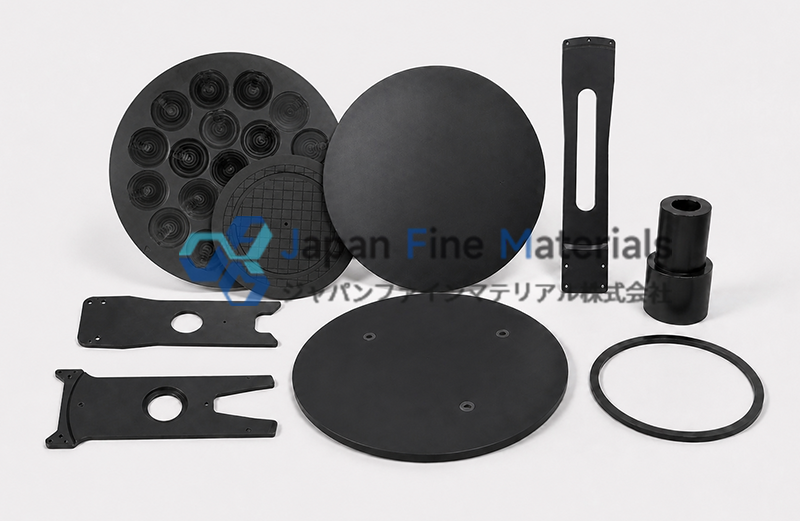
• We cover a wide range of advanced ceramic systems and can adjust material and process parameters according to specific applications
• We participate in structural and drawing evaluations and provide recommendations for manufacturability optimization
• We support complex structures and high-precision tolerances, and places a strong emphasis on batch consistency control
• End-to-end inspection with a focus on dimensional and performance stability
• We serve applications across multiple industries and can quickly adapt to project requirements