Why Alumina Ceramic Rods Are Essential in Electronics and Machinery
-
2026-06-02 Industry News






This article explains why alumina ceramic rods are widely used in electronics and machinery, focusing on their insulation, heat resistance, and durability in demanding operating conditions.
In modern electronic and mechanical equipment, the choice of materials not only affects product performance but also directly determines its service life and reliability. Especially in semiconductor, precision electronics, and high-load mechanical environments, ordinary metals or engineering plastics often struggle to meet multiple critical requirements such as wear resistance, high-temperature resistance, corrosion resistance, and electrical insulation.
Alumina ceramic rods, with their high purity, high strength, and excellent thermal stability, have become the high-performance material of choice for engineers and equipment manufacturers in the electronics, electrical, semiconductor, and mechanical industries. Whether used as precision mechanical components, electronic insulating supports, or machined into wafer lift pins for semiconductor wafer handling, they deliver reliable performance and long-term stability in demanding environments.
What is an alumina ceramic rod?
Alumina ceramic rods are high-performance engineering ceramic products manufactured through precision processes such as molding, drying, and sintering using high-purity alumina powder. Their microstructure features a uniform, dense grain structure, endowing them with outstanding mechanical strength and wear resistance.
Compared to metals or engineering plastics, alumina ceramic rods not only offer higher hardness and wear resistance but also maintain stable dimensions and shape in high-temperature environments. This thermal stability makes them particularly suitable for long-term use in electronic, electrical, and precision mechanical equipment.
Furthermore, alumina ceramic rods possess excellent electrical insulation and corrosion resistance, allowing them to operate for extended periods in acidic, alkaline, and chemical cleaning environments without damage. Due to these comprehensive properties, they have become a key material for industrial components such as supports, bearings, and insulators.
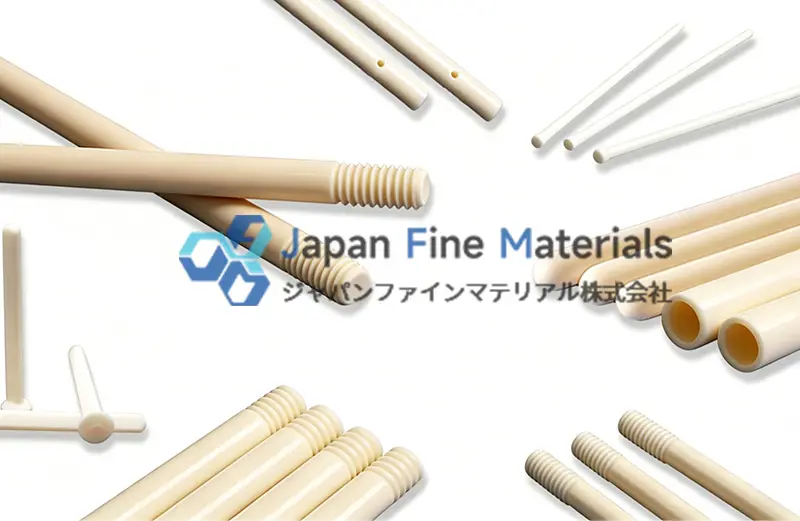
In the semiconductor industry, alumina ceramic rods can be further processed into precision components such as wafer lift pins. Thanks to their high purity, dimensional stability, and surface finish, they provide reliable support and protection for wafer handling.
Manufacturing Process of Alumina Ceramic Rods
The manufacturing process for alumina ceramic rods is highly rigorous and precise; every step, from raw material selection to final machining, directly determines the product’s performance and reliability. High-purity alumina powder is ground, screened, and uniformly mixed to form a base billet, ensuring a uniform particle distribution and providing a solid foundation for subsequent shaping.During the forming stage, extrusion, injection molding, or isostatic pressing techniques are employed to give the green body the required shape and dimensional accuracy, while ensuring a dense internal structure to prevent potential defects. The drying process involves the gradual removal of moisture to reduce stress, ensuring the green body does not crack or deform during the subsequent high-temperature sintering process.
High-temperature sintering is the core process, with temperatures reaching 1600°C or higher. During sintering, the alumina particles undergo solid-state sintering, densifying the material and imparting excellent mechanical strength, wear resistance, thermal stability, and dimensional stability.For high-precision applications, such as wafer lift pins used in semiconductor equipment, the sintered rods must undergo precision grinding, polishing, or cutting to meet strict dimensional tolerances and surface finish requirements. This not only ensures the safety of the parts during wafer handling but also guarantees stable performance in high-temperature, high-wear, or cleanroom environments.
The key process steps are as follows:
• Raw Material Preparation: High-purity alumina powder is ground, screened, and mixed to ensure uniform particles and controlled particle size.
• Green body forming: Extrusion, injection molding, or isostatic pressing techniques are used to ensure shape, dimensional accuracy, and internal density.
• Drying: Moisture is slowly removed to reduce internal stress and prevent cracking or deformation of the green body.
• High-Temperature Sintering: At temperatures exceeding 1600°C, particles undergo solid-state sintering to achieve densification, resulting in high strength, wear resistance, and thermal stability.
• Post-processing: Grinding, polishing, or precision cutting to meet the requirements of high-precision applications, such as the strict tolerances and surface finish of wafer lift pins.
Through a precisely controlled process, every alumina ceramic rods maintains stable performance in harsh environments, providing reliable material support for electronic, mechanical, and semiconductor equipment.
Key Properties of Alumina Ceramic Rods
Mechanical Strength and Wear Resistance
Alumina ceramic rods can reach a Mohs hardness of 9, offering wear resistance several times higher than that of ordinary metals and engineering plastics. In high-load mechanical environments, such as precision drive shafts, wear-resistant bushings, and support rods, they effectively reduce friction and wear, extend component life, and reduce equipment maintenance frequency.
Thermal Stability and Dimensional Stability
Their high melting point and low coefficient of thermal expansion allow aluminum oxide ceramic rods to maintain stable dimensions and shape even in high-temperature environments. They are suitable for semiconductor wafer handling, electronic component support, or internal components of high-temperature furnaces, ensuring that equipment maintains precision even during prolonged high-temperature operation.
Electrical Insulation Properties
Alumina ceramic rods possess excellent electrical insulation and high dielectric strength, providing reliable insulation in high-voltage environments. They are commonly used as insulating support components, conductive isolation plates in electronic devices, and critical insulating parts in semiconductor manufacturing equipment, ensuring safe and stable equipment operation.
Chemical Resistance
They exhibit outstanding resistance to most acids, alkalis, and organic solvents. Whether in chemical production, electronic cleaning solutions, or semiconductor wet processes, alumina ceramic rods maintain their performance over extended periods without corrosion, damage, or product contamination.
Thermal Shock and Crack Resistance
High-purity alumina ceramic rods undergo an optimized sintering process, resulting in excellent thermal shock resistance,. They are suitable for use in environments with rapid temperature changes, such as wafer handling, electronic component test benches, and high-temperature processing equipment, significantly reducing the risk of breakage caused by thermal stress.
Machinability and Surface Finish
Despite their high hardness, precision-machined alumina ceramic rods can achieve micron-level tolerances and high-surface-finish surfaces. The machined rods can be directly used in semiconductor equipment (such as wafer lift pins), precision mechanical bearings, or wear-resistant components, ensuring smooth mating and high operational precision of the equipment.
Typical Applications
Alumina ceramic rods are widely used in electronics, semiconductors, electrical systems, and mechanical equipment. Their superior performance ensures stable operation in a variety of demanding environments. Major applications include:
Electronics Industry
Alumina ceramic rods are commonly used to manufacture high-precision insulating supports, conductive isolation components, and thermal management elements. Their excellent electrical insulation and high-temperature resistance ensure that electronic components can operate safely and stably even under high-load conditions.
Mechanical Industry
In mechanical equipment, alumina ceramic rods are machined into wear-resistant bushings, drive shafts, or precision support components. They can withstand high friction and impact loads, thereby extending the service life of machinery. Their wear resistance and dimensional stability are particularly critical in high-speed rotation or continuous friction applications.
Semiconductor Equipment
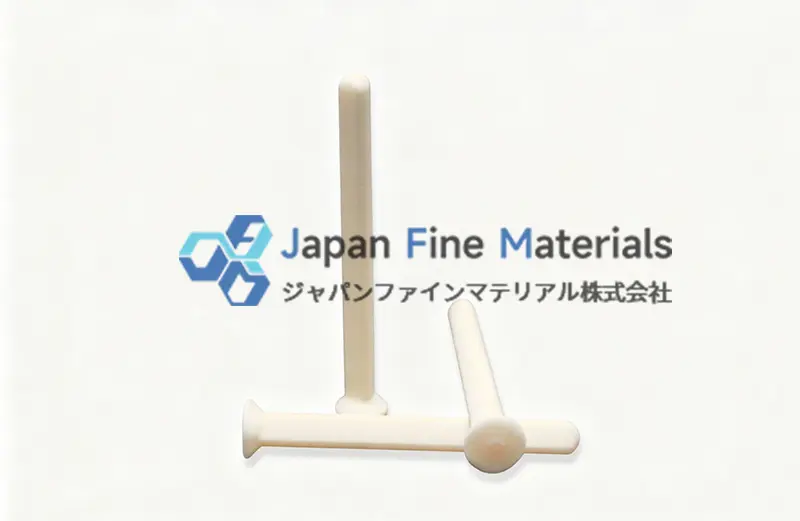
Alumina ceramic rods can be machined into wafer lift pins for wafer handling and support. Their high purity, low thermal expansion, and excellent surface finish ensure that wafers are not scratched or contaminated during handling. At the same time, they withstand high-temperature baking and chemical cleaning environments, enhancing production line reliability and equipment stability.
High-Temperature and Chemical Environments
In chemical, energy, or vacuum equipment, alumina ceramic rods can also serve as corrosion-resistant and wear-resistant support or isolation components. Their adaptability to acidic, alkaline, and high-temperature environments makes them an ideal material for applications where traditional metals or plastics fall short.
Custom Industrial Components
Thanks to their machining precision and diverse specifications, alumina ceramic rods can be customized to various diameters and lengths for use in instrumentation, sensor components, precision bushings, and other high-performance structural parts, meeting the specific requirements of various industrial applications.
Conclusion
In modern electronic devices, semiconductor systems, and high-precision machinery, material selection directly determines equipment performance, lifespan, and reliability. With their exceptional mechanical strength, wear resistance, thermal stability, and electrical insulation properties, alumina ceramic rods are the ideal material for high-load applications. Selecting the appropriate alumina ceramic rods not only enhances equipment operational stability but also reduces maintenance frequency and the risk of production downtime.
Whether you require standard specifications or custom solutions, we provide professional technical support and high-quality products. Contact JFM today to obtain detailed product information, customized solutions, and application recommendations, enabling your electronic and mechanical equipment to achieve optimal performance and reliability while delivering greater value to your production operations.