Silicon Carbide vs Silicon Nitride for Semiconductor Applications
-
2026-10-16 Industry News






Compare silicon carbide and silicon nitride for semiconductor applications, focusing on their properties, performance, processing needs, and material selection.
Introduction
In the field of semiconductor equipment and components, ceramic materials are frequently used in parts that require heat resistance, electrical insulation, corrosion resistance, or low-contamination properties. Although materials such as alumina, silicon carbide, aluminum nitride, and silicon nitride all fall under the category of engineering ceramics, they exhibit distinct differences in their material properties and therefore have different applications depending on specific requirements.
Among these, silicon carbide (SiC) and silicon nitride (Si₃N₄) are both common advanced ceramic materials in semiconductor-related fields. Each has its own distinct characteristics in terms of high-temperature performance, mechanical properties, adaptability to chemical environments, and processing methods.
So, how exactly should silicon carbide and silicon nitride be understood? This article will compare them from the perspectives of material properties and semiconductor applications, and explain the selection criteria for both materials in light of the specific requirements for component use.
What Is Silicon Carbide Ceramic?
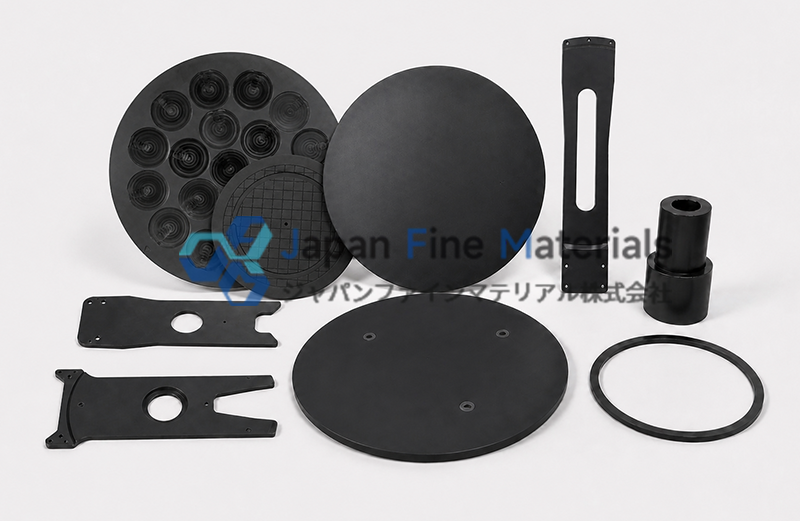
Silicon carbide ceramics are a class of non-oxide engineering ceramics with silicon carbide as their primary component. Silicon carbide consists of silicon and carbon and exhibits various crystal structures, with different crystal forms exerting a certain influence on the material’s final properties.
Compared to oxide ceramics such as alumina, silicon carbide belongs to the non-oxide ceramic family, with unique characteristics in terms of raw material composition, forming methods, and sintering processes. In actual production, the final material properties are controlled through material formulations, sintering processes, and subsequent precision machining, all tailored to the specific requirements of the components.
Silicon carbide ceramics can be fabricated into plates, rings, tubes, carriers, and other custom structural components, making them widely used in industrial equipment and semiconductor-related parts.
What Are Silicon Nitride Ceramics?
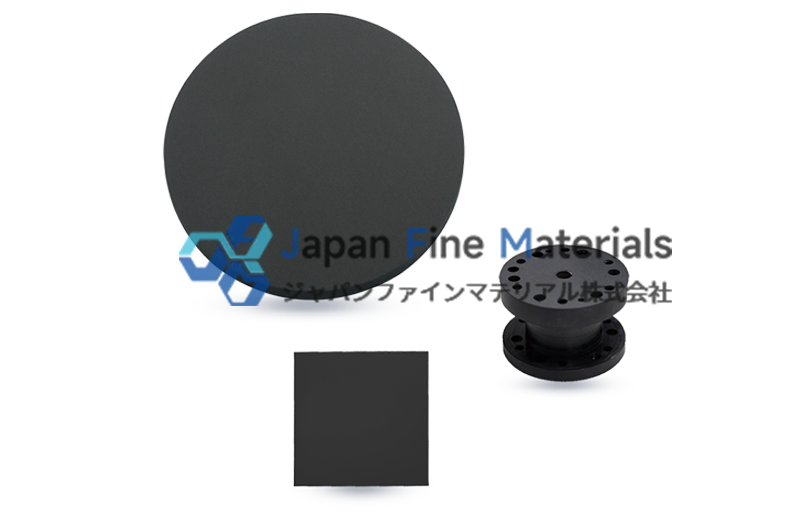
Silicon nitride ceramics are a class of non-oxide engineering ceramics with silicon nitride as their primary component. Silicon nitride consists of silicon and nitrogen, and its crystal structure primarily comprises the α phase and the β phase. These two phases undergo mutual transformation during the material preparation process, which influences the microstructure of the final ceramic.
Silicon nitride ceramics typically undergo processes such as powder preparation, forming, sintering, and precision machining to form the final components. Depending on the specific material system and preparation process, different microstructures and material properties can be achieved.
In practical engineering applications, silicon nitride can be machined according to part designs to produce support components, structural components, insulating components, and other custom ceramic parts. The specific material system and manufacturing process to be adopted must be evaluated based on the part’s dimensions, structure, and final operating conditions.
Comparison of Key Properties
|
VS |
Silicon Carbide (SiC) |
Silicon Nitride (Si₃N₄) |
|
Material Type |
Non-oxide ceramic |
Non-oxide ceramic |
|
Hardness |
High |
High |
|
Thermal Conductivity |
Generally high |
Typically lower than silicon carbide |
|
High-Temperature Properties |
Suitable for high-temperature applications |
Good high-temperature mechanical properties |
|
Thermal expansion |
Lower |
Lower |
|
Mechanical toughness |
High Hardness, but the material is brittle |
Good fracture toughness |
|
Chemical resistance |
Good adaptability to a variety of corrosive environments |
Good resistance to certain chemical environments |
|
Machining Characteristics |
High hardness, making machining relatively difficult |
Suitable for precision ceramic machining |
|
Key Considerations |
High temperatures, thermal conductivity, corrosion resistance, low pollution |
Mechanical loads, thermal cycling, structural strength |
It should be noted that actual performance is influenced by factors such as material purity, crystalline phase, sintering method, porosity, and specific material grade; therefore, the final performance of a part cannot be determined based solely on the material name.
Characteristics of Silicon Carbide Applications in Semiconductors
The application of silicon carbide in the semiconductor industry is closely related to its high-temperature performance, hardness, thermal conductivity, and chemical stability.
In high-temperature process environments, components must withstand continuous heating, temperature fluctuations, and chemical reactions caused by process gases. Since silicon carbide is suitable for such operating conditions, it is commonly used in components for equipment related to heat treatment, epitaxy, and CVD.
Common applications include:
• Silicon Carbide wafer carriers
• Silicon Carbide bases
• Silicon carbide ceramic arms
• Silicon Carbide ceramic focusing rings
• Silicon Carbide process components
For certain equipment components that require both high-temperature performance and low-contamination characteristics, silicon carbide is also a material worth considering.
Application Characteristics of Silicon Nitride in Semiconductors
The key applications of silicon nitride in semiconductor-related equipment differ from those of silicon carbide. Its superior mechanical properties and fracture toughness make it suitable for certain ceramic components that must withstand mechanical stress, temperature fluctuations, or structural loads.
In wafer processing, heat treatment equipment, and other semiconductor equipment structures, silicon nitride can be used for support, positioning, or other functional components according to specific design requirements.
For example:
• Wafer handling components
• Ceramic support components
• Structural Components
• Insulation Components
• High-Temperature Fixtures
• Custom Ceramic Components
For components where dimensional accuracy, mechanical strength, and thermal cycling properties are critical, silicon nitride can be evaluated as a candidate material.
High-Temperature Performance of Silicon Carbide and Silicon Nitride
High-temperature applications are a common scenario in which these two materials are compared.
Silicon carbide has high thermal conductivity and maintains good material properties in high-temperature processes, making it suitable for certain components that require rapid heat transfer or must withstand high-temperature process conditions.
Silicon nitride also exhibits good high-temperature performance, but its material advantages are more evident in its mechanical properties and thermal shock resistance at high temperatures.
Therefore, if a part’s primary considerations are thermal conductivity, high-temperature process environments, and material purity, silicon carbide may be a better fit for the design; if the part’s primary considerations are mechanical loads, thermal cycling, and structural integrity, silicon nitride should be included in the material evaluation.
The final selection must still be determined based on the actual process temperature, structural design, and operating conditions.
Chemical Resistance of Silicon Carbide and Silicon Nitride
During semiconductor manufacturing, components come into contact with various types of process gases and chemical media; therefore, the chemical stability of ceramic materials is also a critical factor in material selection.
Silicon carbide exhibits good resistance to a variety of chemical environments and is suitable for use in certain corrosive atmospheres and high-temperature process environments. Silicon nitride also possesses a certain degree of chemical stability, but its actual performance may vary depending on the specific chemical medium, temperature, and material formulation.
Therefore, material selection should not be based solely on a simple conclusion such as “corrosion resistance.”
A more reasonable approach is to evaluate materials by considering the following factors:
• Type of process gas
• Operating temperature
• Concentration of chemical media
• Exposure time
• Surface condition
• Material Purity
• Component Structure
For semiconductor equipment, the material itself is only one factor; the actual machining quality and surface condition of the components are equally important.
Mechanical Properties of Silicon Carbide and Silicon Nitride
Both ceramics possess high hardness, but their mechanical properties manifest differently.
Silicon carbide has high hardness and wear resistance, making it suitable for certain components that require surface wear resistance and high-temperature performance. However, high hardness also means that machining processes suitable for the characteristics of ceramic materials must be adopted during precision machining.
Silicon Nitride, on the other hand, possesses better fracture toughness and exhibits different failure characteristics than Silicon Carbide when subjected to mechanical loads or temperature changes. Therefore, Silicon Nitride has certain application value for structural components, support components, or parts that need to withstand a certain amount of mechanical stress.
This is why, in the actual design of semiconductor equipment, the two materials typically need to be evaluated separately based on the function of each part.
How to Choose Between Silicon Carbide and Silicon Nitride for Semiconductor Applications?
Choosing between silicon carbide and silicon nitride is not usually a matter of simply comparing which material has higher parameters, but rather determining whether the material’s properties match the component’s function.
This decision can be made based on the following factors:
• High Temperatures and Thermal Conductivity: For certain components in high-temperature process equipment, if the design focuses on thermal conductivity, temperature control, and compatibility with high-temperature atmospheres, Silicon Carbide should be evaluated first.
• Mechanical Loads: For structural components used for support, positioning, or those required to withstand certain mechanical stresses, Silicon Nitride should be included in the material comparison.
• Chemical Environment: If components are in prolonged contact with specific process gases or chemical media, chemical resistance must be evaluated based on the specific medium, temperature, and material grade, rather than selecting a material solely based on its name.
• Precision Ceramic Machining: When parts have complex geometries, precise dimensions, or specific surface roughness requirements, it is necessary to simultaneously evaluate the material’s machinability, sintering shrinkage, and final dimensional control strategies.
Selecting Ceramic Materials for Semiconductor Components
In practical projects, decisions can be made by following the sequence: “Process conditions → Part function → Material properties → Machining requirements.”
|
Evaluation Factors |
Key Considerations |
|
Process Temperature |
What temperature range must the component withstand? |
|
Thermal Properties |
Is thermal conductivity or thermal cycling performance more important? |
|
Chemical Environment |
What process gases or chemical media will the part be exposed to? |
|
Mechanical Loads |
Will the part bear support, positioning, or structural loads? |
|
Dimensional Accuracy |
What are the requirements for dimensions, tolerances, and geometric accuracy? |
|
Surface Requirements |
Are there any specific surface roughness or surface treatment requirements? |
|
Material Purity |
Are there any requirements regarding impurity and particle control? |
|
Processing Methods |
Material Properties Is the material suitable for the target manufacturing process? |
Making a comprehensive assessment based on these factors is more appropriate for the actual selection of semiconductor equipment components than simply comparing material parameters.
Are Silicon Carbide and Silicon Nitride interchangeable?
In some applications, there may be some functional overlap between the two materials, but this does not mean they are directly interchangeable.
Semiconductor equipment components typically must simultaneously meet requirements for material performance, structural design, machining precision, and process compatibility. If a material is replaced directly, changes may occur in the material’s thermal expansion, thermal conductivity, mechanical properties, sintering characteristics, and machining methods, thereby affecting component design.
Therefore, if you plan to switch from silicon carbide to silicon nitride, or from silicon nitride to silicon carbide, it is generally necessary to reassess:
Do the material properties match?
• Does the part structure need to be adjusted?
• Has the sintering shrinkage changed?
• Do the machining allowances need to be redesigned?
• Is the surface treatment method appropriate?
• Is the intended operating environment compatible?
For custom semiconductor ceramic components, such material substitutions typically require evaluation based on specific parts and process conditions.
Conclusion
Both silicon carbide and silicon nitride are engineering materials with practical applications in the field of semiconductor ceramics, but their respective strengths differ. Silicon carbide is more commonly associated with requirements such as high temperatures, thermal conductivity, and chemical environments, while silicon nitride is characterized by its mechanical properties, fracture toughness, and thermal cycling performance.
Therefore, there is no single “one-size-fits-all” solution for all semiconductor components when choosing between silicon carbide and silicon nitride. Material selection requires a comprehensive evaluation based on specific processes, component functions, structural design, and manufacturing requirements.
JFM specializes in the research, development, and supply of precision ceramic components coordinated , providingservices to assist with material solutions, part design, and supply coordination based on specific application needs. If you are evaluating silicon carbide, silicon nitride, or other semiconductor ceramic material solutions, please contact JFM to further discuss your specific project requirements.