Why Are Ceramic Grinding Discs Used in Semiconductor Manufacturing?
-
2026-10-16 Industry News






Discover why ceramic grinding discs are used in semiconductor manufacturing, with a look at material properties, grinding performance and wafer processing needs.
Introduction
Semiconductor manufacturing involves the processing of wafers, ceramic components, and various precision structural parts. After some materials are formed, they must undergo additional processes such as grinding and finishing to further refine their dimensions, flatness, and surface condition.
In these machining processes, the material, abrasive grains, grain size, and structure of the grinding tools all influence the machining results. Ceramic grinding discs are therefore used in certain semiconductor-related machining scenarios, particularly when processing hard, brittle materials or those with high surface quality requirements.
So, why are ceramic grinding discs used in semiconductor manufacturing? For which workpieces are they suitable? And what factors should be considered when selecting them?
Why Is Grinding Necessary in Semiconductor Manufacturing?
Semiconductor components typically undergo various processing steps—including cutting, forming, sintering, grinding, and polishing—from raw materials to their final usable state. For certain ceramics and hard materials, it is difficult to achieve the required dimensions and surface finish solely through front-end forming processes; therefore, mechanical grinding is also necessary.
The purpose of grinding is not merely to remove material; more importantly, it serves to adjust the dimensions and geometry of the workpiece.
For example, in the machining of semiconductor-related ceramic components, the grinding process may involve:
• Adjusting the thickness and dimensions of the part
• Improving surface roughness
• Correcting flatness
• Controlling the machining condition of edges and localized areas
• Providing suitable surface conditions for subsequent finishing or assembly
For hard ceramic materials such as alumina, silicon carbide, and aluminum nitride, which are inherently hard and brittle, it is necessary to select appropriate grinding tools and process parameters based on the material’s characteristics during machining.
Why Choose Ceramic Grinding Discs?
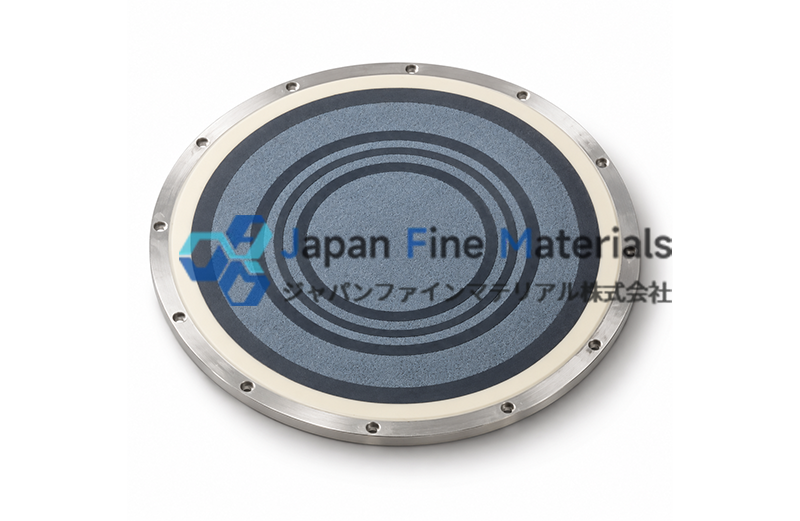
The application of ceramic grinding discs is closely related to the characteristics of semiconductor material processing. Some workpieces in semiconductor manufacturing are characterized by high hardness, significant brittleness, and strict dimensional requirements; therefore, the grinding tools must be properly matched to the material being processed.
Suitable for the Machining Requirements of Hard Materials
The semiconductor industry involves silicon, silicon carbide, and various engineering ceramic materials. The difficulty of machining these materials differs from that of ordinary metallic materials.
Ceramic grinding discs allow for the selection of appropriate abrasive systems, grit sizes, and structures based on the specific workpiece, enabling material removal and surface finishing. For hard ceramic components, proper matching of the abrasive to the workpiece material helps ensure a more controllable grinding process.
Helps Control Dimensional and Geometric Accuracy
Semiconductor ceramic components typically require attention not only to material removal but also to parameters such as thickness, flatness, and dimensional tolerances.
During the grinding process, the dimensions, flatness, abrasive characteristics, and equipment parameters of the grinding disc all influence the machining results. By adjusting the grinding disc and process conditions to suit specific parts, it is possible to better meet the machining requirements of precision ceramic components.
Adapting to Different Surface Finishing Requirements
Different semiconductor components have varying requirements for surface finish.
Some parts require significant material removal, while others prioritize surface roughness and final geometric dimensions. Therefore, grinding discs should not be selected based solely on the principle that “the harder, the better”; instead, they must be matched based on the material, machining allowance, target surface quality, and equipment conditions.
For Which Semiconductor Materials Are Ceramic Grinding Discs Suitable?
Semiconductor manufacturing involves a wide variety of materials, and since different materials vary in hardness, brittleness, thermal properties, and machining response, the grinding solutions used will also differ.
Silicon
The processing of silicon wafers and related silicon materials involves grinding operations. The grinding process must balance material removal with surface finish, and appropriate grinding conditions must be selected based on wafer size, processing stage, and subsequent processes.
Silicon Carbide
Silicon carbide has a high hardness and is generally more difficult to process than ordinary silicon materials. When machining silicon carbide components, grinding tools must be selected based on the material’s characteristics; the type of abrasive, grit size, and machining parameters all affect material removal and surface quality.
Alumina Ceramics
Alumina is a common engineering ceramic material used in semiconductor equipment, serving in insulating components, structural parts, and other equipment components. For sintered alumina components, grinding can be used to further adjust dimensions, flatness, and surface finish.
Aluminum Nitride Ceramics
Aluminum nitride possesses good thermal conductivity and electrical insulation properties and is used in certain semiconductor and electronic device components. Its machining also requires consideration of the material’s hardness and brittleness; the abrasive type and machining parameters of the grinding wheel must be tailored to the specific part.
|
Materials |
Machining Characteristics |
Factors to Consider During Grinding |
|
Silicon |
Hard and Brittle Materials |
Material Removal and Surface Finish |
|
Silicon Carbide |
High hardness |
Abrasives, particle size, machining efficiency |
|
Aluminum Oxide |
Engineering Ceramics |
Dimensions, flatness, surface roughness |
|
Aluminum nitride |
Hard Ceramics |
Material Properties, Surface Quality, Machining Parameters |
How Do Ceramic Grinding Discs Affect Surface Quality?
In the machining of semiconductor components, the grit size, abrasive type, disc structure, and grinding parameters of the grinding disc all affect the surface finish after machining. Different grit sizes result in different material removal mechanisms; coarser grits are typically suitable for initial material removal, while finer grits are better suited for subsequent fine grinding.
In actual machining, the following aspects deserve particular attention:
• Abrasive Grain Size: This affects the material removal mechanism and the surface roughness after grinding; grain size selection must be based on the processing stage and target surface requirements.
• Abrasive Type: Different semiconductor materials have varying compatibility with abrasives; selection must be based on the workpiece material.
• Grinding pressure and rotational speed: These affect the material removal rate and the machined condition of the workpiece surface; these parameters must be adjusted based on the equipment and material.
• Cooling conditions: Heat and debris generated during the grinding process must be properly controlled; otherwise, they may affect the surface condition and the machining process.
• Grinding Disc Structure: The disc structure and abrasive particle distribution also affect the contact conditions and material removal efficiency during the grinding process.
Therefore, when machining ceramic materials such as aluminum oxide, aluminum nitride, and silicon carbide, one must not focus solely on the grinding disc itself; rather, a comprehensive match must be achieved by considering material properties, machining allowance, equipment conditions, and target surface quality.
Abrasive Grains and Particle Size of Ceramic Grinding Discs
The operating conditions of a grinding disc are closely related to the characteristics of the abrasive grains.
Different abrasive materials have varying hardness, wear resistance, and cutting behavior. For example, different abrasive systems may need to be considered for different ceramic and semiconductor materials.
Grain size is also a parameter frequently considered during the selection process.
Generally speaking:
• Coarser grit sizes are suitable for machining stages requiring significant material removal
• Medium grit sizes can be used for dimensional adjustment and general grinding
• Finer grit sizes are better suited for machining stages requiring a higher surface finish
The actual choice of grit size must also take into account the workpiece material, machining allowance, equipment conditions, and target surface quality; it cannot be determined solely based on grit size.
How to Select a Semiconductor Ceramic Grinding Disc?
If ceramic grinding discs are used for machining semiconductor-related components, it is recommended to base the selection on actual process requirements.
• Material to be processed: First, determine whether the workpiece is silicon, silicon carbide, or ceramic materials such as aluminum oxide or aluminum nitride. Different materials may require different types of abrasives, hardness levels, and grinding parameters.
• Machining Allowance: If a significant amount of material needs to be removed, the grinding disc must be capable of meeting the corresponding material removal requirements; if the process has entered the finishing stage, greater attention should be paid to surface condition and dimensional control.
• Target Surface Quality: Select an appropriate grinding solution based on the final product’s surface roughness, flatness, and dimensional requirements.
• Grinding Equipment: The grinding wheel must also be compatible with the actual equipment, including wheel dimensions, mounting method, speed range, and machining method.
• Part Dimensions and Structure: Ceramic parts of different sizes and structures may experience varying stress conditions and require different machining methods. Therefore, the specifications and structure of the grinding disc must be considered in conjunction with the specific workpiece.
Factors Affecting Ceramic Grinding Performance
In the machining of semiconductor components, the final grinding result is not determined solely by the ceramic grinding disc, but rather depends on the compatibility among the material, the grinding disc, the equipment, and the process parameters. This is particularly true for hard ceramic materials such as alumina, aluminum nitride, and silicon carbide, which differ in hardness, brittleness, and machining response, and thus require different grinding methods.
Workpiece Material
The workpiece material is one of the fundamental factors influencing the grinding process. The material’s hardness, brittleness, and microstructural characteristics affect how material is removed when the abrasive grains come into contact with the workpiece. If the abrasive properties of the grinding disc are not properly matched to the workpiece material, this may result in variations in material removal efficiency, an increase in surface defects, or accelerated wear of the grinding disc.
Grinding Disc Parameters
The abrasive grain type, particle size, concentration, and disc structure all influence the machining conditions. Coarser particle sizes are typically suitable for initial material removal, whereas during the finishing stage, more appropriate particle sizes and disc structures must be selected based on the target dimensions and surface roughness.
Equipment and Process Parameters
Spindle speed, grinding pressure, feed rate, cooling method, and processing time also contribute to the final machining results. If there is a lack of proper alignment between equipment parameters and grinding disc characteristics, it may affect the uniformity of material removal and impact flatness, dimensions, and surface finish.
Machining Allowance and Quality Requirements
The amount of material to be removed from the workpiece, as well as the required final dimensions and flatness, are also factors to consider when selecting a grinding solution. The roughing stage typically focuses more on material removal, while the finishing stage requires greater attention to dimensional control and surface quality.
Therefore, when selecting ceramic grinding discs for semiconductor applications, one should not focus on a single parameter but rather perform a comprehensive evaluation that takes into account the workpiece material, machining allowance, part geometry, target surface quality, grinding equipment, and process parameters. Different specifications and grit sizes of grinding discs can also be used for different machining stages to ensure a reasonable transition between rough and finish grinding.
Conclusion
The use of ceramic grinding discs in certain semiconductor manufacturing scenarios is closely related to the processing characteristics of semiconductor materials and components. When working with hard materials such as silicon, silicon carbide, aluminum oxide, and aluminum nitride, the grinding process must simultaneously consider material removal, dimensional control, and surface quality.
Therefore, the selection of ceramic grinding discs cannot be separated from the specific materials and machining processes involved. The compatibility between abrasive type, grit size, grinding disc specifications, equipment conditions, and target surface requirements are all factors that warrant attention in practical applications.
If you are looking for ceramic grinding discs suitable for machining semiconductor ceramic components, JFM can provide integrated R&D and manufacturing supply services tailored to your specific product needs. We will coordinate with you from product requirements and specification matching through to the manufacturing and supply stages, providing the necessary support to advance your project.
For further information on ceramic grinding discs or to discuss specific application requirements, please feel free to contact the JFM team.