Silicon Carbide vs Zirconia Ceramics: Key Differences
-
2026-06-02 Industry News






A clear comparison between silicon carbide and zirconia ceramics, covering strength, temperature resistance, wear performance, and common application scenarios to help guide material selection.
In the realm of high-performance ceramic materials, silicon carbide (SiC) and zirconia (ZrO₂) are frequently used in different operating conditions. However, there are significant differences between the two in terms of structural properties, resistance capabilities, and applicable scenarios, which necessitates careful consideration of specific usage conditions during the engineering selection process.
This article will provide a detailed overview of the differences between the two at, helping you understand their distinct industrial applications and make thechoice right.
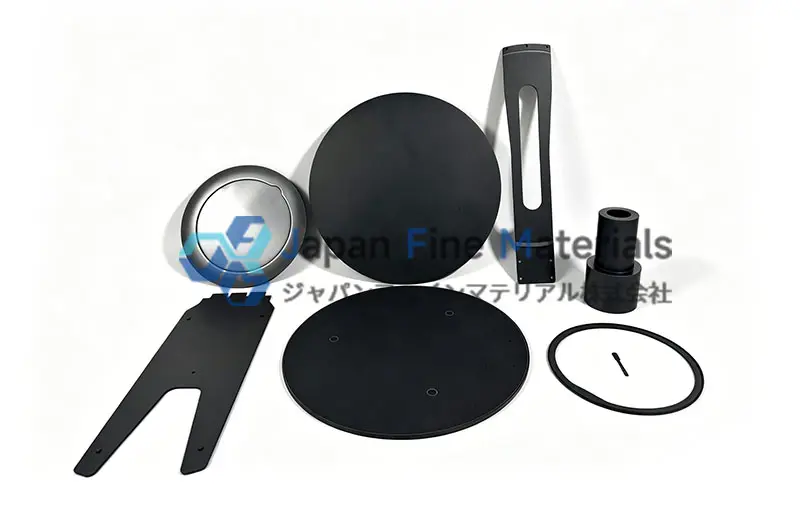
What is Silicon Carbide Ceramic?
Silicon carbide ceramics are a class of advanced ceramic materials formed through high-temperature reactions or sintering processes, with carbon and silicon as their primary elements. Depending on the preparation method, common types include reaction-sintered silicon carbide (RB-SiC) and pressureless-sintered silicon carbide (SSiC). These manufacturing processes determine their internal structure and application areas.
In industrial applications, silicon carbide is typically classified as a functional structural material and is frequently used in equipment components operating under demanding conditions, such as those involving high-temperature media, corrosive gases, or complex process environments. Its application is often closely tied to process stability and the operating environment of the equipment.
What is zirconia ceramic?
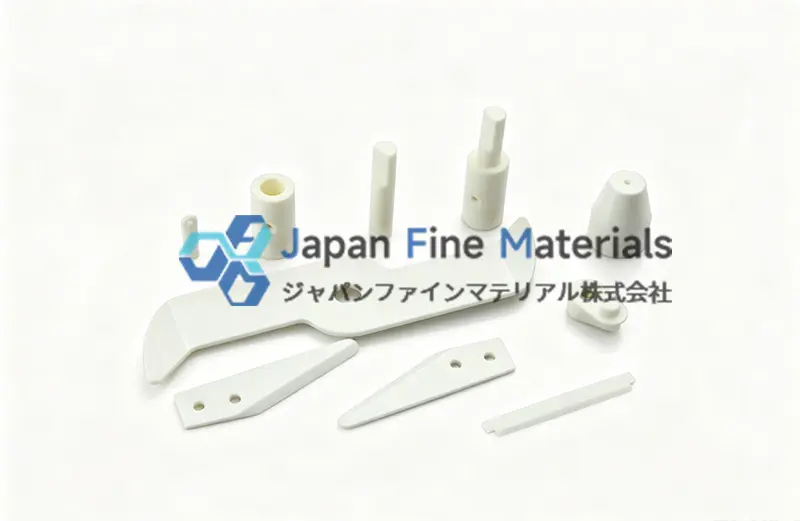
Zirconia ceramics are polycrystalline ceramic materials based on zirconia, formed by adding stabilizers (such as yttria). Depending on the stabilization method, common types include partially stabilized zirconia (PSZ) and fully stabilized zirconia (FSZ), with different structural forms serving distinct priorities in engineering applications.
In practical applications, zirconia is often regarded as an engineering ceramic material that combines both structural and functional properties, commonly used in components that require a certain level of dimensional accuracy, structural integrity, or operational reliability. Its material properties make it well-suited for precision equipment and specific industrial sectors.
Material Properties
Silicon carbide and zirconia exhibit distinct differences in crystal structure, bonding mechanisms, and microstructure. These differences are further reflected in the materials’ mechanical performance, thermal response, and long-term service behavior.
Silicon Carbide (SiC)
Its predominantly covalent crystal structure endows it with high structural density and rigidity. In practical applications, this material is more commonly used in operating conditions that require wear resistance, high-temperature resistance, and thermal management. Additionally, different sintering methods (such as reaction sintering and pressureless sintering) can influence its internal pore structure and performance.
Zirconia (ZrO₂)
As a polycrystalline material, it forms specific phase systems through the introduction of stabilizers, thereby inducing phase transformations under external forces. This microscopic mechanism allows it to alleviate localized stress concentrations during loading, making it common in components requiring high structural integrity.
• SiC is more suited for: structural rigidity and environmental adaptability
• ZrO₂ is better suited for: structural toughness and stress resistance
Key Performance Differences
1. Hardness and Wear Resistance
Silicon carbide excels in hardness. In environments involving prolonged friction or particle erosion, the material exhibits a relatively low surface wear rate and is frequently used in components requiring high wear resistance, such as conveying systems or parts in contact with fluids.
Although zirconia is not as hard as silicon carbide, it possesses strong crack-propagation resistance. In scenarios involving cyclic loading or impact, this helps reduce the risk of structural damage caused by localized stress concentration.
2. Thermal Conductivity
Silicon carbide possesses high thermal conductivity, making it particularly effective in equipment involving heat transfer or temperature distribution control, such as structural components requiring rapid heat dissipation.
Zirconia has relatively low thermal conductivity, making it more suitable for applications where heat transfer efficiency needs to be minimized, such as components used for thermal insulation or as heat shields.
3. High-Temperature Stability
Silicon carbide maintains a relatively stable structural state even in sustained high-temperature environments, making it suitable for equipment operating continuously under high-temperature conditions, such as heating systems or heat treatment components.
Zirconia also exhibits a certain degree of stability in the medium-to-high temperature range; however, under conditions of frequent temperature fluctuations, its performance must be evaluated in conjunction with material formulations and service life to mitigate the impact of structural performance variations.
4. Corrosion Resistance
Silicon carbide exhibits relatively balanced performance across a variety of chemical environments, particularly in acidic media or complex atmospheres, and is commonly used for structural components in contact with corrosive substances.
Zirconia also exhibits good stability in certain chemical media, but its suitability depends more on specific operating conditions, such as the type of medium, temperature, and duration of contact.
5. Mechanical Strength and Toughness
Thanks to its phase-transition toughening mechanism, zirconia can disperse stress concentrations when subjected to external forces, offering superior resistance to impact and fracture. It is suitable for structural components exposed to vibration or dynamic loads.
Silicon carbide, on the other hand, is characterized by high strength and high rigidity, performing more reliably under stable loads. However, during the design phase, structural geometry and stress paths must typically be considered to optimize its performance.
|
VS |
Silicon Carbide (SiC) |
Zirconia (ZrO₂) |
|
Hardness/Wear Resistance |
High, suitable for environments with severe abrasion and particle erosion |
Relatively low, but with good crack resistance |
|
Thermal conductivity |
High, suitable for heat conduction and heat dissipation applications |
Lower, with a greater emphasis on thermal insulation properties |
|
High-temperature performance |
Structurally stable under prolonged high-temperature conditions |
Stable at medium to high temperatures, but thermal cycling effects require evaluation |
|
Corrosion resistance |
Demonstrates balanced performance against a variety of chemical media |
Stable performance in some media, depending on operating conditions |
|
Impact resistance/toughness |
High rigidity, but relatively limited impact resistance |
Good toughness, with superior crack resistance |
Processing and Manufacturing
During actual procurement and engineering selection, processing difficulty, forming methods, and subsequent finishing capabilities often directly impact the assessment of a material’s manufacturability and overall cost structure; therefore, these factors typically need to be considered concurrently during the design phase.
Silicon Carbide
Due to the material’s high hardness and pronounced brittleness, its forming and subsequent machining typically rely on high-precision grinding equipment and diamond-based tools. Common process routes include near-net-shape forming followed by precision machining to meet dimensional accuracy and surface quality requirements. For components with complex geometries or tight tolerances, machining cycles, process routes, and yield control typically require advance evaluation and planning.
Zirconia
Zirconia offers a degree of process flexibility during the forming stage. Complex structures can be preliminarily shaped through methods such as pressing or injection molding, followed by sintering and finishing to achieve dimensional convergence and surface treatment. These process characteristics give it certain advantages for multi-structure designs, small-batch customization, and components with complex shapes.
• Silicon carbide ceramics are more commonly used for components with relatively well-defined structures and clear performance requirements
• Zirconia ceramics are better suited for products with complex shapes or those requiring dimensional accuracy
Typical Applications
Common Applications of Silicon Carbide (SiC)
• Load-bearing and functional structural components in semiconductor equipment (e.g., support and flow-guiding parts)
• Components in the petrochemical industry that come into contact with corrosive media
• Mechanical components operating in high-temperature environments for extended periods
• Critical areas in energy equipment requiring thermal conductivity or wear resistance
Common Applications of Zirconia (ZrO₂)
• Components in medical devices requiring structural stability
• Functional structural components in precision machinery
• Sealing systems or components requiring stress relief
• Engineering components operating under impact or vibration conditions
How to Select the Right Material?
In practical projects, material selection typically requires a comprehensive assessment that considers operating conditions, structural design, and cost expectations, rather than relying solely on a single performance metric. Preliminary screening can be conducted based on the following criteria:
• Applications involving high temperatures and heat conduction requirements: Prioritize silicon carbide
• Applications involving impact, vibration, or dynamic loads: Zirconia is more suitable
• For environments subject to long-term wear or erosion: Silicon carbide is more commonly used
• For complex structures or high precision requirements: Zirconia offers greater machining flexibility
For engineering applications, understanding the relationship between material properties and actual operating conditions is more meaningful than simply comparing parameters.
If you are evaluating the application of silicon carbide or zirconia ceramics in a specific project, conduct a selection analysis by considering both the actual operating conditions and structural requirements.
JFM offers a variety of ceramic material solutions and custom machining support. We welcome you to discuss your specific requirements with us to more efficiently advance your project.