Porous Ceramic Disc in Semiconductor Processes
-
2026-04-30 Industry News






Explore how porous ceramic discs are used in semiconductor processes for gas distribution, vacuum adsorption, and thermal management.
In semiconductor manufacturing processes, wafer processing demands high standards for environmental control and process stability, particularly in areas such as gas distribution, vacuum adsorption, thermal management, and cleanliness control. Thanks to their controllable pore structure and stable physicochemical properties, porous ceramic discs have gradually become functional components in a variety of critical equipment.
What Are Porous Ceramics?
Porous ceramics are a class of inorganic non-metallic materials with continuous or semi-continuous pore structures, which are typically formed through process control during shaping and sintering. Compared to dense ceramics, these materials retain a large amount of controllable internal space, enabling them to exhibit specific permeability characteristics when gases or fluids pass through.
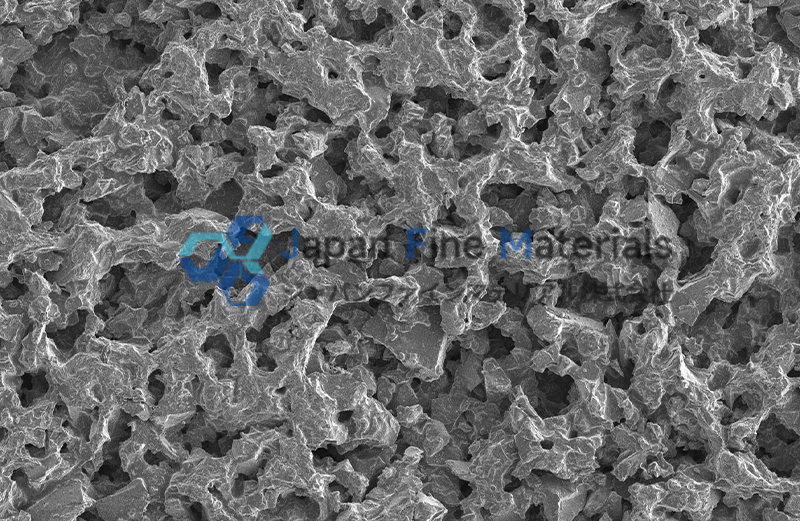
In terms of material composition, porous ceramics are typically based on oxide or carbide systems, with pore structures regulated through the use of pore-forming agents, template methods, or partial sintering. Their structural characteristics allow them to maintain overall rigidity and high-temperature resistance while also exhibiting certain permeability and energy transfer properties.
The relationship between their structure and performance can generally be summarized as follows:
• The continuity of the pore structure influences the fluid flow path
• Pore size distribution determines the balance between permeability and barrier properties
• The matrix material system influences overall thermal stability and chemical inertness
Since the pore structure can be designed and adjusted within a certain range, these materials can exhibit different functional behaviors in various industrial applications, such as fluid regulation, structural support, or energy transfer.
Process Mechanism of Porous Ceramic Discs
The interior of a porous ceramic disc consists of a large number of uniform or semi-uniform micropores. This structure allows gas or vacuum to form continuous channels within the material, thereby enabling uniform fluid transport and distribution.
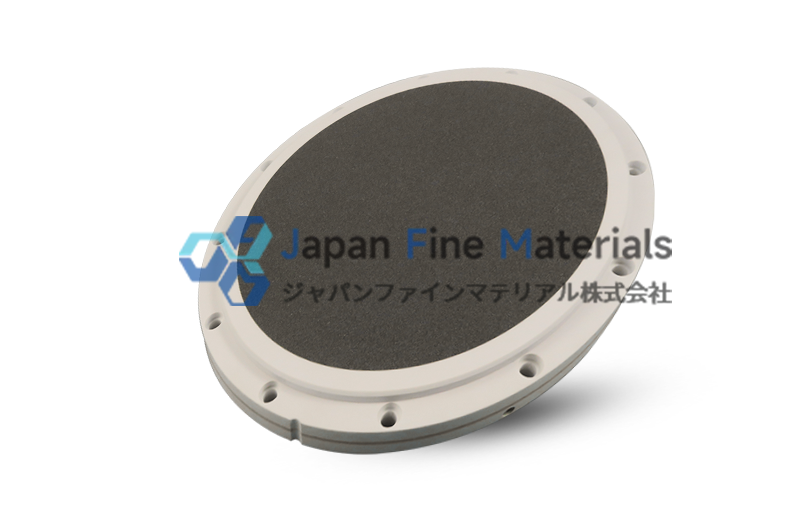
In semiconductor process environments, their functions are primarily manifested in the following aspects:
1. Uniform Gas Distribution
During processes such as thin-film deposition and etching, reaction gases passing through the porous ceramic disk are dispersed into a more uniform gas flow, maintaining a relatively consistent reaction environment on the wafer surface and helping to improve process consistency.
2. Vacuum Adhesion and Wafer Clamping
In vacuum systems, the porous structure creates areas of continuous negative pressure distribution, which are used to secure thin materials such as wafers and glass substrates. Compared to traditional contact-based clamping methods, this approach minimizes mechanical contact with the surface, helping to reduce surface scratches or localized stress concentrations.
3. Exhaust and Reaction Byproduct Control
During the operation of the process chamber, the porous ceramic disk assists in gas evacuation, helping to disperse byproducts throughout the space and reduce localized accumulation, thereby providing auxiliary support for maintaining cleanliness within the chamber.
4. Heat Transfer and Temperature Equalization
The porous ceramic structure possesses stable heat transfer characteristics. Under high-temperature process conditions, it can facilitate heat diffusion or serve as a thermal buffer, thereby reducing local temperature gradients to a certain extent and improving the stability of the process environment.
5. Particle Control and Airflow Buffering
Before gas enters the reaction chamber, the porous structure buffers and filters the gas flow, smoothing its flow pattern and thereby reducing the impact of particle turbulence on the wafer surface.
Typical Applications of Porous Ceramic Discs in Semiconductors
Porous ceramic discs are typically not used as standalone functional components in semiconductor equipment but are integrated into key process modules, working in conjunction with vacuum systems, gas delivery systems, and thermal control structures. Their specific placement varies depending on the type of process (deposition, etching, cleaning, thermal processing, etc.).
Wafer Vacuum Suction Platform
During wafer handling and process clamping, porous ceramic discs are often integrated into vacuum suction platforms. The internal microporous structure creates a continuous negative pressure zone, allowing the wafer to adhere to the support surface and achieve stable positioning. This structure helps reduce localized stress concentration and minimizes the risk of surface damage caused by mechanical clamping, making it particularly suitable for handling thin wafers or precision substrates.
Gas Distribution Systems
In processes such as thin-film deposition (CVD, PECVD) and etching, porous ceramic discs can serve as gas distribution media. Once process gases enter the material, they are gradually released into the reaction chamber through the microporous network, resulting in more uniform gas flow distribution. This helps mitigate concentration gradient issues within the reaction zone and improves process consistency.
Reaction Chamber Exhaust and Exhaust Gas Management Module
During semiconductor process reactions, by-product gases and unreacted residues are generated. Porous ceramic discs can be used in exhaust paths or buffer zones to disperse and guide gas flow through their porous structure, making the gas extraction process smoother and reducing the impact of local turbulence on the cleanliness of the chamber.
Heat Treatment and Temperature Control Auxiliary Structures
In certain high-temperature or temperature-sensitive process equipment, porous ceramic discs can be used in heat diffusion or thermal insulation buffer zones. Their internal pore structure helps reduce localized heat concentration, resulting in a more balanced temperature distribution and thereby providing auxiliary support for process window stability.
Clean Airflow Buffer and Particle Control Zones
At the inlet section where gas enters the process chamber, porous ceramic discs can serve as a medium for airflow rectification and buffering. By dispersing the velocity and direction of the airflow, they reduce the impact of high-speed gas flow on the disturbance of particles within the chamber, resulting in more consistent performance in overall clean environment control.
Key Performance Factors
In semiconductor applications, the actual performance of porous ceramic discs typically depends on the synergistic design of multiple structural and process parameters. These factors collectively influence their suitability for gas control, vacuum adsorption, and thermal management processes.
Pore Structure
Pore size and the uniformity of its distribution directly influence the transmission paths of gas or vacuum within the material. A more uniform pore structure generally helps create a more stable fluid distribution, whereas structures with significant variations in pore size may lead to localized flow inconsistencies.
Porosity
Porosity determines the balance between overall flow capacity and structural density. Under different process conditions, porosity settings must typically be matched to gas flow requirements and system pressure ranges to achieve relatively stable operational performance.
Thickness Design
Thickness not only affects the gas flow path within the material but also influences pressure decay characteristics. In practical engineering design, thickness must be determined by comprehensively considering both the available structural space within the equipment and the required process response speed.
Material Systems
Different ceramic materials vary in terms of thermal stability, chemical inertness, and mechanical strength. For example, alumina and silicon carbide systems have different performance priorities in high-temperature environments; therefore, material selection is typically tied to the specific process conditions.
Porous Ceramic Discs vs. Traditional Structural Components
Compared to metal porous structures, quartz components, or polymer-based porous materials, porous ceramic discs in semiconductor processes function more as "functional support components," with the primary differences lying in material properties and process compatibility.
• In terms of thermal stability, porous ceramic structures maintain relatively stable morphology and pore structures even within higher temperature ranges and are not prone to significant deformation due to thermal cycling; therefore, they are more suitable for process environments involving periodic heating and cooling cycles.
• In terms of chemical environment adaptability, compared to certain metals or polymeric materials, porous ceramics exhibit lower reactivity toward process gases and byproducts. They can be used in more complex gas systems, thereby reducing the material’s interference with the process environment.
• Regarding cleanliness control, the surface and internal pore structure of porous ceramics pose a low risk of particle shedding, making them more effective at maintaining the required cleanliness standards within the chamber during long-term use.
In terms of structural stability and service life, porous ceramics exhibit a robust pore network that resists significant structural collapse or deformation, thereby reducing the frequency of replacement to some extent.
Additionally, in terms of functional integration, porous ceramic discs can typically perform multiple functions simultaneously, such as gas distribution, vacuum adsorption, and thermal management, whereas traditional single-material components often require multiple components to achieve similar functional configurations.
|
VS |
Porous Ceramic Disc |
Metal Porous Structures |
Polymer materials |
Quartz structural components |
|
Thermal stability |
Adaptability to higher temperatures |
Moderate |
Low |
Good |
|
Chemical compatibility |
Performs relatively stably |
May be susceptible to corrosion |
Susceptible |
Relatively stable |
|
Cleanliness |
Fairly good |
Moderate |
Weak |
Good |
|
Functional Integration |
Multi-functional integration |
Somewhat limited |
Many limitations |
Simple structure |
Design and Selection Factors
In semiconductor process systems, porous ceramic discs primarily serve functions such as gas distribution, vacuum adsorption, exhaust control, and thermal management. Their core value lies in utilizing a stable microporous structure to achieve a more balanced distribution of fluid and temperature within the process environment, thereby establishing a more controllable foundation for the wafer processing workflow.
In practical applications, the selection of porous ceramic discs is typically evaluated based on the following criteria:
• Process gas type and flow rate requirements
• Vacuum system pressure range
• Wafer size and mounting method
• Temperature control range
• Chamber cleanliness requirements
By comprehensively matching these parameters, the material structure can be better adapted to specific equipment requirements.
For further information regarding structural design solutions for porous ceramic discs in semiconductor equipment, material selection recommendations, or custom manufacturing capabilities, please contact JFM to obtain additional technical documentation and application support.