Design Guidelines for Custom Alumina Ceramic Components
-
2026-04-17 Industry News






Explore key design guidelines for custom alumina ceramic components. Learn how to balance performance, manufacturability, and cost in demanding industrial applications.
Foreword
In industrial applications, aluminium oxide ceramics are often regarded as a ‘mature and stable’ engineering material; however, in the actual manufacturing process, they are far from being a product that can be simply standardised. Different equipment, operating conditions and service life targets often impose entirely different requirements on aluminium oxide ceramics, and it is precisely these differences that form the fundamental basis for the value created by customisation.
From a business operations perspective, what is truly required is not a single, fixed-specification aluminium oxide ceramic, but rather a solution capable of long-term, stable operation within a specific application environment. This implies that the selection of the material system, the suitability of the structure for forming and sintering, the need for precision machining of critical areas, and the compatibility of the surface finish with actual operating conditions must all be systematically considered at an early stage of the project.
In many projects, even aluminium oxide ceramic components that appear similar in shape may differ entirely in their internal material design, forming methods and machining processes. If the sole objective is to ‘produce to drawing’, issues such as assembly deviations, inadequate performance or unstable service life are likely to emerge at a later stage.
Therefore, true customisation of aluminium oxide ceramics is not merely a matter of adjusting dimensions or changing grades, but rather a process of holistic planning involving materials, processes and structure, based on the actual application scenario.
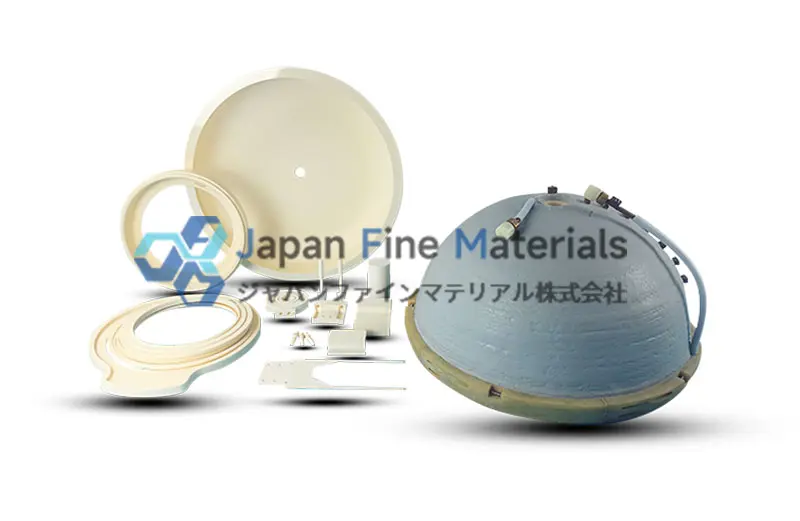
Customisation of Alumina Ceramic Grades and Formulations
In all customisation projects, the primary focus is typically we confirm with clients the material grade and formulation system of the aluminium oxide ceramics, rather than individual dimensions or machining methods.
Within the industry, alumina ceramics are typically categorised by purity, such as the common grades of 92%, 95%, 96% and 99%. These grades do not inherently imply any absolute superiority or inferiority; rather, they correspond to different application requirements. In our practical discussions, we focus more on where the product will be used, the operating conditions it will endure, and the specific problems it is intended to solve.
|
Alumina Grades |
Typical Applications |
|
90%–92% |
General industrial structural components, low wear resistance requirements |
|
92%–95% |
Components requiring moderate wear resistance or electrical insulation |
|
95%–96% |
Precision mechanical structural components, wear-resistant parts |
|
96%–99% |
High-performance functional components, critical equipment components |
|
99%+ |
Semiconductor equipment components, ultra-high-purity functional parts |
During the material customisation phase, we typically work with clients to confirm each detail from the following perspectives:
• Whether the product is intended primarily for structural support or as a functional component
• Whether long-term stable operation is required, rather than short-term use
• Does the operating environment involve high temperatures, vacuum conditions, or scenarios with high stability requirements?
• Is there a clear emphasis on wear resistance or electrical insulation properties?
Based on this information, we determine whether to adopt a conventional aluminium oxide ceramic system or a higher-purity material solution.
For example, in certain semiconductor-related equipment, companies often prefer high-purity alumina ceramics to minimise the impact of material performance fluctuations during long-term operation; whereas in some general industrial applications, the balance between overall performance and cost is of greater importance.
It should be noted that even within the same purity grade, the final performance of aluminium oxide ceramics is influenced by the formulation and sintering process. Therefore, in bespoke projects, we do not simply ‘produce according to grade’, but instead adapt the material formulation and process parameters to meet specific application requirements, ensuring that material performance is truly aligned with the intended use.
Custom Dimensions, Thickness and Structural Forms
When customising aluminium oxide ceramics, dimensions and structural configurations are often the most intuitive and critical aspects. We have observed that many companies, when first engaging in ceramic customisation, tend to focus solely on length, width and height; however, in reality, wall thickness, the layout of holes, and the rationality of steps and grooves all have a direct impact on the product’s forming, sintering and performance.
At this stage, we typically work with clients to confirm the following key aspects:
• Dimensional range and tolerance estimates: to ensure the product fits precisely with equipment interfaces during assembly
• Wall thickness distribution: Uniform thickness reduces sintering deformation and internal stresses
• Hole and channel design: avoiding holes that are too close to the edges or spaced too closely together to ensure structural stability
• Special features: such as steps, grooves or irregular contours, which are often used to secure components or guide the flow of gases or liquids
We also provide clients with a simple ‘Design for Manufacturability Checklist’ to help quickly identify which designs may encounter issues during the sintering or forming stages:
|
Structure type |
Potential Risks |
Recommended Approach |
|
Thin-walled or slender structures |
Prone to deformation during sintering |
Add supports or increase wall thickness |
|
Holes located near the edge |
Prone to cracking |
Adjust hole spacing or modify hole shape |
|
Steps/grooves |
Difficult to form |
Optimise the angle or add a fillet |
|
Irregular contours |
High difficulty in post-processing |
Design to suit the forming process |
In certain ceramic structural components for semiconductor equipment—such as parts used in vacuum chambers or gas distribution systems—the structural design not only determines mechanical strength but also influences the uniformity and cleanliness of gas flow. For such applications, we engage in multiple rounds of consultation with the client during the design phase to ensure that the positioning of holes, steps and grooves is not only manufacturable but also maintains optimal performance during operation within the equipment.
In summary, during the customisation of dimensions and structure, we emphasise the principles of prioritising function, manufacturability and cost control, rather than simply ‘manufacturing to drawing’. By confirming these details in advance, subsequent sintering, machining and assembly processes can proceed smoothly, avoiding rework or adjustments during the production phase.
Selection of Forming Processes
The selection of the forming process is a crucial aspect of customising aluminium oxide ceramics. Different forming methods not only determine whether the product can be successfully formed but also affect subsequent dimensional stability, structural complexity and overall yield. We comprehensively evaluate suitable forming solutions based on the product’s structural characteristics, batch size and functional requirements.
Common Moulding Processes:
|
Forming Process |
Scope of Application |
Features and Benefits |
|
Dry Press Moulding |
Simple, uniform-thickness parts |
Mature process, low cost |
|
Isostatic Pressing |
Complex-shaped or parts with intricate internal channels |
High internal density and excellent consistency |
|
Injection moulding |
Parts with thin walls and complex shapes |
High precision and great design flexibility |
|
Cast/Poured Moulding |
Thin sheets or multi-layer structures |
Smooth surface, suitable for semiconductor applications |
During the actual customisation process, we take the following factors into account:
• Structural complexity: Simple shapes can typically be produced using dry pressing, whilst complex, irregularly shaped components may require injection moulding or isostatic pressing.
• Dimensional consistency: For parts requiring high precision, we prioritise moulding methods that offer more stable dimensional control.
• Batch size and cost: For high-volume production, selecting the appropriate forming process can significantly reduce unit costs whilst ensuring product consistency.
In certain semiconductor manufacturing equipment applications, where components must operate for extended periods in highly clean and stable environments, we recommend employing more refined forming methods, such as tape casting or isostatic pressing. This optimises internal structural density and ensures precise hole positioning, thereby enhancing overall reliability and service life.
This approach not only helps customers realise their design intent but also mitigates potential issues at the forming stage, ensuring smoother and more controllable subsequent sintering and machining processes.
Sintering Regimes and Densification
Sintering is one of the critical stages in the manufacture of aluminium oxide ceramics; it determines the ceramic’s density, structural stability and long-term performance. For bespoke projects, the sintering regime itself is a customisation requirement that must be confirmed in advance.
We focus on confirming the following aspects:
• Densification Objective: Depending on the product’s application, we clarify with the client whether the aim is to achieve high density or to retain a certain porosity whilst ensuring basic strength and stability.
• Structural Consistency: Materials undergo shrinkage during sintering; we assess the shrinkage characteristics of structural shapes, particularly in irregularly shaped holes, grooves and thin-walled areas.
• Temperature and Time Profiles: Sintering temperatures and holding times must be optimised according to material grade, structural thickness and intended application. We confirm whether the component needs to withstand high-temperature or prolonged operational environments.
In certain semiconductor equipment applications, ceramic components are typically subjected to vacuum, high temperatures and prolonged mechanical stress; consequently, the sintering regime imposes higher demands on material stability and surface quality. To meet these requirements, we typically incorporate the following verification points into the sintering plan:
|
Sintering Focus Areas |
Purpose of Customisation |
|
Internal Density |
To enhance mechanical strength and wear resistance |
|
Compensation for dimensional shrinkage |
Ensuring dimensional accuracy of critical mating surfaces |
|
Surface Microstructure |
Reduces the risk of particle shedding and ensures cleanliness |
|
Long-term thermal stability |
Suitable for use in high-temperature or cyclic environments |
Through these targeted adjustments, we are not only able to optimise the stable operation of ceramic components, but also meet our customers’ high demands for consistent performance and reliability during long-term equipment operation.
In summary, when customising aluminium oxide ceramics, the sintering regime and densification direction are not optional considerations, but rather the core factors determining the success or failure of the entire product. Clarifying these requirements in advance allows us to guarantee performance whilst avoiding repeated modifications or quality fluctuations during the production phase.
Dimensional Tolerance Control and Precision Machining Range
Post-sintering, aluminium oxide ceramics possess extremely high hardness; without clearly defining machining and tolerance requirements in advance, issues are likely to arise during functional installation or assembly. During the customisation process, we work closely with clients to confirm dimensional tolerances and machining ranges in detail, ensuring that each component meets performance requirements whilst avoiding unnecessary machining costs.
Firstly, we categorise the different areas of the product by function:
• Assembly positioning surfaces: These are typically critical surfaces where the product must fit precisely with equipment. Stricter tolerance controls are established for these locations to prevent misalignment or looseness during installation.
• Functional contact surfaces: These include surfaces related to wear resistance, friction or electrical insulation. Although these surfaces do not directly affect overall assembly dimensions, they are critical to performance. We determine machining accuracy and surface finish by considering material grades (such as aluminium oxide ceramics of 92%, 95% or 99% purity) and machining capabilities.
• Non-critical areas: These areas have relatively relaxed dimensional requirements and typically need only to fulfil their functional purpose. In machining, we prioritise cost and efficiency rather than expending resources on precision machining.
In certain applications for semiconductor equipment manufacturing, we pay particular attention to functional contact surfaces and assembly surfaces, as even minute deviations can directly affect the stability of equipment operation and production line yield. Therefore, during the customisation phase, we provide a clear machining classification scheme, ensuring customers understand the tolerance grades, machining methods and necessary inspection procedures required for each area.
Furthermore, we will discuss with the client:
• whether precision machining is required for all surfaces, or only for critical surfaces
• Whether dimensional inspection or functional verification is required following precision machining
• How to maintain dimensional consistency across batches during mass production
In this way, we not only help clients realise their design intentions but also ensure product manufacturability and stability whilst controlling costs.
Surface Condition and Surface Treatment Methods
Surface condition is often an aspect of aluminium oxide ceramics that is easily overlooked during actual use, yet it directly affects the performance, service life and reliability of the component. When communicating with clients, surface treatment typically becomes a key focus of early discussions, as different surface requirements will influence post-sintering finishing and precision machining solutions. During the customisation process, we usually confirm the following aspects with the client:
Surface Roughness and Flatness
Requirements for surface roughness vary significantly across different applications. For example, in friction-contact components, a lower surface roughness is required to minimise wear; whereas for non-contact components, roughness requirements can be moderately relaxed.
Types of Surface Treatment
In practical applications, it may be necessary to polish, sandblast or retain the original sintered surface. We therefore propose suitable solutions based on the ceramic’s hardness and machinability.
Functional Requirements
For certain components used in semiconductor manufacturing equipment, the ceramic surface must not only be flat but also meet cleanliness and particle control requirements to prevent minute particles from affecting the production environment.
Surface Wear Resistance and Contamination Resistance
If ceramic components are subjected to prolonged friction or dusty environments, surface treatment can enhance wear resistance and reduce the accumulation of contaminants.
In certain projects, we also conduct surface testing and validation to ensure that the customised treatment solution not only meets functional requirements but also enables stable mass production. In this way, surface treatment ceases to be a mere ancillary process and becomes an integral part of the entire customisation process, closely linked to performance.
Functional Performance Customisation
For functional aluminium oxide ceramic components, it is not sufficient to merely guarantee dimensional accuracy and structural integrity. During the customisation process, we typically work closely with the client to confirm the material’s performance characteristics in actual use, ensuring the ceramics can meet the operational requirements of long-term service.
During these discussions, we typically focus on the following aspects:
• Electrical Properties: Whether high electrical insulation or low dielectric loss is required; particularly in semiconductor equipment, the stability of electrical insulation is crucial to the operational safety of the entire system.
• Thermal properties: Whether the ceramic needs to withstand high-temperature environments, or maintain dimensional and structural stability in scenarios with frequent temperature fluctuations.
• Mechanical durability: Whether cracks or wear will occur under long-term loading, which is particularly critical for components in automated equipment.
• Environmental compatibility: Will the equipment be exposed to corrosive media, vacuum environments, or settings with high cleanliness requirements?
We typically work with clients to analyse these performance requirements and draw up a list of functional priorities:
|
Functional Category |
Customisation Focus |
Application Notes |
|
Electrical Performance |
High insulation, low dielectric loss |
Electrical insulation components for semiconductor manufacturing equipment |
|
Thermal Stability |
High-temperature resistance, thermal expansion matching |
Applications involving significant process temperature fluctuations or frequent thermal cycling |
|
Mechanical properties |
Abrasion resistance, impact resistance |
Automated transmission or load-bearing components |
|
Environmental adaptability |
Corrosion resistance, high cleanliness |
Contact with chemical media or high-cleanliness environments |
In this way, potential risks can be eliminated at the design and material selection stages, whilst optimising material grades, forming processes and machining strategies to ensure that the final ceramic components delivered are not only ‘functional’ but also capable of long-term, stable operation in demanding environments such as semiconductor manufacturing.
Overview of customised alumina ceramic projects
|
Customisation Categories |
Customisable Projects |
Description / Purpose |
|
Material Grade |
Alumina Purity (92%, 95%, 96%, 99.7%, 99.9%) |
Select according to the operating environment and performance requirements |
|
Product Dimensions and Structure |
External dimensions, hole positions, slot positions, thin-walled/irregular structures |
Ensuring manufacturability and assembly performance |
|
Forming methods |
Dry pressing, injection moulding, isostatic pressing, etc. |
Balancing Complex Structures and Consistency |
|
Sintering and densification |
Sintering regimens and density control |
Structural stability and long-term reliability |
|
Precision machining |
Machining of functional and mating surfaces |
Ensuring Accuracy and Performance |
|
Surface finish |
Polishing, sandblasting, cleanliness, etc. |
Meeting requirements for friction, contamination resistance or semiconductor cleanliness |
|
Functional Properties |
Wear resistance, high-temperature resistance, electrical insulation, etc. |
Meeting the requirements of different applications |
Customising aluminium oxide ceramics is not a one-off decision, but a systematic engineering process involving materials, structure, manufacturing processes and application scenarios.
Truly valuable customisation stems from the manufacturer’s expert judgement during the initial stages, rather than repeated modifications later on.
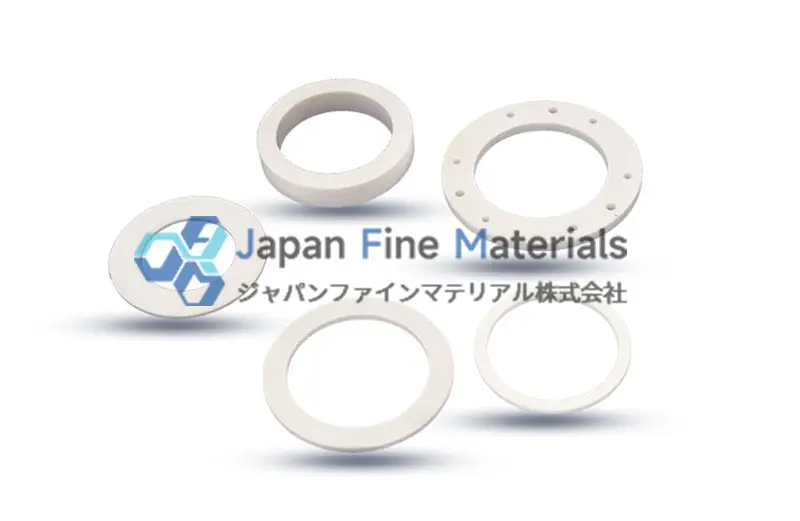
When you choose JFM, you gain more than just a product
In aluminium oxide ceramic customisation projects, JFM adheres to an application-driven approach, engaging deeply in the client’s design and engineering decision-making process to help establish long-term, sustainable solutions that balance performance, stability and cost.
If you are planning a new aluminium oxide ceramic project, or if your existing products are facing performance or service life limitations, please feel free to contact the JFM team to discuss your specific application. We will provide you with a more rational and reliable customisation pathway from a manufacturing perspective.