Alumina Ceramic vs Silicon Carbide: Key Differences Explained
-
2026-08-06 Industry News






Compare alumina ceramic vs silicon carbide to understand their differences in hardness, thermal performance, applications, and how to choose the right ceramic material.
Introduction
In the field of high-performance industrial materials, both alumina ceramics and silicon carbide ceramics are extremely important high-temperature-resistant and wear-resistant materials. As modern industry places ever-increasing demands on equipment durability, production efficiency, and process precision, engineers and procurement professionals face growing challenges in material selection. Although both types of ceramics possess high hardness and corrosion resistance, there are significant differences in their chemical composition, mechanical properties, thermal characteristics, and suitable industrial applications.
Understanding these key differences not only helps optimize equipment performance but also reduces maintenance costs, extends the service life of components, and ensures long-term, stable material performance in demanding environments such as semiconductor manufacturing, machining, energy, and chemical processing. This article will provide a detailed analysis of the core differences between alumina ceramics and silicon carbide ceramics, offering professional guidance for industrial material selection.
Alumina Ceramics
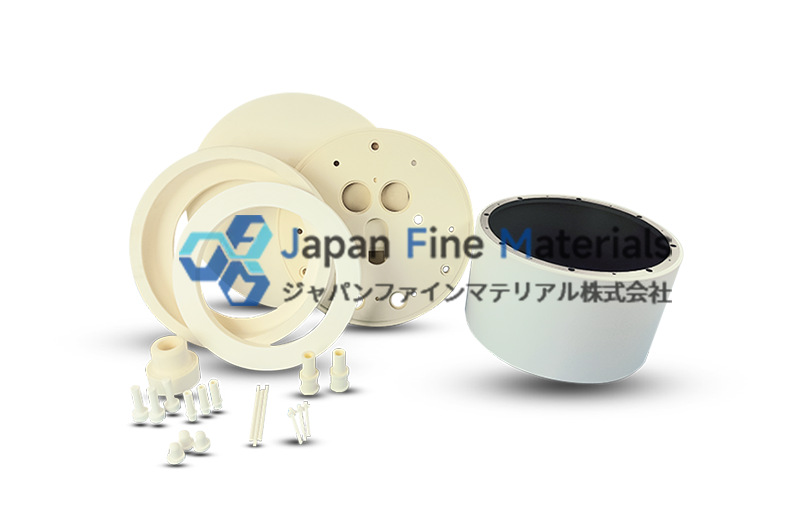
Alumina ceramics are a type of engineering ceramic material primarily composed of powder processing, molding, and alumina (Al₂O₃), formed throughhigh-temperature sintering. They are not only highly hard and wear-resistant but also possess excellent insulating properties and chemical stability.
Alumina ceramics are widely used in industry, serving both as structural materials to withstand mechanical loads and as protective linings to resist corrosion and wear.
Furthermore, by adjusting its purity and microstructure, alumina ceramics can achieve different combinations of properties, such as enhanced wear resistance or increased thermal stability. They play a vital role in electronic, electrical, mechanical, and semiconductor equipment, and are particularly well-suited for applications requiring wear resistance, corrosion resistance, and long-term stable operation.
Silicon Carbide Ceramics
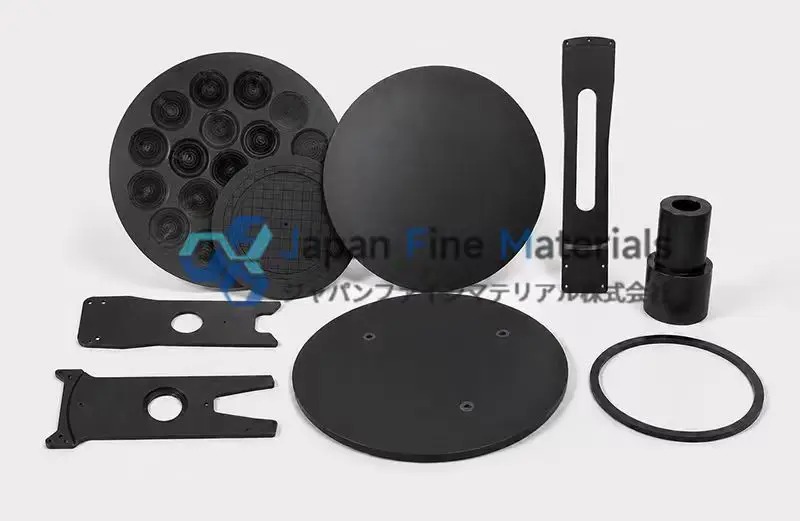
Silicon carbide (SiC) ceramics are a high-performance ceramic material composed of silicon and carbon. With a hardness approaching that of diamond, they exhibit exceptional resistance to high temperatures and thermal shock.
Silicon carbide ceramics are not only corrosion-resistant but also maintain high stability in oxidizing environments, enabling them to perform exceptionally well in industrial settings characterized by high temperatures, severe wear, and rapid temperature changes.
Due to its high strength and thermal conductivity, silicon carbide ceramics can be used in wear-resistant nozzles, heat exchanger components, and high-temperature process parts in semiconductor manufacturing equipment, as well as in cutting or grinding tools under specific conditions.
Through microstructural optimization , formulation design and process control,, the crack resistance and impact resistance of to meet silicon carbide ceramicscan be further optimized specific industrial requirements.
Chemical Composition and Structure
Alumina ceramics consist primarily of aluminum oxide (Al₂O₃) and are a typical engineering ceramic material. They haveexhibiting a certain degree of resistance in a stable crystal structure and good stability various acidic media and some alkaline chemical, media. In industrial applications, alumina ceramics are typically classified into three categories based on purity:
• Engineering grade (approximately 95%–98%): These contain relatively higher levels of additives and glass phases, are relatively lower in , and commonly costare used for wear-resistant linings and general mechanical parts.
• High-purity grade (approximately 99%–99. 7%): With lower levels of impurities and glass phase, this grade is commonly used in precision electronic components , insulating parts, and applications requiring high cleanliness.
• Ultra-High-Purity Grade (99.9% and above): Primarily used in semiconductor manufacturing, optical ceramics, and specialized electronic equipment, where extremely high material consistency and stability are required.
Silicon carbide (SiC) ceramics are composed of silicon and carbon. They feature a dense crystalline structure, extremely high hardness, and excellent wear resistance and thermal conductivity. They perform exceptionally well under high-temperature and high-wear conditions, while also exhibiting good thermal shock resistance. Although they may undergo slight oxidation in highly oxidizing environments, their performance advantages are evident in semiconductor manufacturing equipment, heat exchangers, and high-temperature mechanical components.Its performance advantages are typically evident in semiconductor manufacturing equipment, heat exchangers, and high-temperature mechanical components; however, in highly oxidizing or high-temperature oxidizing environments, the material’s performance may be affected by temperature, atmosphere, and duration of use.
|
Material |
Main Components |
Crystal Structure |
Chemical Stability |
|
Alumina Ceramics |
Al₂O₃ |
Hexagonal crystal system |
High |
|
Silicon carbide ceramics |
SiC |
Hexagonal/Cubic crystal system |
Relatively high |
Comparison of Mechanical Properties
Alumina ceramics have a Mohs hardness of approximately 9. Their flexural strength typically reaches about 300–400 MPa , while their compressive strength is usually significantly higher than this range however, the material generally ;isquite brittle.They are prone to fracture when subjected to impact loads, sharp impacts, or bending forces; therefore, support structures or thick-walled designs must be considered when designing parts. Their excellent wear resistance makes them suitable for applications such as pump linings, valve components, and electronic insulating parts.
Silicon carbide ceramics have even higher hardness (Mohs hardness of approximately. Silicon carbide ceramics generally have higher hardness (Mohs hardness of approximately 9–9.5) and good thermal shock resistance, making them more suitable for applications involving rapid temperature changes and high thermal stress. 9.5–9.7) and extremely strong thermal shock resistance, enabling them to withstand rapid temperature changes and high stress loads without fracturingTheir advantages include:
• High wear resistance: Suitable for wear-resistant nozzles, seals, and components used in abrasive processing
• High thermal shock resistance: Suitable for high-temperature components in thermal cycling, CVD, or CMP processes
• High mechanical strength: Suitable for core support components and high-load mechanical parts in semiconductor equipment
|
Performance Specifications |
Alumina Ceramics |
Silicon carbide ceramics |
|
Mohs hardness |
9 |
9.5–9.7 |
|
Flexural strength |
Approx. 300–400 MPa |
Approx. 350–450 MPa |
|
Brittleness |
High |
Lower |
|
Thermal Shock Resistance |
Moderate |
Excellent |
Differences in Thermal Properties
Alumina ceramics exhibit stable performance in high-temperature environments and have a low coefficient of thermal expansion (approximately 7–8 × 10⁻⁶/K), allowing them to maintain dimensional stability in scenarios where temperature changes are not extreme. However, alumina has a relatively low thermal conductivity (approximately 20–30 W/m·K), which may limit its performance in applications requiring rapid heat dissipation or high heat flux densities.
Silicon carbide ceramics have extremely high thermal conductivity (over 120 W/m·K) and a low coefficient of thermal expansion (approximately 4 × 10⁻⁶/K), enabling them to maintain dimensional stability even under high-temperature cycling or rapid temperature changes. In scenarios involving rapid temperature changes, their thermal shock resistance typically outperforms that of alumina, them more makingsuitable for CVD high-temperature components , heat exchangers, and certain parts of semiconductor manufacturing equipment.
|
Material |
Thermal Conductivity (W/m·K) |
Thermal Expansion (×10⁻⁶/K) |
High-Temperature Stability |
|
Alumina Ceramics |
20–30 |
7–8 |
High |
|
Silicon carbide ceramics |
120+ |
4 |
Extremely high |
In addition, silicon carbide offers higher reliability under thermal cycling conditions, reducing microcracks or deformation caused by thermal expansion differences, thereby improving the long-term stability and service life of equipment.
Industrial Applications
Thanks to its wear resistance, chemical inertness, and insulating properties, alumina ceramic is suitable for standard operating conditions and auxiliary components:
• Electronic Insulation Components: High-voltage electronic assemblies, insulating bushings
• Pump casing linings and valve components: Wear- and corrosion-resistant, suitable for the chemical and mechanical industries
• Semiconductor equipment components: Insulating supports, wear-resistant and parts,certain components related to CMP, CVD, and PVD
Silicon carbide ceramics, on the other hand, offer distinct advantages under high-temperature, high-hardness, and thermal shock conditions, making them suitable for core high-temperature processes and extreme environments:
• High-speed cutting tools and abrasive processing equipment
• Nozzles, heat exchangers, and furnace linings
• Semiconductor equipment high-temperature or corrosion-resistant components ( such as CVD and other parts for processes)
Through appropriate combinations, engineers can select the right materials based on specific operating conditions. For example, in semiconductor equipment , aluminum oxide can be used for insulating supports, wear-resistant bushings and other auxiliary components,, while silicon carbide is better suited for high-temperature , corrosion-resistant, or rapid-temperature-change-related components, thereby helping to balance performance and cost.
Cost and Machinability
Alumina ceramics are relatively low-cost, and forming and sintering processes are well-established; after sintering typically still their,theyrequire through methods such as and precision machining diamond cutting, grinding, drilling, making them suitable for mass production. With mature machining processes and high production efficiency for standardized parts, they are widely used in industrial components and semiconductor auxiliary parts.
Silicon carbide ceramics have high hardness and are difficult , typically to machinerequiring diamond tools, precision grinding equipment, and specialized processes. Their manufacturing costs are generally higher than those of alumina ceramics, but they offer significant performance advantages under high-speed, high-temperature, and wear-resistant conditions.
Alumina Ceramics vs. Silicon Carbide Ceramics
|
Properties |
Alumina Ceramics (Alumina Ceramic) |
Silicon Carbide (SiC) Ceramics |
|
Main Components |
Al₂O₃ |
SiC |
|
Crystal Structure |
Hexagonal crystal system |
Hexagonal/Cubic crystal system |
|
Thermal Properties |
Moderate thermal conductivity, low coefficient of thermal expansion |
High thermal conductivity, very low coefficient of thermal expansion |
|
Hardness and Wear Resistance |
High hardness, high wear resistance |
Extremely high hardness, excellent wear resistance |
|
Chemical and Electrical Properties |
High chemical stability, excellent electrical insulation |
High chemical stability, fair electrical insulation |
|
Compressive Strength and Thermal Shock Resistance |
Good compressive strength, fair thermal shock resistance |
High compressive strength, excellent thermal shock resistance |
|
Processing Difficulty and Cost |
Fairly good processability, low cost |
Difficult to process; higher cost |
|
Typical Applications |
Electronic insulating components, pump body linings, valve components, semiconductor equipment parts |
High-speed cutting tools, nozzles, heat exchangers, high-temperature process components for semiconductor equipment |
Alumina ceramics and silicon carbide ceramics each have their own unique advantages; the choice of material should be based on specific operating conditions and performance requirements.
With its high wear resistance, excellent chemical stability, and insulating properties, alumina ceramic is suitable for use in corrosive environments, mechanical parts, and electronic and semiconductor equipment, providing long-term, stable performance.
Silicon carbide ceramics, with their extremely high hardness, excellent thermal conductivity, and resistance to thermal shock, excel in environments characterized by high temperatures, rapid temperature changes, and severe abrasion, making them an ideal choice for demanding applications such as semiconductor manufacturing equipment, heat exchangers, and high-speed mechanical components.
If you are looking for high-quality alumina or silicon carbide ceramic products, or need customized solutions tailored to specific operating conditions, contact JFM today and let our team of experts provide comprehensive support for your industrial projects.