Electrostatic Chuck vs Vacuum Chuck: Key Differences Explained
-
2026-09-08 Industry News






Compare electrostatic chuck vs vacuum chuck by working principle, wafer holding, temperature control, cleanliness, applications, and key selection factors.
Introduction
In semiconductor manufacturing, wafer processing, testing equipment, and precision machining systems, how workpieces are secured directly impacts equipment design, process environments, and subsequent processing methods. Electrostatic chucks and vacuum chucks are both common workpiece clamping solutions, but they are not simply interchangeable.
Vacuum chucks primarily rely on pressure differentials to generate holding force, whereas electrostatic chucks use electrostatic forces to grip wafers or other workpieces. Due to their different operating principles, there are significant differences between the two in terms of adaptability to vacuum environments, system architecture, suitable workpieces, temperature management, and equipment costs.
For equipment designers and procurement personnel, determining which solution is more suitable is not simply a matter of comparing“suction force” in isolation; rather, it requires a comprehensive evaluation that takes into account the process environment, wafer type, temperature requirements, cleanliness, and equipment structure.
What Is an Electrostatic Chuck?
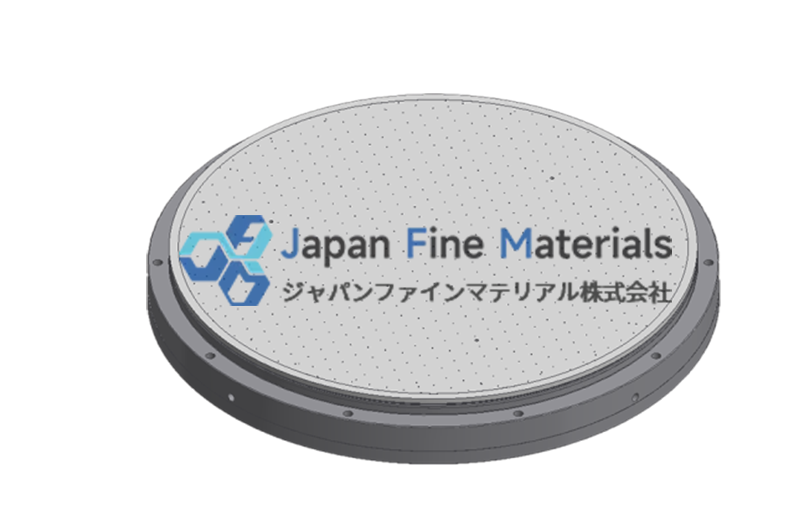
An electrostatic chuck is a clamping component that secures wafers or other flat workpieces through electrostatic forces; it is commonly found in semiconductor manufacturing equipment.
A typical electrostatic chuck usually consists of electrodes, an insulating or dielectric layer, a ceramic substrate, and related electrical components. During operation, a voltage is applied to the internal electrodes, creating an electrostatic attraction between the wafer and the chuck, thereby causing the wafer to adhere to the chuck’s surface.
Based on their operating principles, common types of electrostatic chucks primarily include:
• Coulomb-type Electrostatic Chuck
• Johnsen-Rahbek (J-R) Type
The Coulomb-type primarily relies on the polarized charges generated in the dielectric layer by an electric field to attract the wafer via Coulomb forces; its dielectric layer has an extremely high resistivity (typically > 10¹⁴ Ω·cm); the Johnsen-Rahbek type (J-R type), on the other hand, utilizes the Johnsen-Rahbek force generated by the dielectric layer under a certain voltage. This force is closely related to the volume resistivity of the dielectric material (typically between 10⁸ and 10¹¹ Ω·cm) and generates a stronger holding force through charge injection and polarization effects at the interface.
Different structures also have varying requirements regarding ceramic materials, resistivity, operating voltage, temperature, and surface condition.
Since electrostatic chucks do not rely on the surrounding gas to create a pressure differential, they are well-suited for process equipment that requires wafer clamping in low-pressure or vacuum chambers, such as:
• Plasma etching systems
• Chemical vapor deposition (CVD) systems
• Physical vapor deposition (PVD) systems
• Ion implantation systems
• Semiconductor wafer processing equipment
• Wafer Handling and Processing Systems
Practical application still requires evaluation based on specific process conditions and equipment design.
What is a vacuum cup?
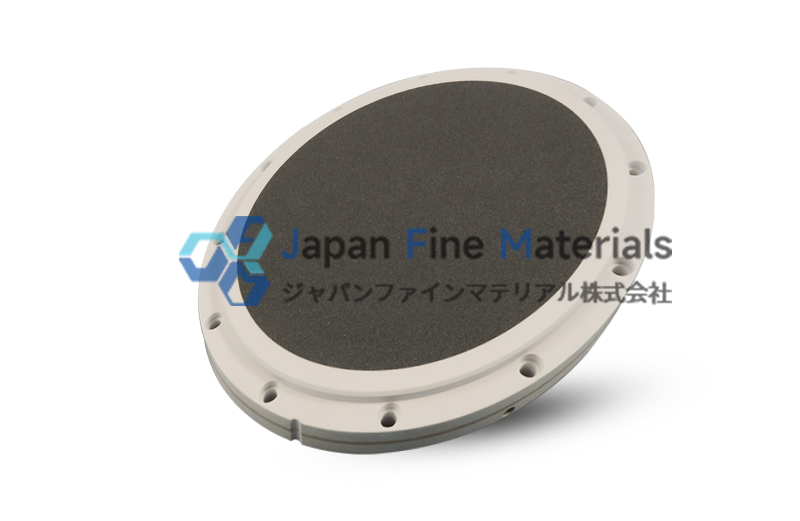
A vacuum cup is a type of clamping device that uses a vacuum system to create a pressure differential, causing the workpiece to be pressed against the surface of the suction cup.
The surface of the suction cup is typically designed with vacuum ports, grooves, or a porous structure. When the vacuum pump removes the air from the area where the workpiece contacts the suction cup, a pressure difference forms on either side of the workpiece, thereby creating an adhesive effect.
A vacuum cup system typically includes:
• The suction cup body
• Vacuum channels
• Vacuum pump
• Valves
• Sealing assembly
• Pressure Control Components
In atmospheric environments or under operating conditions with a sufficient pressure differential, vacuum cups are a relatively common method of securing objects.
For example, vacuum cups may be used in wafer inspection, optical inspection, grinding, cutting, certain packaging equipment, and other flat workpiece processing equipment.
However, its operation is highly dependent on pressure differentials. When the equipment itself is in a high-vacuum environment, the effective pressure differential that can be established between the interior and exterior of the suction cup is significantly reduced, thus limiting the application of vacuum cups.
This is also one of the key reasons why electrostatic chucks are more commonly used in certain semiconductor vacuum processes.
Different Clamping Principles
This is the most fundamental difference between electrostatic chucks and vacuum chucks.
Vacuum chucks primarily reduce the gas pressure beneath the workpiece to create a pressure differential on either side of the workpiece, thereby pressing the wafer or other flat workpiece against the chuck surface. They typically require vacuum ports, grooves, or porous structures to function in conjunction with a vacuum system.
An electrostatic chuck, on the other hand, generates an electric field via internal electrodes, creating electrostatic adhesion between the wafer and the chuck. Since atmospheric pressure is not the primary driving force in this clamping process, it is more suitable for certain low-pressure and vacuum processes.
These two distinct clamping principles also influence their requirements for process environments, material structures, and peripheral systems.
Adaptability to Vacuum Environments
The clamping effectiveness of a vacuum chuck is related to the pressure differential that can be established on both sides of the workpiece.
Under normal atmospheric pressure or conditions with sufficient ambient pressure, vacuum chucks can be used for wafer inspection, processing, handling, and the clamping of other flat workpieces. However, as the chamber pressure decreases, the available pressure differential also decreases.
Electrostatic chucks are relatively less dependent on external atmospheric pressure and are therefore better suited for certain semiconductor processes that require continuous wafer clamping within a vacuum chamber, such as plasma etching, thin-film deposition, and ion implantation.
However, the specific solution to be adopted must still be determined based on a combination of chamber pressure, wafer type, equipment structure, and actual process requirements.
Material Requirements
Vacuum chucks can be made from materials such as aluminum alloy, stainless steel, ceramics, or porous ceramics. When selecting materials, factors such as mechanical strength, machining precision, surface quality, corrosion resistance, and operating temperature are typically considered.
In addition to meeting mechanical and thermal performance requirements, electrostatic chucks must also prioritize the electrical properties of the material.
Common factors of concern include:
• Electrical resistivity
• Dielectric Properties
• Thermal conductivity
• Coefficient of thermal expansion
• Mechanical strength
• Surface Roughness and Flatness
• Plasma Resistance
In semiconductor equipment, both alumina and aluminum nitride are common ceramic materials used for electrostatic chucks. Alumina offers good insulation properties and a well-established processing infrastructure; aluminum nitride has high thermal conductivity, giving it certain advantages in applications with stringent heat transfer requirements.
The specific material must still be selected based on the electrostatic chuck’s structure, resistivity requirements, process temperature, and equipment environment.
Temperature Control Methods
In some semiconductor manufacturing processes, the chuck is used not only to secure the wafer but also to help manage the wafer’s temperature.
Vacuum chucks can also achieve temperature control through integrated cooling channels or resistive heaters; however, this type of temperature control is indirect, primarily affecting the workpiece through heat conduction or convection. Its temperature control efficiency and uniformity are limited by the thermal conductivity of the chuck’s base material and its structural design, with the workpiece primarily being affected by heat conduction; in the presence of a gaseous medium, convective heat transfer may also play a supplementary role.
In certain etching and deposition equipment, electrostatic chucks are often used in conjunction with cooling channels, heating elements, temperature sensors, and structures such as gas cooling on the backside of the wafer.
For example, in some plasma etching processes, helium is introduced to the backside of the wafer to improve heat transfer conditions between the wafer and the chuck.
Therefore, if the equipment has stringent requirements for wafer temperature control, in addition to comparing clamping methods, it is necessary to simultaneously consider the thermal conductivity of the chuck material, its internal structure, and the overall thermal management design.
System Structure and Cost
The system structure of a vacuum chuck is typically relatively simple, primarily consisting of a vacuum source, piping, valves, sealing structures, and the vacuum channels inside the chuck.
Maintenance typically focuses on vacuum leaks, channel blockages, the condition of seals, and the surface condition of the chuck.
Electrostatic chucks, on the other hand, require additional design elements such as electrodes, dielectric layers, high-voltage power supplies, electrical controls, and wafer release mechanisms. Some products also integrate cooling, heating, or temperature monitoring systems, making the overall design and manufacturing processes typically more complex.
This also further affects the cost structures of the two types of chucks.
The cost of a vacuum cup is primarily determined by the material, size, machining precision, and vacuum design; the cost of an electrostatic chuck may also be influenced by factors such as ceramic materials, electrode fabrication, sintering processes, precision machining, electrical performance testing, and temperature control systems.
Therefore, when selecting a model in practice, it is more appropriate to conduct a comprehensive evaluation that takes into account the required equipment functions, process environment, and system complexity, rather than simply comparing the purchase price of individual chucks.
Applications of Electrostatic Chucks
Electrostatic chucks are closely associated with semiconductor wafer manufacturing equipment.
Common applications primarily include the following categories.
Plasma Etching
During the plasma etching process, the wafer must be held in the proper position within the vacuum chamber, and the equipment may also need to manage heat transfer on the back of the wafer; therefore, electrostatic chucks are commonly used in this type of equipment.
Chemical Vapor Deposition and Physical Vapor Deposition
Some chemical vapor deposition (CVD) and physical vapor deposition (PVD) systems use electrostatic chucks based on process temperature, chamber conditions, and wafer clamping requirements.
Ion Implantation
The ion implantation process involves wafer positioning, a vacuum environment, and process temperature control; some equipment also employs electrostatic chucks.
Semiconductor Wafer Processing
In addition to the equipment mentioned above, electrostatic chucks may also be used in other semiconductor process systems that require wafer positioning and handling in a vacuum environment.
Whether an electrostatic chuck is actually used depends on the specific equipment platform and process route.
Applications of Vacuum Cup
Vacuum chucks have a broader range of applications and are not limited to semiconductor manufacturing.
Common applications include:
• Wafer inspection
• Wafer cutting
• Wafer grinding
• Polishing
• Optical inspection
• Glass Processing
• PCB Manufacturing
• Precision Machining
• Automated Material Handling
If the workpiece surface is relatively flat, the equipment operates in an atmospheric environment or one with a sufficient pressure differential, and there is no need for complex high-voltage electrical systems, a vacuum chuck is often a straightforward solution.
Electrostatic Chuck vs. Vacuum Chuck
|
VS |
Electrostatic Chuck |
Vacuum Cup |
|
Clamping Principle |
Electrostatic Force |
Gas Pressure Differential |
|
Does it rely on a vacuum pump to generate adhesion? |
Generally not |
Required |
|
Vacuum chamber adaptability |
Fairly suitable |
Subject to pressure differential limitations |
|
Electrical system |
Typically requires a high-voltage control system |
Relatively simple electrical design |
|
Suction Cup Structure |
Electrodes, dielectric layers, substrates, etc. |
Vacuum holes, grooves, or porous structures |
|
Common workpieces |
Semiconductor wafers |
Wafers, glass, metals, and other flat workpieces |
|
Temperature control integration |
Can be designed in conjunction with cooling and heating structures |
Temperature control structures can also be designed |
|
System Complexity |
Relatively high |
Relatively low |
|
Common Applications |
Vacuum processes such as etching and deposition |
Processes such as inspection, processing, and handling |
How to Choose Between an Electrostatic Chuck and a Vacuum Cup?
There is no one-size-fits-all answer for which type of chuck is suitable for all equipment.
If your project is in the design or procurement phase, you can prioritize the following questions to make a decision.
1. Does the equipment operate in a vacuum environment?
If the workpiece needs to be continuously held in a low-pressure or vacuum chamber, and the pressure on both sides of the suction cup is similar, the effective pressure differential that a vacuum cup can generate will be limited In this case, you may want to further evaluate an electrostatic chuck
2. Is the equipment primarily used for semiconductor wafers?
If the equipment is part of a semiconductor process system—such as plasma etching, deposition, or ion implantation—an electrostatic chuck is typically a better fit.
If the application involves only wafer inspection, handling, or certain machining operations, the necessity of using an electrostatic chuck should be determined based on the actual operating environment of the equipment.
3. Is complex temperature management required?
If the chuck also serves a wafer thermal management function, further consideration must be given to design aspects such as material thermal conductivity, cooling channels, heating structures, and gas cooling on the wafer’s backside.
4. What are the constraints regarding equipment complexity and cost?
The peripheral control systems for vacuum chucks are generally simpler.
An electrostatic chuck, on the other hand, requires comprehensive consideration of multiple systems—including ceramics, electrodes, high-voltage power supplies, temperature control, and wafer release—and therefore typically involves higher requirements for initial design and manufacturing.
5. What is the workpiece material?
Metals, glass, silicon wafers, compound semiconductor wafers, and other materials have different electrical properties and surface characteristics.
For electrostatic chucks in particular, the specific structural design must be determined based on the workpiece material’s electrical conductivity and dielectric behavior.
Quick Selection Guide
|
Operating Conditions |
Solutions Deserving Priority Consideration |
|
Ordinary flat workpieces in an ambient-pressure environment |
Vacuum Suction Cups |
|
Wafer inspection or simple positioning |
Vacuum Suction Cups |
|
Wafer clamping inside a vacuum chamber |
Electrostatic Chuck |
|
Plasma Etching |
Electrostatic Chuck |
|
Requires helium cooling on the backside of the wafer |
Electrostatic Chuck |
|
Aiming to reduce the complexity of the system architecture |
Vacuum Suction Cups |
|
Electrical control, thermal management, and wafer clamping must all be considered |
Electrostatic Chuck |
This table is primarily intended for preliminary evaluation. Actual projects require further validation based on equipment parameters, process conditions, and workpiece characteristics.
Conclusion
Although both electrostatic chucks and vacuumcups serve to secure workpieces, their underlying technical principles are distinctly different.
Vacuum chucks rely on pressure differentials to generate clamping force; they have a relatively simple structure and are better suited for inspection, processing, and handling equipment operating under sufficient ambient pressure.
Electrostatic chucks, on the other hand, use electrostatic forces to secure wafers and are less dependent on external atmospheric pressure, making them highly valuable for applications such as plasma etching, thin-film deposition, and other vacuum semiconductor processes. Additionally, electrostatic chucks involve multiple technical factors, including ceramic dielectric materials, electrode design, high-voltage control, temperature management, and wafer release.
Therefore, when selecting a chuck, it is not recommended to compare only holding force or price. Equipment operating pressure, wafer material, process temperature, thermal management methods, cleanliness, electrical requirements, and equipment structure should all be included in the preliminary evaluation.
If your project involves ceramic components for electrostatic chucks, ceramic parts for semiconductor equipment, or related precision ceramic assemblies, please feel free to contact JFM. We can discuss your specific requirements—including actual drawings, material specifications, dimensional tolerances, operating temperatures, and application environments—to provide guidance for subsequent material selection, structural design, and product manufacturing.
FAQ
Are electrostatic chucks better than vacuum grippers?
Not necessarily. Electrostatic chucks are better suited for certain vacuum and semiconductor processes, while vacuum grippers are better suited for inspection, processing, and handling applications at atmospheric pressure.
Can vacuum grippers be used inside a vacuum chamber?
Yes, but performance is affected by the chamber pressure; when the pressure on both sides of the suction cup decreases along with the chamber pressure, the higher the vacuum level, the smaller the available pressure differential typically becomes.
Why are electrostatic chucks frequently used in semiconductor equipment?
Because electrostatic chucks do not rely on atmospheric pressure to generate their primary gripping force, making them better suited for certain vacuum process environments.
What materials are typically used for electrostatic chucks?
Common ceramic materials include aluminum oxide and aluminum nitride; the specific choice depends on temperature, electrical properties, and the process environment.
What are some key considerations for electrostatic chucks?
Key considerations include high-voltage control, dielectric materials, residual charge, temperature management, and surface finishing.