Ceramic Components for Ion Implantation Equipment
-
2026-08-16 Industry News






Explore ceramic components for ion implantation equipment, including their key properties, applications, material options, and role in semiconductor manufacturing.
Introduction
In advanced semiconductor manufacturing processes, ion implantation is one of the core processes for achieving precise control over device electrical performance. By implanting ions with specific energies and doses into wafers, process engineers can control doping depth and concentration distribution at the nanoscale, thereby meeting the design requirements of various products such as logic chips, memory devices, and power devices.
Compared to other processes, ion implantation places higher demands on the structural stability, motion precision, and electrical safety of the equipment itself. The equipment must not only operate stably over the long term under high-voltage and high-energy beam conditions but also ensure precise positioning and repeatable consistency of the wafer during the implantation process. Even the slightest mechanical misalignment, thermal deformation, or particle contamination can directly affect doping uniformity and the final chip yield.
It is precisely against this process backdrop that Ceramic Components play an irreplaceable role in ion implantation equipment. Thanks to their excellent electrical insulation properties, thermal stability, mechanical strength, and low-particle characteristics, ceramics are widely used in the equipments mechanical motion systems, wafer clamping and insulation systems, and precision measurement and calibration structures, serving as the key foundational material that underpins the stability and reliability of the ion implantation process.
Ceramic Components for Mechanical Motion and Structural Support
Ion implantation systems contain multiple high-precision motion mechanisms. Under conditions of vacuum, high-energy beam flux, and prolonged continuous operation, these systems must maintain stable motion and extremely high repeatability in positioning. Even the slightest structural misalignment or vibration can affect wafer positioning and implantation uniformity, thereby directly impacting device performance and yield. Consequently, Ceramic Components are extensively used in critical motion and support areas to provide a long-term, reliable mechanical foundation.
Key components include:
• Precision bearings and motion support systems (including bearing housings, bearing sleeves, balls, etc.)
• Bearing guides
• Air-bearing guides
• Screws and frames
• Thermally stable pins
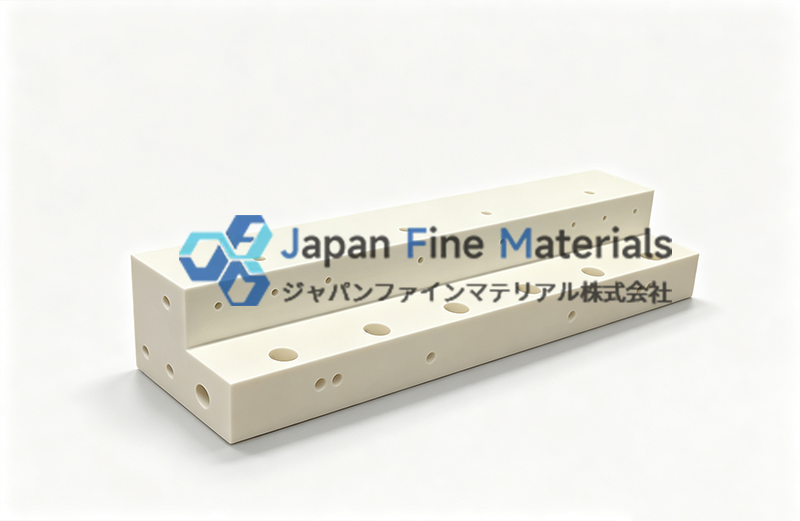
These Ceramic Components perform load-bearing, guiding, and supporting functions. Under conditions of high-speed motion, frequent starts and stops, and temperature fluctuations, they effectively reduce vibration, minimize friction, and suppress particle generation, thereby ensuring smooth equipment motion and repeatable precision. At the same time, their high hardness and low thermal expansion allow these components to maintain precise positioning during long-term operation, providing stable and reliable support for ion implantation processes.
Ceramic Components for Electrical Insulation and Wafer Clamping
Ion implantation processes typically operate in environments with high voltages and high-energy beam flows, imposing strict requirements on wafer clamping and positional accuracy. Ceramic Components not only provide electrical isolation in these systems but also facilitate the precise clamping and positioning of wafers, serving as a critical element in ensuring implantation uniformity and process consistency.
Typical components include:
• Insulating rings
• Ultra-flat vacuum suction cups
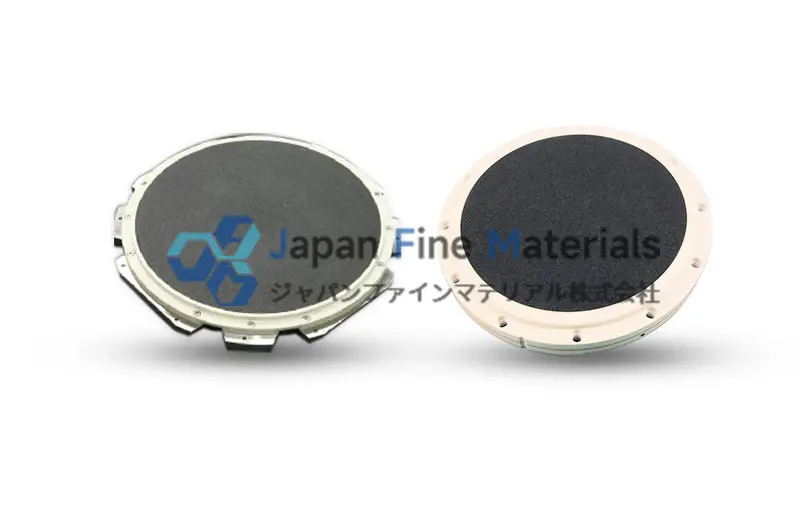
Insulation rings provide electrical isolation in high-voltage areas, preventing electrical interference and the risk of discharge; ultra-flat vacuum suction cups secure the wafer to the implantation table via precise vacuum suction, ensuring the wafer remains flat and stable throughout the implantation process and preventing minor movements or warping from affecting doping uniformity. Additionally, the high cleanliness and low particle-release characteristics of these components help improve yield and reduce equipment maintenance frequency.
Ceramic Components for Precision Measurement and Calibration
The precision of ion implantation depends not only on mechanical motion and wafer clamping but also on high-precision measurement and calibration systems. Ceramic Components primarily serve as stable mounting bases and reference structures in such systems, ensuring that geometric accuracy during measurement and calibration remains unaffected by temperature or vibration.
Related components include:
• Ceramic Components for Measuring Instruments
• Interferometer reference mirrors
• Scale bases
Thanks to their high dimensional stability and resistance to thermal deformation, ceramic components provide reliable structural support, helping measurement equipment such as interferometers and precision scales maintain measurement accuracy during long-term operation. This stable support helps maintain precise control over key parameters such as beam position and injection angle, which in turn affect wafer processing quality and semiconductor device performance. At the same time, the low wear rate and high durability of these components can help reduce equipment maintenance requirements and improve production efficiency.
Ceramic Materials for Ion Implantation Equipment
In ion implantation equipment, different ceramic components have varying requirements for mechanical strength, electrical insulation, thermal stability, and cleanliness; therefore, different types of ceramic materials are typically selected.
|
Materials |
Key Advantages |
Typical Applications |
|
Alumina (Al₂O₃) |
High electrical insulation, good mechanical strength, high stability |
Insulation rings, bearing housings, structural support components |
|
Yttrium Oxide (Y₂O₃) |
Extremely low particle release, high purity, resistance to ion beam erosion |
Critical insulating components, sensitive parts |
|
Aluminum nitride (AlN) |
High thermal conductivity, good thermal stability, excellent electrical insulation |
Thermally stable pins, structural components for high thermal loads |
|
Silicon nitride (Si₃N₄) |
High mechanical strength, wear resistance, and fatigue resistance |
Ball bearings, high-precision moving parts |
|
Silicon carbide (SiC) |
High rigidity, high-temperature resistance, corrosion resistance |
Equipment frames, high-strength support components |
|
Porous ceramics |
Controllable porosity, stable vacuum adhesion, low particle release |
Ultra-flat vacuum suction cups, wafer clamping and positioning systems |
In practical applications, these ceramic materials are typically combined based on the operating conditions of the components.For example, alumina and silicon nitride are often used for mechanical support and moving parts to ensure equipment stability; yttrium oxide can be used in areas with high requirements for cleanliness and resistance to ion beam erosion, while porous ceramics are often used in structures related to vacuum adsorption and wafer clamping; aluminum nitride and silicon carbide can be used for thermal loads or high-rigidity structures, providing long-term reliability.
Through the proper combination of these materials, Ceramic Components for ion implantation equipment can not only withstand complex operating conditions but also effectively improve equipment precision, extend service life, and ensure the stability and consistency of semiconductor manufacturing processes.
The Significant Value of Ceramic Components in Ion Implantation
In ion implantation equipment, Ceramic Components are integrated across multiple systems, including mechanical structures, electrical insulation, wafer clamping, and precision measurement. Their overall value is reflected in the following aspects:
Ensuring Equipment Operational Stability
Ceramic Components possess excellent mechanical strength and thermal stability, effectively reducing the impact of vibration and thermal drift on equipment operation and ensuring the long-term stable operation of critical systems.
Supporting High-Voltage Process Environments
By incorporating high-performance ceramic materials in components such as insulating rings, the equipment can operate safely under high-voltage conditions, thereby reducing electrical risks.
Enhancing Wafer Positioning and Implantation Accuracy
Ultra-flat vacuum suction cups, precision supports, and measurement-related ceramic components help maintain stable wafer positioning, ensuring consistency and repeatability in the ion implantation process.
Reduced Particle and Contamination Risks
Ceramic materials feature stable surfaces and low particle shedding, helping to maintain a clean process environment and improve wafer yield.
Extending Equipment Lifespan and Reducing Maintenance Costs
Ceramic Components are wear- and corrosion-resistant, reducing the frequency of replacement for critical components and thereby lowering equipment maintenance and downtime costs.
Overall, the value of Ceramic Components in the ion implantation process is reflected not only in the performance of individual components but also in their role in ensuring the overall reliability of the equipment, production efficiency, and wafer yield on an ongoing basis.
Conclusion
As semiconductor processes continue to evolve toward higher precision and greater stability, the requirements for core components in ion implantation equipment are also constantly increasing. Whether in mechanical motion systems, electrical insulation and wafer-holding systems, or precision measurement and calibration systems, Ceramic Components have evolved from auxiliary materials into key components that directly impact equipment performance, process consistency, and long-term operational stability.
Therefore, selecting the right supplier of semiconductor Ceramic Components is not merely a matter of material selection; it also directly impacts equipment operational efficiency, maintenance intervals, and overall manufacturing cost control.
If you are seeking a stable and reliable supply of ceramic components for ion implantation equipment, or if you wish to customize Ceramic Components for specific structures or operating conditions, we can provide you with professional support. From air bearing systems, vacuum suction cups, and insulating components to precision measurement and structural support Ceramic Components, we can provide highly compatible and stable solutions tailored to your equipment needs.
Please contact the JFM technical team to learn more about our material selection, processing capabilities, and application experience with Ceramic Components for ion implantation equipment.