What Is Solder Paste? A Complete Guide
-
2026-07-15 Industry News






This guide explains solder paste in detail, including its materials, function in PCB assembly, and key process considerations in electronics manufacturing.
What Is Solder Paste?
Solder paste is used in electronic assembly processesa suspension-type composite functional material . It is formed by in asystemuniformly dispersing metal solder powder flux, resulting in a paste-like substance with certain thixotropic properties.
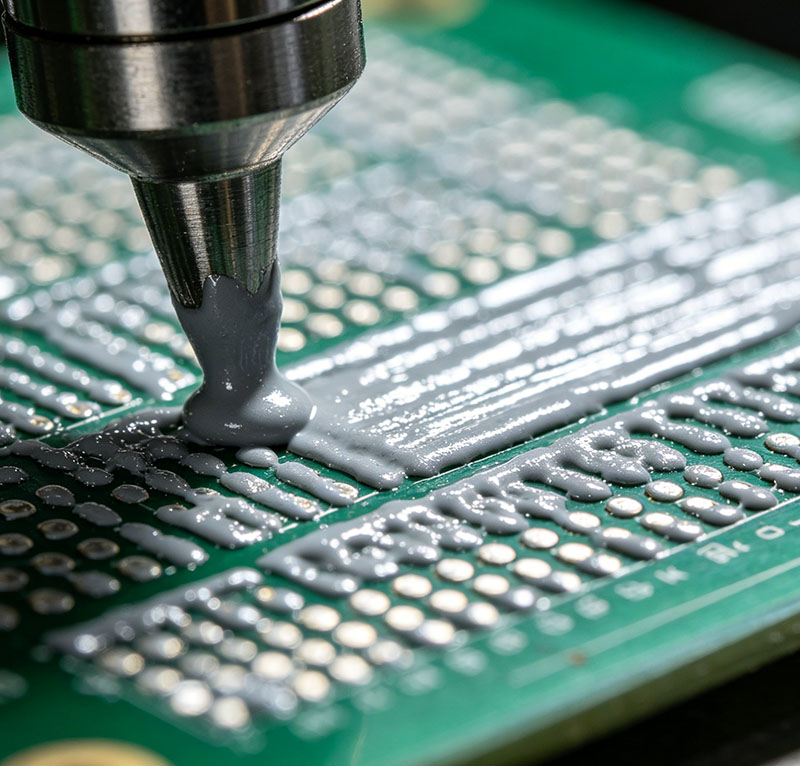
In the surface-mount technology (SMT) process, solder paste is deposited onto PCB pads via stencil printing. After reflow soldering, the molten solder reacts with the substrate metal to form intermetallic compounds (IMCs, such as Cu₆Sn₅and Ni₃Sn₄), creating a reliable electrical and mechanical connection .
From a process perspective, the primary functions of Solder Paste are:
• Providing a controlled solder volume distribution
• Supporting the assembly requirements of fine-pitch components
• Forming a stable solder joint structure after the thermal process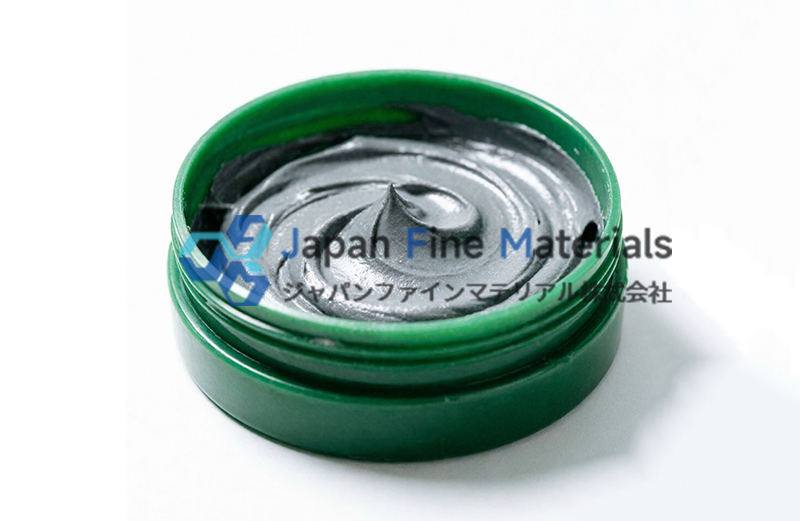
Solder Paste Composition
Solder paste typically consists of two major functional systems, and its performance depends on the synergy between them.
1. Metal solder powder system
The mass fraction of metal solder powder in solder paste is typically 85%–90% (volume fraction approximately 40%–60%), depending on the alloy density and particle size distribution. Common alloy systems include:
• SAC series (Sn-Ag-Cu): Widely used in lead-free electronics manufacturing
• Sn-Cu system: Suitable for certain cost-sensitive applications
• Sn-Pb system: Still in use in specific industrial or legacy processes
Key influencing factors include:
• Particle size grade (Type 3 / Type 4 / Type 5 / Type 6)
• Powder sphericity
• Control of oxidation level
• Particle size distribution uniformity
These parameters affect rolling behavior and gap-filling capability during the printing process.
2. Flux System
Flux is a critical component that affects soldering quality. Its functions include:
• Removing the oxide layer from the metal surface
• Reducing surface tension to promote wetting
• Stabilizing the chemical reaction pathway during the reflow process
• Controlling the morphology of residues
Flux typically consists of activators, resins (rosin or synthetic resins), solvents, and additives. Depending on the cleaning method, it can be classified as:
• No-clean systems
• Water-washable systems
• Solvent-cleaning systems
The Role of Solder Paste in the SMT Process
In the SMT process, solder paste serves a dual function as both a medium for the metered transfer of solder and a preformed joint.
1. Stencil Printing Stage
The volume of solder paste is controlled via the stencil aperturesto ensure it is uniformly deposited onto the PCB pads according to the design pattern. The primary focus of this stage is:
• Print fill integrity
• Demolding performance
• Edge sharpness
• Resistance to sagging
2. Component Placement Stage
Solder paste provides a certain amount of initial adhesion, allowing electronic components to remain in place after placement until they enter the reflow oven.
This adhesion is a physical force and does not constitute a structural bond.
3. Reflow Soldering Stage
Under a controlled temperature profile, Solder Paste undergoes the following processes:
• Solvent evaporation
• Flux activation
• Oxide removal
• Melting of solder granules
• Solder wetting of the pad
• Solidification to form a solder joint
The resulting solder joint structure provides both electrical and mechanical connections.
Types of Solder Paste
Solder paste is typically classified based on three criteria—material composition, particle size distribution, and flux system—to meet the requirements of different SMT process conditions and manufacturing needs.
1. By Alloy System
This is the most fundamental method of material classification, directly affecting the mechanical strength, thermal fatigue performance, and process window of the solder joint.
• SAC Series (Sn-Ag-Cu): A common system in current lead-free processes, suitable for most consumer and industrial electronics assembly environments
• Sn-Cu System: Relatively simple in structure, this system is more commonly used for cost-sensitive products or those requiring relatively stable soldering performance
• Sn-Pb System: Primarily used in specific industrial equipment or established process systems where process window control is relatively less stringent
2. By Powder Particle Size Grade
This classification directly affects process adaptability for fine-pitch devices. Common grades include:
• Type 3: Suitable for standard-pitch components; has a relatively wide process window
• Type 4: Used for medium-pitch components, balancing print resolution and stability
• Type 5 and above: Designed for higher-density packaging (e.g., micro-pitch BGAs, fine-pitch QFNs, etc.)
3. By Flux System Characteristics
This dimension affects the chemical behavior of the soldering process and post-processing requirements.
• No-Clean: Leaves minimal residue after soldering, typically requiring no additional cleaning steps; suitable for consumer electronics and large-scale production lines
• Water-washable: Requires cleaning of residues after soldering; more suitable for applications with high reliability or high cleanliness requirements
• Solvent-cleanable: Suitable for specific process flows or product designs with additional residue control requirements
Therefore, the types of Solder Paste do not form a parallel relationship, but rather a multi-tiered decision-making structure:
• Material system: Determines basic performance
• Particle size distribution: Determines manufacturability
• Flux system: Determines the process flow
• Application scenario: Determines the final selection
Key Factors Affecting the Performance of Solder Paste
The performance of solder paste in actual use is typically determined by a combination of factors:
1. Rheological Properties
Including viscosity, thixotropic index, and recovery ability, which affect morphological stability after printing.
2. Printing Adaptability
Closely related to stencil design, squeegee speed, and pressure conditions.
3. Reflow Compatibility
Solder paste must be compatible with the temperature profile (preheat zone, hold zone, and reflow zone).
4. Environmental Stability
Changes in temperature and humidity can affect the paste’s consistency and its usable time window after opening.
5. Storage Conditions
Typically, low-temperature storage is required, followed by acclimatization before use to maintain consistent performance.
Typical Applications
Solder paste is widely used in the electronics manufacturing industry, primarily in various surface-mount and hybrid assembly processes. Different sectors place varying emphasis on solder joint reliability, thermal performance, and long-term stability.
1. Consumer Electronics
Used in PCB assembly for products such as mobile phones, computers, tablets, and wearable devices. These products typically feature high component density and small form factors, placing certain demands on the printing accuracy and fine-pitch adaptability of solder paste, while also requiring consistency control during mass production.
2. Automotive Electronics Systems
Used in structures such as ECUs, sensors, and in-vehicle control modules. This sector places greater emphasis on long-term stability, such as the ability of solder joints to maintain integrity under temperature fluctuations and in vibrating environments, as well as overall structural reliability.
3. Communications and Networking Equipment
Used in products such as routers, base stations, and RF modules. These circuits typically involve high-frequency signal transmission, so there is a focus on solder joint consistency and flux residue control to minimize potential impacts on signal performance.
4. Industrial Control and Power Supply Equipment
Used in industrial control boards, power modules, and drive systems. These applications place greater emphasis on the structural stability of solder joints during long-term operation, as well as their thermal adaptability under load conditions.
5. LED and Optoelectronic Applications
Used in LED light boards and the encapsulation of optoelectronic components. Due to their compact structure and concentrated heat generation, these applications require uniform solder joints and consistent thermal pathways.
Conclusion
In electronics manufacturing, solder paste is not merely a material but a key medium connecting design and manufacturing processes. Its performance depends on the comprehensive compatibility of the material system, process window, and production environment. Understanding its structure and behavioral mechanisms helps improve the overall stability and consistency of SMT production.
If you are looking for soldering materials and technical support solutions suitable for various electronic assembly processes, please contact JFM for further information and application recommendations.
FAQ
What is solder paste inspection?
Solder paste inspection (SPI) is a process step used to inspect the print quality of solder paste on a PCB. It primarily checks whether the volume, height, and position of the solder pastemeet the requirements.
How to use solder paste?
Solder paste is typically printed onto PCB pads using a stencil, followed by component placement. The PCB then proceeds to the reflow oven to complete the soldering process.
What is solder paste used for?
Solder paste is used in electronics manufacturing to connect PCBs to electronic components. It forms both electrical and mechanical connections during the reflow soldering process.
How does solder paste work?
When heated, the flux in the solder paste first acts to remove oxides, and the metal powder then melts to form solder joints. Upon cooling, a stable connection is formed.
Can you use solder paste with a soldering iron?
Solder Paste can be used with a soldering iron for small-scale repairs, but the soldering quality is not as consistent as with reflow soldering, so this method is not typically used in mass production.
Does solder paste expire?
Yes, it does expire, primarily depending on storage temperature and duration. Printing and soldering performance may decline after the expiration date.
How do you choose solder paste?
The choice depends primarily on the alloy type, particle size, and process requirements. It is usually necessary to select a solder paste that matches the PCB structure and soldering conditions.