Ceramic Focus Ring Materials for Semiconductor Etching
-
2026-04-14 Industry News






Learn about ceramic focus ring materials used in semiconductor etching, their properties, performance differences, and how they impact process stability and yield.
Introduction
In modern semiconductor manufacturing, ceramic focusing rings are one of the critical consumables in plasma etching and deposition equipment. They not only optimize plasma distribution and help maintain etching uniformity and precision at the wafer edges, but also serve as key factors influencing product yield, equipment lifespan, and production costs. Given that the operating environment involves high temperatures, high-energy ion bombardment, and corrosive gases, the choice of material for the focusing ring directly determines its performance and lifespan.
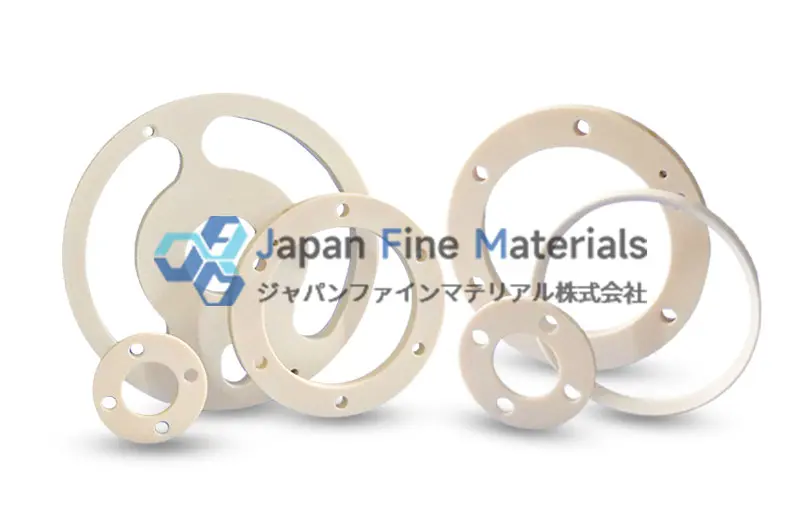
The Importance of Material Selection for Ceramic Focus Ring Performance
Selecting the appropriate material for ceramic focusing rings hinges on balancing corrosion resistance, thermal stability, mechanical strength, and cost.
During plasma etching or CVD deposition processes, focusing rings face the following challenges:
• High-temperature environment: Local temperatures can reach hundreds of degrees Celsius, requiring the material to maintain structural stability.
• Corrosive gas exposure: Reactive gases containing halogens corrode the ring’s surface, reducing its service life.
• Plasma bombardment: High-energy particle impacts may cause microcracks or particle spalling on the surface, affecting wafer yield.
• Mechanical stress and thermal shock: Equipment loading/unloading or sudden temperature changes generate stress, requiring materials to possess sufficient toughness and crack resistance.
Therefore, material selection is directly related to:
• Etching uniformity: Affects product yield
• Equipment maintenance frequency: Determines downtime costs
• Risk of particle contamination: Affects chip performance
Types of Ceramic Focus Ring Materials
Alumina (Al₂O₃)
Alumina ceramic is the most common material for focusing rings on the market and is widely adopted due to its mature manufacturing processes, stable performance, and high cost-effectiveness.
Alumina ceramics feature high hardness, excellent electrical insulation, and wear resistance, and possess basic resistance to low-to-medium energy plasma etching gases.
Suitable for conventional process nodes and high-volume production environments. It offers low cost, mature manufacturing processes, stable supply, and short lead times.
Silicon Nitride (Si₃N₄)
Silicon nitride is favored in high-demand processes due to its thermal shock resistance and mechanical strength. It features a low coefficient of thermal expansion, high strength, and excellent wear resistance, along with strong tolerance to corrosive gases.
Suitable for wafer manufacturing processes involving high-temperature etching, frequent thermal shock, and high precision requirements. It effectively extends service life, reduces replacement frequency, and lowers equipment downtime costs.
Zirconia (ZrO₂)
Zirconia ceramics are renowned for their high toughness and crack resistance, making them suitable for applications involving mechanical stress and frequent loading and unloading.
It offers good toughness, strong thermal shock resistance, and moderate corrosion resistance. It is suitable for equipment in semiconductor production lines that requires frequent maintenance or involves high-frequency wafer handling.
It reduces breakage and downtime, supporting stable equipment operation.
Silicon Carbide (SiC)
Silicon carbide is a preferred material for focus rings in cutting-edge processes, offering significant advantages particularly in 7nm and smaller processes.
It features extremely high hardness, excellent thermal conductivity, strong corrosion resistance, and a low coefficient of thermal expansion. Suitable for advanced logic chips, AI chips, and high-value-added processes.
Effectively extends service life, promotes etch uniformity, and reduces particle contamination.
Yttria (Y₂O₃)
Yttria ceramics are commonly used in high-temperature processes such as semiconductor manufacturing, particularly for high-energy etching and special atmospheric environments.
Characterized by a high melting point, excellent heat resistance, and strong chemical stability, it can withstand the impact of high-energy plasma.
Commonly used in high-power etching systems or harsh reactive gas environments.
Aluminum Nitride (AlN)
Aluminum nitride ceramics are renowned for their high thermal conductivity and mechanical strength, enabling effective heat dissipation and mitigating the impact of localized overheating on etching uniformity.
It features high thermal conductivity, a moderate coefficient of thermal expansion, and good corrosion resistance. It is suitable for high-temperature etching or deposition processes, particularly in equipment with large wafer sizes and high power densities.
Effectively optimizes heat distribution, reduces localized overheating, and supports process stability.
Porous Ceramics
By controlling porosity, porous ceramics can optimize gas flow and plasma distribution, offering specific advantages in certain specialized etching processes.
Adjustable porosity, lightweight, and low thermal mass contribute to uniform plasma distribution.
Primarily used in specialized etching or deposition processes, particularly where uniform gas distribution or control of particle generation is required.
 |
 |
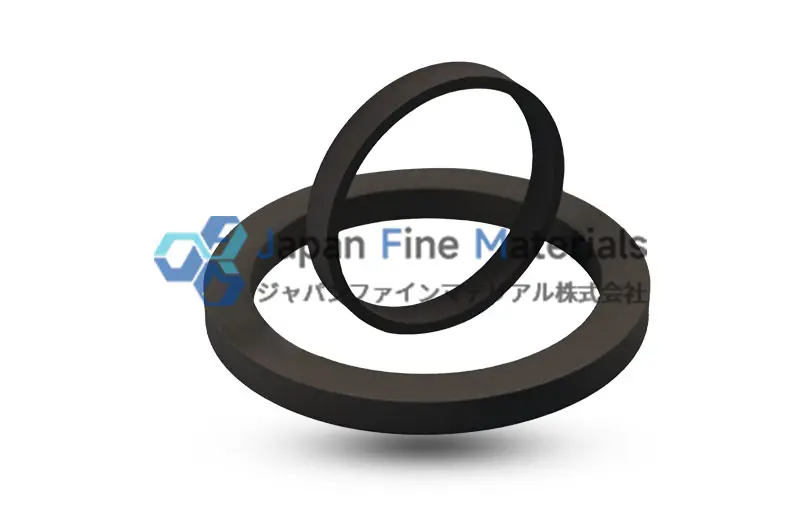 |
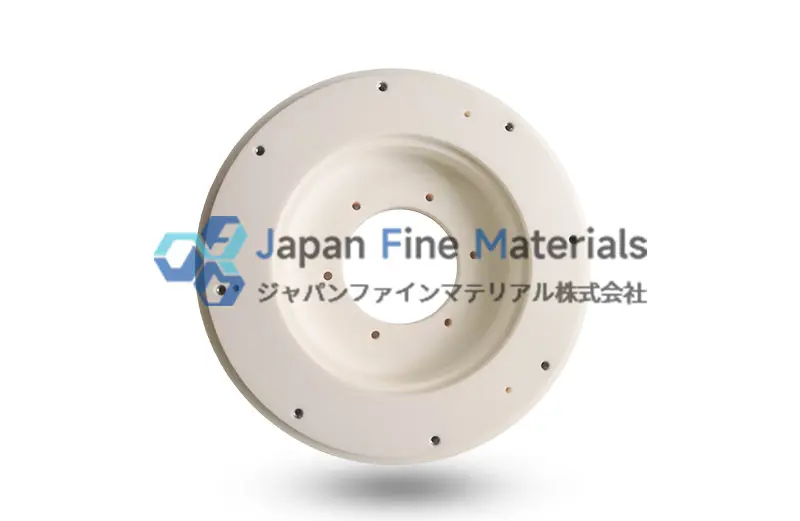
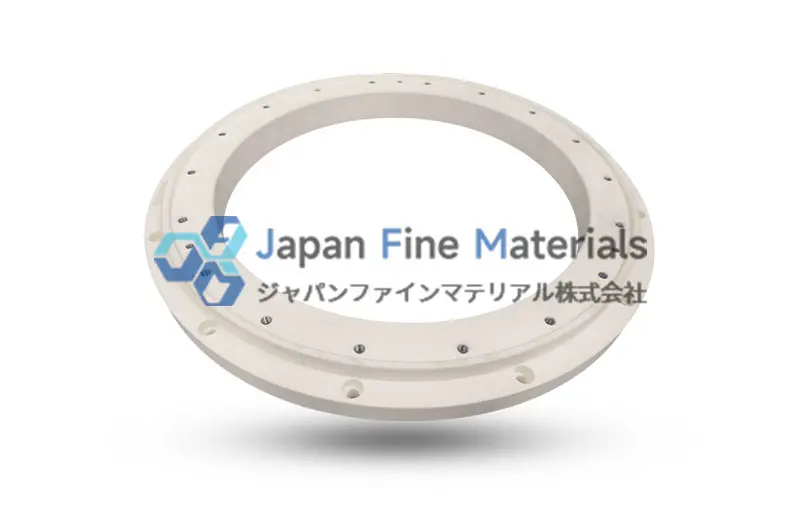
| Selected Ceramic Rings | ||
Material Selection Strategies and Key Considerations
|
Objectives |
Recommended Materials |
Features |
|
Cost Control, High-Volume Production |
Alumina |
High cost-effectiveness, suitable for mature nodes; mature manufacturing processes, short lead times |
|
High-temperature stability, thermal shock resistance |
Silicon nitride |
Extends service life, reduces downtime, suitable for high-temperature processes and those with frequent thermal shocks |
|
High mechanical strength requirements |
Zirconia |
High crack resistance, suitable for environments with frequent maintenance and mechanical impact |
|
High-end advanced processes |
Silicon carbide |
Excellent corrosion resistance, high uniformity, and long service life; suitable for 7nm and below process nodes |
|
Processes requiring high temperatures and low contamination |
Yttrium oxide |
Excellent chemical stability and high-temperature strength, suitable for etching processes in special atmospheres |
|
Good thermal conductivity and heat dissipation requirements |
Aluminum nitride |
High thermal conductivity reduces the risk of localized overheating, making it suitable for high-power etching equipment |
|
Lightweight and gas permeability requirements |
Porous ceramics |
Enables uniform gas distribution, suitable for specific deposition or etching processes, and reduces material weight |
Additionally, the following should be considered:
• Equipment type and process parameters: Different etchers and CVD systems have varying requirements for focusing ring materials.
• Wafer size: Larger wafers may exacerbate thermal shock, affecting material selection.
• Replacement cycle: Selecting materials with a longer service life based on production schedules can significantly reduce downtime costs.
Conclusion
The material of ceramic focusing rings not only determines the service life of the components themselves but also directly impacts the stability of semiconductor etching and deposition processes. Companies must select highly compatible materials based on process requirements, wafer size, equipment type, and cost budgets to achieve an optimal balance between production efficiency, cost control, and product yield.
If you are seeking high-performance, customized ceramic focusing ring solutions, JFM is your reliable choice. We provide one-stop services ranging from material selection and engineering design to delivery, committed to meeting your stringent semiconductor manufacturing requirements and ensuring the sustained stability of production efficiency.
Ceramic Focus Ring FAQ
Q1: How often do ceramic focusing rings typically need to be replaced?
Lifespan varies significantly by material: alumina lasts approximately 50 wafer batches, silicon nitride about 100 batches, and silicon carbide can exceed 200 batches.
Q2: Which material offers better resistance to high temperatures and corrosion?
Silicon carbide offers superior resistance to high temperatures and severe corrosion, followed by silicon nitride, while aluminum oxide is suitable for standard processes.
Q3: How can I extend the service life of a focusing ring?
Select high-durability materials, optimize etching power and gas ratios, and minimize thermal shock and mechanical stress.
Q4: Does the material affect etch uniformity?
Yes. Materials with high hardness and low thermal expansion (such as silicon carbide or silicon nitride) ensure etching uniformity and wafer yield.
Q5: Can ceramic focusing rings be customized?
Yes, we can customize materials, dimensions, and structures based on process requirements, drawings, or samples to meet various process needs.