Silicon Carbide Ceramics Manufacturing A Detailed Overview of the Process
-
2026-05-18 Industry News






Explore silicon carbide ceramic production methods, covering powder processing, molding, sintering, machining, polishing, and quality control for high-performance applications.
What Is Silicon Carbide Ceramic?
Silicon carbide ceramics are a type of high-performance advanced ceramic material. Due to their outstanding high-temperature resistance, extreme hardness, and excellent wear resistance, they have gradually become an indispensable key material in modern industry. In fields such as high-temperature furnaces, semiconductor equipment, chemical machinery, and energy equipment, silicon carbide ceramics can not only withstand extreme operating conditions but also maintain stable dimensions and superior mechanical properties.
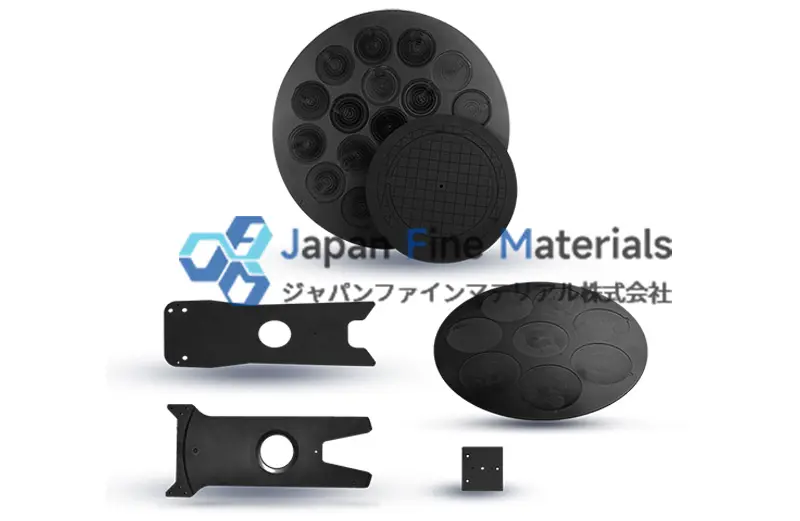
Compared to traditional metals and ordinary ceramics, silicon carbide ceramics offer the following significant advantages:
• High-temperature resistance: Can be used long-term in environments exceeding 1600°C with stable performance.
• High hardness and wear resistance: Suitable for high-wear environments such as mechanical components and wear-resistant liners.
• Excellent chemical stability: Demonstrates outstanding resistance to acids, alkalis, and corrosive media.
• High thermal conductivity: Suitable for high-temperature components in heat exchangers and semiconductor equipment.
• High thermal shock resistance: Maintains structural integrity even under conditions of rapid temperature changes.
With the rapid development of the semiconductor, electronics, and new energy industries, the demand for high-performance ceramics is growing, and the application areas and market prospects for silicon carbide ceramics are becoming increasingly broad. Understanding the manufacturing process of silicon carbide ceramics helps engineers, procurement personnel, and technical decision-makers better grasp the relationship between material properties and manufacturing processes, thereby enabling them to select the ceramic products best suited to their needs.
Raw Material Preparation and Processing
The performance of silicon carbide ceramics depends largely on the quality of the raw materials; therefore, raw material preparation is a critical step in the entire manufacturing process. When producing high-performance silicon carbide ceramics, high-purity silicon carbide powder must first be selected as the primary raw material. The particle size, distribution uniformity, and impurity content of the powder directly affect the ceramic’s density, hardness, and heat resistance.
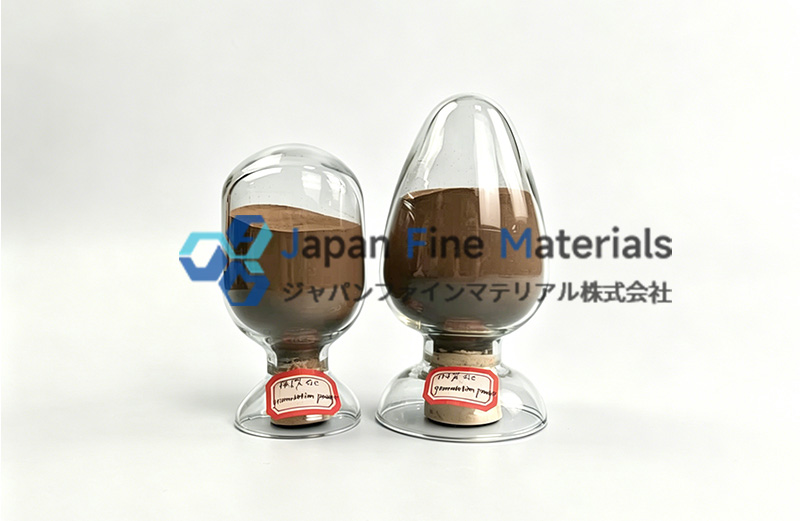
The raw material processing typically includes the following steps:
• Screening and Grading: Removing oversized particles and impurities to ensure uniform powder particle size.
• Addition of Modifiers: Depending on performance requirements, small amounts of oxides or additives are added to improve sinterability, enhance mechanical properties, or increase thermal shock resistance.
• Drying: Removing moisture from the powder to prevent caking due to moisture absorption and ensure uniform mixing.
• Storage management: Maintaining a low-humidity, dry environment to prevent moisture absorption that could cause forming or sintering issues.
• Chemical and Microstructural Analysis: For high-precision applications, inspect powder composition, particle morphology, and purity to ensure the final ceramic meets performance expectations.
Through rigorous raw material screening and processing, a stable and uniform base material is provided for subsequent mixing, forming, and sintering stages, ensuring the high-performance characteristics of silicon carbide ceramics from the source.
Mixing and Slurry Preparation
In the fabrication of silicon carbide ceramics, mixing and slurry preparation are critical steps that determine the uniformity and mechanical properties of the final product. The specific process includes:
• Precise raw material proportioning: High-purity silicon carbide powder, binders, and additives are precisely weighed according to the design formulation. Binders enhance the bonding strength of the green body during forming, while additives improve sintering performance or regulate the microstructure.
• Uniform mixing: Professional equipment is used to thoroughly mix the powder, preventing particle agglomeration or density variations.
• Slurry Preparation and Control: For injection molding or slip casting, the powder is mixed with a liquid medium to form a slurry. The viscosity is adjusted to ensure smooth filling of the mold while preventing slurry stratification or settling.
• Degassing: Remove air bubbles introduced during mixing to reduce porosity formation after sintering, thereby improving ceramic density and mechanical properties.
• Environmental Control: The entire mixing and slurry preparation process must be conducted in an environment with strictly controlled temperature, humidity, and cleanliness to ensure stable material performance.
Through scientific mixing and slurry preparation, silicon carbide ceramic green bodies can achieve high density and uniformity, providing a solid foundation for subsequent forming and high-temperature sintering, while enhancing the mechanical properties and reliability of the final ceramic.
Forming Methods
There are various forming methods for silicon carbide ceramics, and different processes directly affect the green body’s density, dimensional accuracy, and final performance. Selecting an appropriate forming method requires comprehensive consideration of the part’s shape, dimensions, complexity, and the difficulty of subsequent machining. Common forming methods include:
Pressure Molding
Pressure molding involves placing the mixed silicon carbide powder into a mold and compressing it into shape by applying high pressure. This method is suitable for parts with relatively simple shapes. Due to its mature process and ease of operation, pressure molding offers the advantages of lower cost and high production efficiency.
Cold Isostatic Pressing (CIP)
Cold isostatic pressing (CIP) applies uniform pressure in multiple directions to ensure the green body is dense and homogeneous. This method is typically used for large-sized parts or those requiring high precision. Green bodies formed using CIP have lower internal stresses and superior density, effectively reducing the risk of cracks during the subsequent sintering process.
Injection Molding
Injection molding involves injecting silicon carbide slurry into a mold, allowing it to fill complex structures and solidify into the final shape. This method is suitable for thin-walled or complex-shaped parts. Injection molding achieves high dimensional accuracy while enabling the formation of complex structures that are difficult to process using traditional methods.
Slip Casting
Slip casting utilizes the flowability of silicon carbide slurry to fill the mold, where it cures. It is suitable for thin-walled or irregularly shaped ceramic products. This method offers process flexibility, meeting the forming requirements of parts with special shapes, while placing relatively fewer demands on the mold.
Extrusion Molding / Roll Forming
Extrusion / Roll Forming involves forcing the mixture through a die or rolling it into shape, making it suitable for tubular or bar-shaped standardized parts. This method is well-suited for continuous production and is highly efficient, particularly for the mass production of standardized products.
The formed green bodies typically require drying or preliminary curing to reduce the risk of cracking and deformation. The choice of forming method directly impacts subsequent sintering and finishing processes; therefore, material properties, part application, and production costs should be comprehensively considered during the design phase.
Pre-sintering/Baking
Once the green body has dried, it typically undergoes pre-sintering (also known as calcination). This is a critical step in the preparation of silicon carbide ceramics, primarily serving to enhance the strength of the green body, reduce the risk of deformation or cracking during sintering, and prepare it for final sintering.Pre-sintering not only improves the internal microstructure of the green body but also regulates porosity and uniformity, thereby influencing the mechanical properties and density of the final ceramic.
Key considerations for pre-sintering include the following:
• Temperature control: Pre-sintering is performed at relatively low temperatures, typically between 800°C and 1200°C, to prevent excessive shrinkage of the green body.
• Heating rate: Slow heating at approximately 2–5°C/minute to prevent cracking.
• Holding time: Maintain the temperature for 1–3 hours to allow the green body to fully dehydrate and the binder to decompose.
• Atmosphere control: The process should be conducted in an inert or reducing atmosphere, such as nitrogen or argon, to prevent the oxidation of silicon carbide in high-temperature air.
• Green Body Support: Large or complex green bodies require support to prevent deformation.
Through these steps, the pre-sintered green body not only exhibits significantly improved strength but also features a more uniform pore distribution, laying a solid foundation for subsequent high-temperature sintering.
Final Sintering
Sintering is the most critical stage in the preparation of silicon carbide ceramics, as it determines the ceramic’s density, hardness, and wear resistance. Depending on specific application requirements, the choice of sintering method and process parameters directly influences the final performance. Common sintering methods primarily include reaction sintering (RBSiC) and pressure sintering (SSiC).
Reaction Sintering (RBSiC)
The principle of reaction sintering involves allowing carbon-containing silicon carbide green bodies to react with molten silicon ( The reaction between silicon and carbon produces secondary silicon carbide which fills the pores to achieve densificationin a high-temperature environment ).,. This method is suitable for large-sized or structurally complex ceramic components; since the sintering temperature is relatively low, it effectively reduces thermal stress cracking.When performing reaction sintering, the reaction atmosphere and temperature gradient must be strictly controlled to avoid local overheating or incomplete reactions, ensuring the green body is uniformly dense.
Atmospheric Pressure Sintering (SSiC)
Atmospheric sintering (also known as pressure sintering) at higher temperatures (involves solid-state sintering of silicon carbide powder ,. Ceramics produced by this process above) in an inert atmosphere with the addition of small amounts of sintering aids (such as 2000°Cboron and carbon)exhibit , and, making them the preferred choice for high-performance precision components.During operation, the heating profile and high-temperature holding time must be strictly controlled to ensure uniform grain size and achieve theoretical density. Additionally, the slow cooling process after sintering is crucial for reducing residual thermal stress and preventing microcracks.high purity, superior hardness excellent corrosion resistance
Through scientific control of these process parameters, the sintered silicon carbide ceramics can achieve high density, high hardness, and excellent wear resistance, laying a solid foundation for subsequent finishing and practical applications.
Finishing
Although sintered silicon carbide ceramics already possess basic density and strength, finishing is typically required to meet the demands of high-precision applications. Finishing not only improves dimensional accuracy and surface finish but also enhances wear resistance and fit performance. Depending on the specific application, the commonly used finishing methods and their characteristics are shown in the table below:
|
Method |
Application |
Key Points |
|
Grinding |
Adjust dimensions |
Control errors to the micron level |
|
Polishing |
Improved smoothness |
Smoother surfaces, reduced friction |
|
Laser processing |
Drilling or complex shapes |
Non-contact, reducing damage |
|
Electrical Discharge Machining |
Recessed or complex structures |
High precision, suitable for hard and brittle parts |
Inspection and Quality Control
Finished silicon carbide ceramics undergo rigorous testing and quality control before shipment to ensure stable performance in high-temperature, abrasive, or corrosive environments. Testing primarily covers four areas:
• Physical Properties: Measurement of density, hardness, and flexural strength to ensure the ceramic is robust and durable.
• Chemical Properties: Testing acid and alkali resistance as well as oxidation resistance to ensure the material remains stable in corrosive environments.
• Thermal Properties: Testing thermal conductivity and the coefficient of thermal expansion to ensure safe use of the ceramics at high temperatures.
• Appearance and Dimensions: Verifying the absence of cracks or pores and confirming that dimensions meet specifications to facilitate installation and use.
Through this series of tests, we effectively guarantee the performance stability and service life of every silicon carbide ceramic component, providing users with reliable product support.
Conclusion
Due to its exceptional high-temperature resistance, wear resistance, and chemical stability, silicon carbide ceramic plays a critical role in industrial applications. Selecting the right supplier not only guarantees product quality but also ensures professional support during practical application, thereby avoiding risks associated with performance mismatches.
JFM can provide you with:
• High-performance silicon carbide ceramics: Suitable for a wide range of applications, including wear-resistant parts, high-temperature components, heat exchangers, and electronic applications;
• Technical Support: Material selection and specification recommendations tailored to your application needs;
• Application Guidance: Performance optimization recommendations during use to ensure the ceramics deliver optimal results;
• Customized solutions: Recommendations for suitable specifications and materials based on specific requirements.
Contact JFM today to receive quotes for our wide range of silicon carbide ceramic products and professional technical support. We offer ceramic products, including ceramic arms, ceramic carrier plates, ceramic vacuum andcups, and can provide tailored silicon carbide ceramic solutions to meet your project requirements.