Why Choose Custom Porous Ceramics for Advanced Industrial Applications?
-
2026-01-29 Industry News






Custom porous ceramics deliver superior strength and reliability through optimized pore structures. Ideal for semiconductor and thermal applications, they maximize process efficiency compared to standard products.
Introduction
In modern advanced manufacturing, porous ceramics have moved beyond conventional structural materials to become essential industrial components that combine functionality with high performance. From semiconductor wafer handling and high-temperature filtration to advanced process equipment, porous ceramics perform core functions, including support, insulation, filtration, and precision positioning.
As process requirements become increasingly sophisticated and diverse, standard porous ceramic products may not fully satisfy specific demands for dimensional accuracy, pore structure, and purity. Consequently, the adoption of custom porous ceramics is growing. By designing components specifically based on the operating environment and customer requirements, stable performance can be ensured even under extreme conditions.
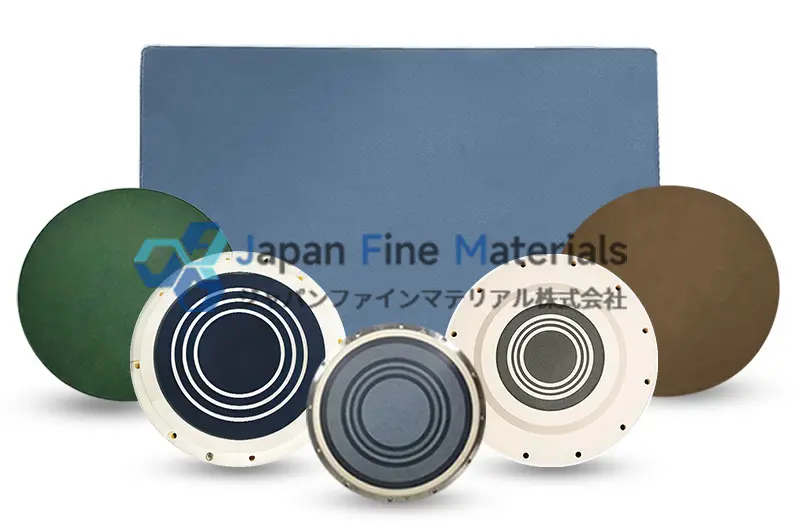
Precise Control of Pore Structure to Meet Diverse Precision Needs
The performance of porous ceramics is heavily dependent on microscopic pore structures, including pore size, porosity, and pore interconnectivity. These parameters directly impact the material's mechanical strength, permeability, and particle emission levels. Standard products often have fixed pore parameters, which can create application constraints for high-precision processes. Custom porous ceramics allow for the precise design and optimization of pore structures, offering the following benefits:
● Optimization of Pore Size and Porosity: Fine pores achieve uniform gas adsorption while macro-pores ensure high flow permeability, balancing performance and structural integrity.
● Controlling Pore Interconnectivity: Optimizes flow path penetration and improves gas distribution uniformity. This reduces dead zones and suppresses the risk of particle entrapment or accumulation.
● Process Adaptation of Microstructure: Pore structures can be designed to suit application-specific operating conditions such as semiconductor wafer handling, vacuum chucking, and high-temperature filtration.
● High Consistency (Batch Stability): Custom production processes minimize variations in pore structure between products, significantly improving equipment operation stability and process repeatability.
Material Optimization Based on Process Conditions
With custom porous ceramics, the most suitable material system can be selected based on industrial process conditions and the operating environment, achieving optimized performance and enhanced reliability. Currently, JFM can supply two types of porous ceramic materials: Alumina and Silicon Carbide.
Typical material types available in the market include:
● Alumina (Al₂O₃): Offers high hardness and excellent wear resistance, suitable for components requiring mechanical support such as wafer handling arms.
● Silicon Carbide (SiC): Features high thermal conductivity and excellent thermal shock resistance, ideal for high-temperature filtration and heat treatment processes.
● Zirconia (ZrO₂): Possesses high fracture toughness and wear resistance (impact/crack resistance), suitable for precision semiconductor parts and wear-resistant components under harsh environments and complex loads.
● Silicon Nitride (Si₃N₄): Provides high thermal shock resistance, making it suitable for conditions with frequent temperature fluctuations or high-temperature, high-load environments.
JFM can flexibly adjust material purity and microstructure according to temperature conditions, chemical corrosion environments, vacuum conditions, or high cleanliness requirements. Furthermore, by coordinately controlling thermal conductivity, mechanical strength, and wear resistance, we ensure stable operation in high-precision and high-temperature applications.
Full Custom Design of Dimensions and Shapes
Custom porous ceramics allow for flexible design of dimensions and geometric shapes to match equipment and process requirements, ensuring component performance and system compatibility. Customization ensures a high-precision fit between the material and the equipment, avoiding additional processing or readjustments due to dimensional variations in standard products. In semiconductor wafer handling arms, an appropriate dimensional design not only ensures uniform vacuum suction but also improves transport accuracy and equipment reliability.
Additionally, custom design enables the optimization of complex shapes and flow path (pore channel) layouts:
● Design of curved surfaces, groove structures, and hole arrays to meet specific process requirements for high-temperature filters and gas distribution plates.
● Optimization of pore density and pore size gradients to uniformize gas/liquid flow, improving film deposition quality and filtration performance.
● Use of 3D modeling and simulation design to achieve a balance between lightweighting and structural rigidity, optimizing the trade-off between performance and manufacturability.
In mass production, custom processes make it easier to manage consistency (batch stability) in dimensions and pore structure, contributing to long-term stable equipment operation, reduced maintenance costs, improved production efficiency, and enhanced process repeatability.
Performance Optimization Based on Requirements
With custom porous ceramics, material properties can be controlled to meet the rigorous requirements of applications such as wafer handling, high-temperature filtration, and advanced processing. While standard products are often limited to specifications for general industrial environments, custom products comprehensively optimize microstructure, material selection, and process design to align critical performance indicators with application conditions at high precision.
Specific performance optimizations are reflected in the following points:
● Pore Size Uniformity and Interconnectivity: Proper design of the pore structure uniformizes fluid/gas flow and reduces the risk of particle shedding or accumulation.
● Porosity and Fluid Resistance (Pressure Drop): Adjusting porosity to match process requirements optimizes the balance between permeability (gas/liquid) and material strength.
● Thermal Properties: Optimizing thermal conductivity and the coefficient of thermal expansion for high-temperature or high-fluctuation environments to suppress thermal stress and deformation.
● Mechanical Strength and Wear Resistance: Providing sufficient load-bearing capacity and long-term wear performance through material system and microstructure design.
● Chemical Stability and Purity: Strictly optimizing material purity to meet high-cleanliness process standards for semiconductors, ensuring corrosion resistance and low particle emission characteristics.
These custom optimizations enable ceramic components to maintain stable performance even in high-precision, high-cleanliness, and complex process environments, thereby improving equipment reliability and production yield.
Long-term Reliability and Process Consistency
Custom porous ceramics focus not only on improving individual component performance but also on mitigating variations during mass production and ensuring stability over the long term. In high-precision applications such as semiconductor wafer handling and advanced processing, the long-term reliability of materials directly affects equipment utilization rates and process yields. Custom design enables comprehensive optimization of microstructure, material composition, and manufacturing processes to achieve stable performance over extended periods.
Specific advantages include:
● Proper control of pore structure and material composition ensures high uniformity of performance across components during mass production, reducing equipment readjustments and downtime.
● Optimization of materials and microstructures tailored to the process environment makes stable operation more achievable in high-temperature, vacuum, and corrosive gas environments.
● Custom manufacturing ensures batch-to-batch repeatability, maintaining high consistency in dimensional accuracy, pore structure, and performance indicators, which supports the process repeatability necessary for precision manufacturing.
Through these optimizations, custom porous ceramics deliver not only excellent initial performance but also sustained operational stability, thereby enhancing the overall efficiency and production yield of industrial equipment.
Custom Products vs. Standard Products
| Property | Standard Product | Custom Product |
|---|---|---|
| Pore Structure | Fixed pore size and distribution | Controlled micro/macro combination; optimized interconnectivity |
| Material Selection | Limited to a few materials | Selectable: Alumina, Zirconia, SiC, Si₃N₄, etc. |
| Dimensional Accuracy | Standard sizes; may need secondary processing | Precision-fitted to equipment; complex geometries possible |
| Mechanical | General industrial standards | Optimized strength/porosity balance; higher stiffness |
| Thermal/Chemical | Generic resistance levels | Tailored for high temp, corrosion, and high purity |
| Compatibility | Significant application constraints | Perfect fit; reduced system adjustment time |
| Service Life | Standard wear/degradation cycles | Extended lifespan; significantly lower maintenance costs |
In summary, while standard products offer cost advantages and shorter lead times, they may not sufficiently meet the requirements of precision, complex, high-cleanliness, or high-temperature applications. In contrast, custom porous ceramics realize the performance and long-term stability required by these applications through technical optimization, design matching, and material selection.
Representative Applications of Custom Porous Ceramics
● High-Temperature Gas and Liquid Filtration Systems
In high-temperature filtration systems, pore structures are designed to match the type, flow rate, and temperature of the process gas or liquid, enabling high filtration efficiency and low pressure drop (low flow resistance). Materials such as Alumina or Silicon Carbide are typically selected to ensure structural stability at high temperatures, while high-purity management and surface treatments help reduce the risk of wear and clogging.
● Gas Distribution Plates for Advanced Processing
In CVD and etching processes, optimizing the pore array and interconnectivity allows for uniform gas distribution and suppresses local flow deviations. High-purity material systems and smooth surface finishes reduce particle emission and ensure the cleanliness of semiconductor processes, contributing to the consistency (uniformity) of film quality and etching rates.
● Energy and Catalyst Systems
In fuel cells, hydrogen-related systems, and high-temperature reactors, controlling porosity and pore size distribution uniformizes gas/liquid diffusion, improving reaction rates and catalyst efficiency. Using Silicon Carbide or Alumina-based composite materials optimizes thermal conductivity and chemical stability, contributing to longer equipment life.
● Vacuum Chucking and Precision Support Systems
In optical instruments, semiconductor inspection equipment, and microelectronics manufacturing devices, custom porous ceramics provide precision suction, mechanical support, and temperature uniformity (thermal management). The design of pore connectivity networks and surface microstructures ensures long-term stable suction force while suppressing particle generation, providing a reliable material foundation for high-precision equipment requiring high cleanliness.
Customization Capability and Production Flow
The essence of custom porous ceramics lies in standardizing and managing the entire process, from requirements analysis to final product verification. The process typically follows these steps:
Requirements Analysis and Process Evaluation
● Conduct close consultations with customers to clarify key indicators such as application purpose, operating temperature, mechanical load, and cleanliness requirements.
● Evaluate specific requirements for pore structure, material properties, dimensional accuracy, and surface treatment based on process characteristics.
Material Selection and Microstructure Design
● Select the appropriate material system (Alumina, Zirconia, Silicon Carbide, Silicon Nitride, etc.) based on functional requirements and determine the structural design policy.
● Design pore size distribution, porosity, and interconnectivity to balance gas/liquid flow, mechanical support, and thermal management.
Solution Design and Prototype Verification
● Perform structural design based on application demands and material properties, optimizing pore distribution and geometric shape while predicting and avoiding potential stress concentration risks.
● Support rapid prototyping (sample production) and iteratively optimize design parameters through on-site equipment verification and testing feedback to ensure the final product fits the required specifications precisely.
Manufacturing Process and Sintering Control
● Select the optimal molding process (pore-forming agent method, foaming method, gel casting, etc.) based on the design.
● Precisely control sintering temperature, atmosphere, and holding time to ensure pore structure accuracy, mechanical strength, and material purity meet design requirements.
Evaluation Testing and Quality Control
● Systematically measure and evaluate pore size, porosity, mechanical properties, thermal properties, and surface cleanliness.
● Perform functional evaluations for critical applications such as wafer handling or high-performance filters to confirm stable operation under actual use conditions.
Delivery and Technical Support
● Deliver high-quality components on time and provide installation support, usage recommendations, and technical consultations.
● Establish an improvement cycle through continuous optimization and updates based on customer feedback from actual use.
Choosing custom porous ceramics means not just selecting a material, but choosing a design precisely suited to your application, reliable performance, and sophisticated manufacturing process management. In wafer handling, high-temperature filtration, advanced processing, and energy systems, custom products help improve production efficiency, reduce operational risks, and extend equipment life.
If you are considering high-performance, multifunctional, and customizable porous ceramic solutions, please contact JFM for an inquiry.