What Is a Porous Ceramic Vacuum Chuck? Structure and Applications
-
2026-09-29 Industry News






Explore porous ceramic vacuum chucks, including their porous structure, vacuum holding principle, material characteristics, and applications in precision manufacturing.
Introduction
In wafer processing, precision inspection, and certain automated manufacturing equipment, workpieces must be held in the proper position during processing or inspection while minimizing the contact effects caused by mechanical clamping. Vacuum chucks have therefore become common positioning components in many precision devices.
Unlike traditional vacuum chucks with vacuum chambers, holes, or sealed areas, the Porous Ceramic Vacuum Chuck utilizes the interconnected microporous structure formed within the ceramic material to transmit negative pressure, enabling the suction area to create a relatively uniform vacuum across the porous surface.
This structure makes it suitable for use with wafers, glass, thin-film materials, and other workpieces that require flatness, cleanliness, and positioning accuracy. This article will introduce the Porous Ceramic Vacuum Chuck from the perspectives of structure, operating principle, materials, and applications.
What Is a Porous Ceramic Vacuum Chuck?
A porous ceramic vacuum chuck is a vacuum clamping component that utilizes porous ceramic material as its suction surface. It contains a certain proportion of open pores, which form interconnected gas channels.
When the vacuum system is activated, the gas inside the chuck is evacuated through the ceramic pores, creating a pressure differential between the suction surface and the workpiece, thereby generating a suction force.
Unlike mechanical fixtures that grip workpieces directly with clamps, the Porous Ceramic Vacuum Chuck primarily secures workpieces through negative pressure; therefore, when handling thin sheets, wafers, and other similar workpieces, it reduces the localized contact associated with traditional mechanical clamping structures.
In terms of product structure, it is typically not a standalone ceramic plate but rather requires integration with a vacuum interface, support structure, and equipment mounting components.
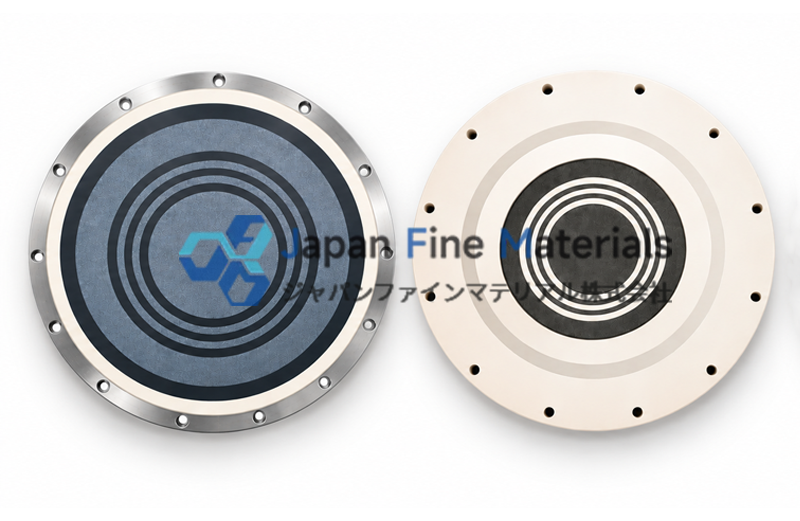
Structure of the Porous Ceramic Vacuum Chuck
The specific structure of a Porous Ceramic Vacuum Chuck is designed based on the equipment, workpiece dimensions, and intended application, but it can generally be understood in terms of the following components.
1. Porous Ceramic Working Layer
This is the part that comes into direct contact with the workpiece and is the key structural feature that distinguishes this product from ordinary vacuum suction cups.
The working layer contains a large number of micropores. Pore size, porosity, pore distribution, and material thickness all affect gas permeability; therefore, these parameters must be controlled during the manufacturing process.
For precision workpieces such as wafers, the flatness and surface finish of the working surface must also be designed in accordance with actual application requirements.
2. Internal Vacuum Channels
While the porous ceramic itself serves as the gas transport medium, the suction cup typically requires an internal vacuum connection structure.
The negative pressure generated by the vacuum pump enters the suction cup through an interface, then passes through the internal space and the ceramic pores to act on the working surface.
The design of the internal channels must take into account factors such as airflow paths, vacuum response, structural strength, and equipment mounting methods.
3. Vacuum Interface
Vacuum interfaces are used to connect to external vacuum systems and serve as the connection point between the suction cup and the equipment.
The dimensions, position, and connection method of the interface typically need to be tailored to the equipment structure. The design of the vacuum interface may vary depending on the type of semiconductor equipment.
4. Support and Mounting Structure
Porous ceramic materials typically need to be mounted on a corresponding support substrate so that the suction cup can be secured to the equipment platform.
In addition to serving a mounting function, the support structure must be compatible with the dimensions, thickness, and vacuum channel design of the ceramic material.
Therefore, when designing a Porous Ceramic Vacuum Chuck, one cannot focus solely on the ceramic material itself but must also comprehensively consider the structure of the entire assembly.
How Does a Porous Ceramic Vacuum Chuck Work?
The operating process of a Porous Ceramic Vacuum Chuck can be simply understood as follows:
Vacuum system → Vacuum port → Internal channels → Porous ceramic → Workpiece surface
Once the workpiece is placed on the surface of the vacuum chuck, the vacuum pump begins to evacuate the air. The internal pressure of the vacuum chuck drops, and gas moves toward the vacuum side through the interconnected pores within the ceramic.
If the workpiece covers the suction area, gas flow is restricted, creating a pressure difference between the chuck surface and the workpiece. Atmospheric pressure acts on the outer side of the workpiece, thereby generating an adhesive force directed toward the chuck surface.
Under ideal sealing conditions, the theoretical holding force can be simplified as F ≈ ΔP × A. However, the actual holding force is influenced by the effective holding area (excluding leakage areas), the workpiece surface roughness, the leakage rate of the ceramic pores, and the response speed of the vacuum system; it is typically significantly lower than the theoretical value.
• F: Theoretical suction force
• ΔP: Pressure difference across the suction cup
• A: Effective adhesion area
In actual use, the adhesion performance is also affected by factors such as workpiece dimensions, surface flatness, leakage conditions, the pore structure of the ceramic, and the capacity of the vacuum system.
Therefore, one cannot simply determine whether a suction cup is suitable for a particular piece of equipment based on vacuum pressure alone; it must also be matched to the actual operating conditions.
Why use porous ceramic materials?
The value of porous ceramics lies not only in their air permeability; their material properties and porous structure together determine how the suction cup is used.
Uniform Suction Area
Traditional vacuum suction cups typically rely on specific vacuum holes or grooves to form the suction area, whereas porous ceramics can utilize micropores distributed across the working surface to transmit negative pressure.
For large, thin workpieces, this structure helps create a more dispersed suction area, reducing the concentration of vacuum at localized points.
Better Dimensional Stability
Ceramic materials have low thermal expansion characteristics; the linear expansion coefficient of engineering ceramics such as alumina typically ranges from approximately 7 to 8 × 10⁻⁶/K.
For precision equipment subject to temperature fluctuations, the thermal expansion characteristics of the material can affect the dimensional fit between the suction cup and the workpiece; therefore, material selection and structural design must be based on the specific operating temperature.
Suitable for Precision Machining Environments
Ceramic materials possess good hardness and wear resistance; after appropriate material selection and surface treatment, they can be used in equipment that requires high cleanliness, surface finish, and dimensional accuracy.
However, actual cleanliness performance still depends on the material formulation, processing methods, cleaning procedures, and the equipment environment; it cannot be determined solely based on the material name “ceramic.”
Common Materials for Porous Ceramic Vacuum Chucks
Different ceramic materials possess distinct physical and mechanical properties; therefore, selection must be based on the equipment operating conditions.
|
Material |
Key Characteristics |
Common Considerations |
|
Alumina |
High hardness, good electrical insulation, and proven track record |
Semiconductor equipment, precision positioning, wafer-related equipment |
|
Zirconia |
High fracture toughness |
Structures with specific mechanical performance requirements |
|
Silicon carbide |
Outstanding thermal and wear resistance |
High-temperature or wear-related operating conditions |
|
Aluminum nitride |
Good thermal conductivity |
Equipment components where heat transfer is a concern |
Among these, the aluminum oxide Porous Ceramic Vacuum Chuck is a product category worthy of attention in the semiconductor and precision equipment sectors.
When selecting materials, it is also necessary to comprehensively consider parameters such as porosity, pore size, thermal expansion, thermal conductivity, mechanical strength, surface roughness, and equipment operating temperature.
Key Parameters of Porous Ceramic Vacuum Chucks
When selecting a product, one should not focus solely on the suction cup outer diameter and vacuum pressure. For precision equipment, the microstructure of the porous ceramic itself is also a critical parameter.
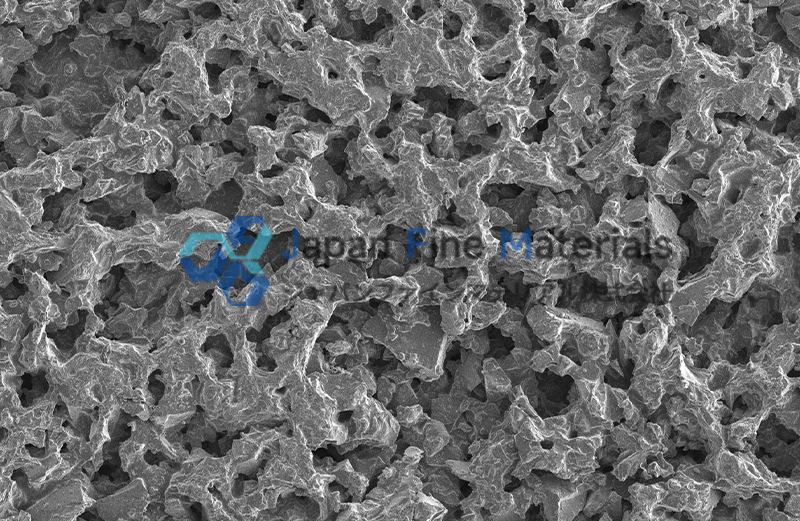
1. Porosity
Porosity refers to the volume percentage of voids within a material.
Porosity affects the material air permeability and the vacuum response characteristics of the suction cup. Too low a porosity may restrict gas flow, while too high a porosity may impose new requirements on the material mechanical properties and structural design.
Therefore, it is necessary to match the material to the characteristics of the vacuum system and the workpiece.
2. Pore Size
Pore size affects the flow pattern of air within the ceramic.
Different applications have different requirements for pore size. Precision workpieces such as wafers typically require a comprehensive evaluation that takes into account the surface condition of the workpiece, adsorption uniformity, and particle control requirements.
3. Surface Flatness
The working surface of the suction cup must make good contact with the workpiece.
If surface flatness does not meet equipment requirements, it may affect the effective adhesion area and workpiece positioning. Therefore, in precision applications, flatness, parallelism, and surface roughness are all critical considerations.
4. Dimensions and Thickness
The size of the suction cup is typically determined based on the workpiece dimensions and the equipment installation space.
For example, wafer equipment may involve various specifications such as 4-inch, 6-inch, 8-inch, and 12-inch; therefore, the vacuum chuck diameter, thickness, mounting hole positions, and vacuum interface locations must all be compatible with the equipment.
Applications of Porous Ceramic Vacuum Chucks
Porous ceramic vacuum chucks are primarily used in equipment requiring vacuum clamping and precise positioning.
Wafer Handling
During wafer handling, the vacuum chuck must be compatible with the wafer dimensions, surface condition, and the handling mechanism.
Porous ceramic vacuum chucks can secure wafers through distributed vacuum suction, providing positioning support for robotic arms, handling platforms, or other actuators.
Wafer Processing
In some wafer processing equipment, workpieces must be held in a relatively fixed position.
Porous ceramic vacuum chucks can be used for vacuum clamping of wafers, with dimensions, pore structures, and mounting methods designed according to the equipment process requirements.
Wafer Inspection
Inspection equipment typically requires workpieces to remain in a relatively stable position while minimizing the impact of fixtures on the inspection area.
Therefore, Porous Ceramic Vacuum Chucks can be used in certain wafer inspection and precision measurement equipment.
Glass and Thin-Film Materials
In addition to semiconductor wafers, the Porous Ceramic Vacuum Chuck can also be designed for use with glass, thin films, ceramic wafers, and other sheet-like workpieces.
Specific applications must be evaluated based on the material dimensions, weight, surface flatness, and vacuum leakage conditions.
Porous Ceramic Vacuum Chuck vs. Conventional Vacuum Suction Cups
The main difference between the two lies in their adhesion mechanisms.
Conventional vacuum suction cups typically create negative pressure through vacuum holes, channels, or sealed areas, whereas the Porous Ceramic Vacuum Chuck utilizes the microporous structure within the ceramic to transmit the vacuum.
|
VS |
Porous Ceramic Vacuum Chuck |
Conventional Vacuum Suction Cup |
|
Adhesion Method |
Porous medium distributed adhesion |
Vacuum hole or groove adhesion |
|
Working Surface |
Porous ceramic |
Metal, polymer, or other materials |
|
Adsorption Area |
Can cover a large working area |
Typically determined by the location of pores or channels |
|
Material Properties |
Possess the characteristics of ceramic materials |
Depends on the specific material |
|
Common Applications |
Semiconductors, precision equipment, thin workpieces |
Automation, machining, material handling, etc. |
This does not mean that a single design is suitable for all equipment. The final selection must still be based on the workpiece and equipment conditions.
How to Select a Porous Ceramic Vacuum Chuck?
If used for semiconductors or precision equipment, evaluation can be based on the following factors.
• Workpiece Dimensions: Confirm the diameter, thickness, weight, and effective gripping area of the wafer or other workpiece.
• Ceramic Materials: Aluminum oxide, zirconia, silicon carbide, and aluminum nitride have different material properties; selection should be based on temperature, mechanical properties, thermal performance, and insulation requirements.
• Consider the pore structure: Porosity, pore size, and air permeability affect vacuum transmission and must be compatible with the equipment vacuum system.
• Surface precision: For precision workpieces such as wafers, attention must be paid to flatness, parallelism, surface roughness, and the treatment of the working surface.
• Confirm Mounting Method: Vacuum interfaces, mounting holes, overall dimensions, thickness, and internal vacuum structure must all be compatible with existing equipment.
For custom Porous Ceramic Vacuum Chucks, you may also provide information such as workpiece dimensions, equipment interfaces, vacuum parameters, operating temperatures, and installation drawings during the initial phase to facilitate further evaluation of the product design.
Conclusion
The Chuck porous ceramic materials with a vacuum-suction structure Porous Ceramic Vacuum combinesto provide a vacuum clamping solution for wafer handling, wafer processing, inspection, and other precision equipment.
Product performance depends not only on the ceramic material but is also closely related to porosity, pore size, surface flatness, dimensional specifications, vacuum interfaces, and equipment operating conditions. Therefore, in actual projects, structural and material selections should be tailored to the specific workpiece and equipment parameters.
JFM specializes in semiconductor ceramic products and offers a range of ceramic-related products, including alumina, silicon carbide, zirconia, and aluminum nitride, covering Porous Ceramic Vacuum Chucks, electrostatic chucks, and other semiconductor ceramic components.If you are looking forsuitable for wafer handling, processing, or inspection equipment Porous Ceramic Vacuum or Chucks , please contact JFM. Provide us with your product dimensions, operating conditions, equipment interfaces, and detailed drawings, and we will conduct a technical evaluation and discuss suitable product solutions.