Alumina Ceramic Grades Explained: Purity Levels
-
2026-08-06 Industry News






Learn how alumina ceramic grades differ by purity levels, including 95%, 99%, and 99.5% alumina, and understand their properties, applications, and selection tips.
What Are the Grades of Alumina Ceramics?
Alumina ceramics are widely used in industrial sectors such as machinery, electronics, semiconductors, and chemicals due to their exceptional wear resistance, high-temperature resistance, corrosion resistance, and electrical insulation properties.However, alumina ceramics are not a single material; they are classified into different grades based on factors such as aluminum oxide ( ) content, microstructure, sintering processes, and impurity control. A proper understanding of these grades is crucial for engineers selecting materials, procurement personnel evaluating cost-effectiveness, and equipment manufacturers managing long-term operating costs.
The classification of alumina ceramics is primarily based on Al₂O₃ content as the core criterion. The Al₂O₃ content of different grades directly affects the material’s mechanical properties (flexural strength, wear resistance), chemical stability (corrosion resistance), electrical insulation properties (volume resistivity), and high-temperature stability. However, it is important to note that classification depends not only on content but is also closely related to the following factors:
• Grain structure: Grain size affects the material’s strength, polishability, and wear resistance. Fine-grained alumina is typically more wear-resistant and easier to polish.
• Sintering Process: Atmospheric sintering, hot-press sintering, and hot isostatic pressing (HIP) significantly affect density, uniformity, and performance.
• Impurity Control: Trace impurities can affect corrosion resistance, electrical insulation, and cleanliness requirements for semiconductor processing.
Therefore, the grade of alumina ceramics is, in fact, a comprehensive reflection of chemical composition, microstructure, process control, and application performance. Only by understanding these factors can one correctly assess the suitability and value of each grade during engineering selection.
92% Alumina Ceramics
92% alumina ceramics are a basic engineering-grade material. Their main advantages lie in their relatively low cost, mature manufacturing processes, and stable performance, making them suitable for general industrial environments. Compared to high-purity grades, these materials typically contain higher levels of glass phase and sintering aids, resulting in relatively limited overall density and corrosion resistance; however, they can still maintain a certain level of mechanical strength and wear resistance in medium- and low-temperature environments.
In terms of processing, the forming and sintering processes for this material are well-established, making it suitable for mass production; however ,ceramics have high hardness and typically require machining methods such as diamond grinding, they cannot be cut using conventional metal-cutting techniques. sintered alumina asAlthough their chemical corrosion resistance and high-temperature stability are inferior to those of high-purity grades, they are sufficient to meet the requirements of light-load structural components or general wear-resistant parts.
Typical Applications:
• Industrial electrical insulation components
• Low-load mechanical structural components
• Wear-resistant liners and gaskets
• Cost-sensitive high-volume parts
95%–96% Alumina Ceramics
The 95%–96% grade is the most commonly used alumina ceramic in industrial applications. Its high density, uniform grain size, and low glass phase content make it significantly superior to the 92% grade in terms of wear resistance, mechanical strength, and chemical corrosion resistance. Sintering is typically performed using atmospheric pressure sintering or hot-press sintering, resulting in more stable performance.
Ceramics of this grade can not only withstand moderate temperatures and loads but also offer good thermal expansion matching properties, making them suitable for a wide range of mechanical and electronic applications. They are relatively easy to machine with low machining loss, making them an extremely cost-effective engineering choice.
Typical Applications:
• Electronic substrates and sensor housings
• High-temperature insulating structural components in industrial equipment
• General-purpose wear-resistant parts
• Medium-temperature mechanical components
97% Alumina Ceramics
The 97% grade is a high-purity engineering ceramic characterized by low porosity and fine grain structure, offering further enhanced wear and corrosion resistance. High density is typically achieved through atmospheric sintering combined with precise formulation and process control; for applications requiring even higher performance, densification processes such as hot pressing or hot isostatic pressing (HIP) may also be employed.
This grade is suitable for industrial components subjected to medium-to-high temperatures and medium-to-high mechanical loads, capable of maintaining stable performance during long-term operation. Its wear resistance exceeds that of the 95% grade, making it suitable for precision machinery and wear-resistant components with slightly higher performance requirements.
Typical Applications:
• Non-critical components in semiconductor equipment
• High-temperature furnace linings
• Precision wear-resistant components
• Industrial automation machinery components
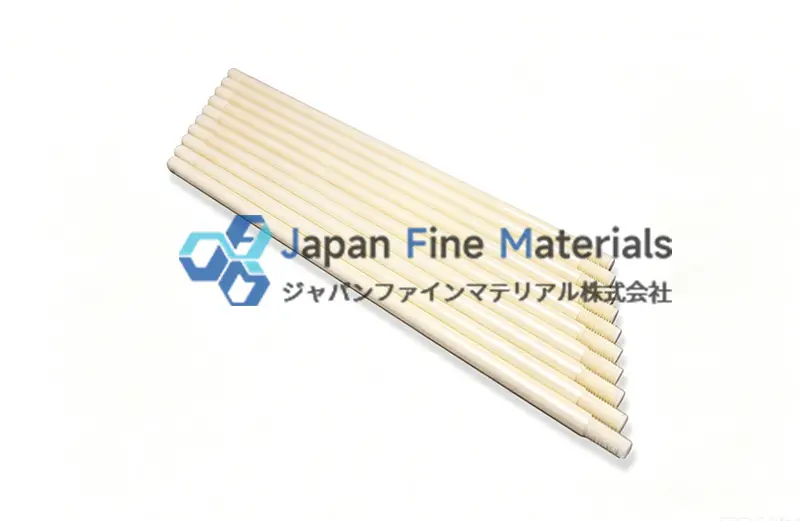
99% Alumina Ceramics
The 99% grade represents industrial-grade high-purity ceramics, suitable for environments with high temperatures, heavy loads, and stringent corrosion resistance requirements. The material features extremely high density and excels in mechanical strength, wear resistance, and electrical insulation. High density can be achieved through established sintering processes; for applications requiring exceptional reliability, densification processes such as hot isostatic pressing (HIP) can be employed to enhance the material’s stability under high-temperature, vacuum, or complex operating conditions.
Ceramics of this grade can be used not only for high-temperature structural components but also as wear-resistant or highly electrically insulating parts, making them particularly suitable for semiconductor equipment and vacuum systems. Their high density and low porosity significantly enhance corrosion resistance while reducing the risk of microcracks.
Typical Applications:
• Semiconductor manufacturing equipment components
• Ceramic components for vacuum systems
• High-temperature furnace structural components
• Precision wear-resistant parts
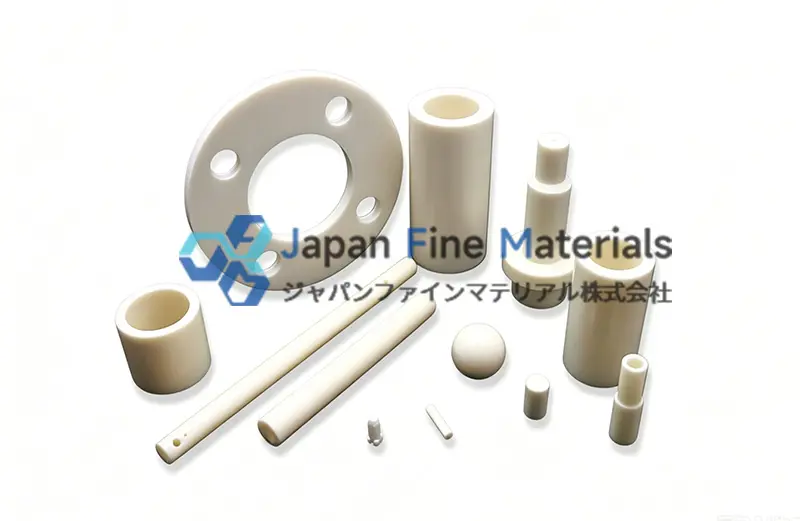
99.5%–99.7% Alumina Ceramics
Ultra-high-purity alumina (99.5%–99.7%) typically features high density, a uniform microstructure, and low impurity levels, it suitable for high-purity, precision machining, or harsh operating conditions. makingThis grade of ceramic material meets the semiconductor industry’s stringent requirements for ionic contamination, electrical insulation stability, and mechanical properties.
Due to the high difficulty of processing, which requires precision machining or laser cutting, the cost is significantly higher than that of lower-grade materials. These ceramics are suitable for use in high-precision, clean environments, or scientific research equipment to ensure long-term, stable operation.
Typical Applications:
• Semiconductor etching and deposition equipment
• Lining for high-purity vacuum chambers
• Precision optical or electronic components
• High-reliability scientific research equipment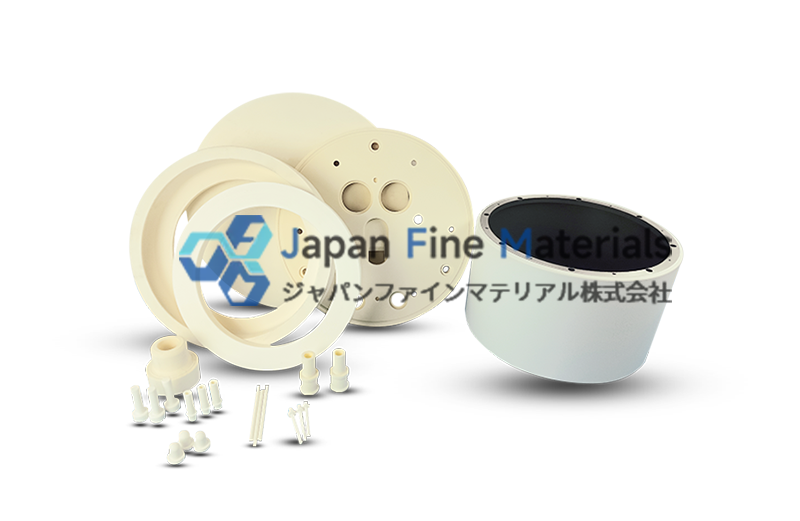
|
Grade |
Performance Characteristics |
Typical Applications |
|
92% |
Basic wear resistance and corrosion resistance; suitable for conventional medium- and low-temperature operating conditions |
Industrial electrical insulation components, low-load parts, wear-resistant liners |
|
95–96% |
Good wear and corrosion resistance; suitable for medium-temperature operating conditions |
Electronic circuit boards, sensor housings, general-purpose wear-resistant parts |
|
97% |
High wear resistance, excellent corrosion resistance, suitable for high-temperature applications |
Non-critical components in semiconductor equipment, high-temperature furnace linings |
|
99% |
High wear and corrosion resistance; good high-temperature stability |
Semiconductor equipment, vacuum components, high-temperature structural parts |
|
99.5–99.7% |
High wear and corrosion resistance; suitable for high-purity or harsh operating conditions |
Semiconductor etching/deposition equipment, high-purity vacuum chambers, precision optical components |
Why isn't a higher level necessarily better?
Blindly selecting higher-purity alumina ceramics may lead to several issues:
Significantly higher costs
High-purity raw materials are inherently more expensive, and when combined with the increased difficulty of processing and sintering, the overall price is often tens of percentage points higher than that of lower-purity grades. For non-critical components or low-load operating conditions, the actual performance improvement is limited, while the cost burden increases significantly.
Limited Performance Improvement
In certain low-temperature or low-load applications, such as standard insulating components or structural supports, 99.5% or 99.7% ultra-high-purity ceramics may not necessarily demonstrate performance benefits commensurate with those of the 95%–96% grade. Higher grades may simply represent “over-specification” and fail to realize their full potential under actual operating conditions.
Equipment and Process Compatibility Issues
Certain industrial equipment imposes strict requirements on the load-bearing capacity and thermal expansion compatibility of ceramic materials. Selecting ceramics with excessively high purity grades or excessive density may result in mismatched coefficients of thermal expansion, thereby increasing the risk of stress concentration and compromising equipment stability.
Principles for Selecting Alumina Grades
In practical engineering applications, selecting the appropriate grade of alumina ceramics requires a comprehensive consideration of material properties, operating conditions, and cost-effectiveness. Common selection principles are as follows:
Operating Temperature
The mechanical strength and thermal stability of alumina ceramics at high temperatures are influenced by purity and grain structure. Generally, for equipment or processes operating at temperatures exceeding 800°C, grades of 99% or higher should be selected to ensure the material does not develop thermal cracks or experience performance degradation at high temperatures. For low-temperature or ambient-temperature applications, grades ranging from 92% to 96% are sufficient to meet strength and insulation requirements.
Mechanical Loads and Wear Resistance
In high-wear or high-load environments—such as pump shaft bushings, wear-resistant liners, and guide components—high-purity grades (97%–99%) with high density and fine grain size should be selected to enhance flexural strength, hardness, and wear resistance. For low-load applications, lower-purity grades (92%–95%) can be used to reduce costs while ensuring sufficient service life.
Electrical Insulation Requirements
For applications sensitive to electrical insulation performance—such as electrode supports in semiconductor equipment, electronic substrates, or high-voltage insulating components—the material’s volume resistivity, dielectric constant, and impurity content must be considered. Generally, alumina grades of 95% or higher meet standard industrial electrical insulation requirements, while grades of 99% or higher are recommended for semiconductors or precision electronic equipment to ensure long-term stability and reliability.
Chemically Corrosive Environments
The performance of alumina ceramics varies significantly in acids, alkalis, or other corrosive media. Due to their low impurity content and high density, In chemical processing, vacuum, or corrosive environments, high-grade materials typically help extend component service life and reduce maintenance frequency. high-purity grades (97%–99.7%) exhibit significantly superior chemical corrosion resistance compared to lower-grade materials.
Cost and Cost-Effectiveness
The price of high-grade alumina ceramics increases significantly with purity and processing requirements. When selecting a grade, one should comprehensively evaluate the balance between performance gains and cost investment. For low-temperature, low-load, or non-critical structural components, there is no need to use the highest grade to avoid waste; however, in extreme operating conditions or high-value equipment, investing in high-grade materials can prevent high repair costs and the risk of production downtime caused by material failure.
Conclusion
The grades of alumina ceramics represent more than just differences in purity numbers; they also reflect the material’s microstructure, sintering process, performance stability, and suitability for specific applications. In engineering selection, blindly pursuing the highest grade often leads to increased costs and greater processing difficulties, while the actual performance improvement is limited. The correct approach is to select the appropriate grade based on specific operating conditions and to comprehensively consider the various factors mentioned above.
If are youseeking alumina ceramics solutions or need selection recommendations for specific operating conditions, please contact the JFM team. Based on your application scenario, drawings, and performance goals, we can provide grade recommendations, technical support, and references for customized processing solutions to help improve equipment operational stability and selection efficiency.