What Is Ceramic Vacuum Chuck? Structure, Working Principle and Uses
-
2026-09-09 Industry News






Discover what a ceramic vacuum chuck is, how its porous structure and vacuum system work, and where ceramic vacuum chucks are used in precision processing.
Introduction
In semiconductor manufacturing, wafer processing, precision inspection, and electronic component production, the positional control and surface flatness of workpieces directly impact subsequent processing steps. For thin, precision workpieces such as wafers, traditional mechanical clamping methods may cause issues such as contact pressure, localized stress, or surface damage; therefore, vacuum suction has become one of the most common methods for securing workpieces.
A ceramic vacuum chuck is a functional component designed for these types of precision clamping applications. It typically consists of a ceramic body that uses vacuum suction to secure the workpiece to the chuck surface, while leveraging the ceramic material’s dimensional stability, heat resistance, and chemical resistance to adapt to various precision machining environments.
This article will introduce the Ceramic Vacuum Chuck in terms of its structure, operating principle, and materials, helping you better understand this precision suction component.
What Is a Ceramic Vacuum Chuck?
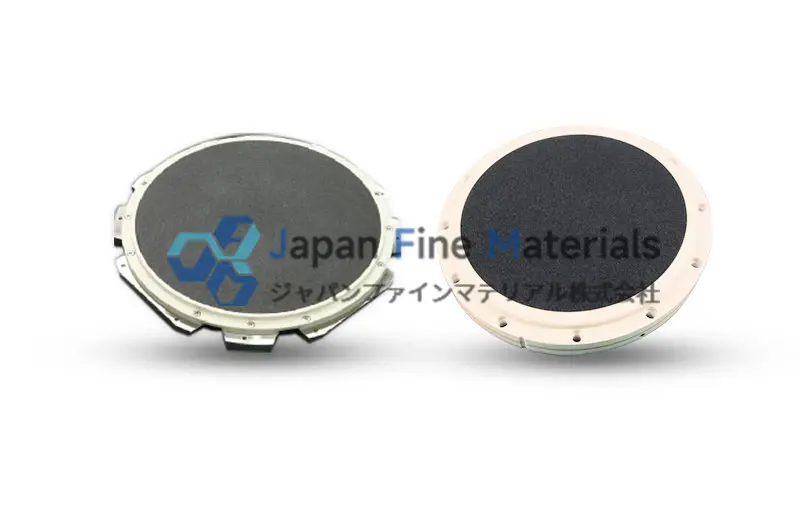
A ceramic vacuum chuck is a suction cup made of ceramic material that secures workpieces using vacuum suction. Depending on the specific design, its working surface may feature porous ceramics, a microporous structure, or specially machined vacuum channels to distribute the suction force across the contact area with the workpiece.
Compared to ordinary vacuum chucks, ceramic vacuum chucks place greater emphasis on material properties, surface flatness, pore structure, and microscopic machining precision; therefore, they are commonly used in applications with high requirements for cleanliness, flatness, and positional control.
In the semiconductor industry, ceramic vacuum chucks are used for wafer clamping and are therefore often referred to as ceramic wafer chucks. It is important to note that “wafer chuck” is a term defined by the application, whereas “ceramic vacuum chuck” emphasizes both the material and the clamping method.
Basic Structure of a Ceramic Vacuum Chuck
The structure of ceramic vacuum chucks may vary across different devices, but they typically consist of the following components.
1. Ceramic Substrate
The ceramic substrate forms the main body of the chuck; common materials include alumina ceramic and aluminum nitride ceramic.
Different materials possess varying thermal conductivity, thermal expansion characteristics, electrical properties, and chemical resistance; therefore, the choice must be based on operating temperature, process environment, and equipment requirements.
2. Vacuum Suction Area
The surface of the chuck is typically designed with a vacuum-holding area to apply vacuum suction to the bottom surface of the workpiece.
Depending on the product’s structure, the suction area may feature a ring-shaped, grid-like, concentric groove, or porous design. A well-designed structure helps ensure a more uniform distribution of suction force while reducing localized stress concentration.
3. Vacuum Channels
Vacuum channels connect the suction surface to the vacuum system.
When the vacuum pump is operating, gas is drawn out through the internal channels, creating a pressure difference between the suction cup surface and the workpiece, thereby generating the suction force.
4. Mounting and Connection Structure
Ceramic vacuum chucks are typically installed into specific equipment; therefore, the bottom may be designed with mounting holes, connection ports, or other positioning features.
For semiconductor equipment, the mounting dimensions, positioning accuracy, and interface types must be compatible with the equipment’s structure.
How Does a Ceramic Vacuum Chuck Work?
The basic operating process of a ceramic vacuum chuck is not complicated.
First, a wafer or other workpiece is placed on the surface of the chuck. Next, the vacuum system begins to evacuate the air, and the air inside the chuck is expelled through the vacuum channels.
As a pressure difference forms between the chuck and the workpiece, atmospheric pressure exerts a downward force on the workpiece, causing it to adhere to the chuck’s surface.
This can be simply understood as:
Workpiece placement → Vacuum extraction → Pressure differential formed → Adhesive force generated → Workpiece held in place
For porous ceramic vacuum chucks, the microporous structure within the ceramic serves as a pathway for gas flow. By appropriately controlling porosity, pore size distribution, and surface structure, the flow characteristics during the vacuum adhesion process can be modified.
This is why the material parameters and manufacturing processes of porous ceramics are critical factors in product design.
Why are ceramic materials used to manufacture vacuum chucks?
Ceramic materials are not simply used as structural materials for vacuum chucks; rather, they must be selected based on the thermal, mechanical, electrical, and chemical properties required for the specific application. Common aluminum oxide and aluminum nitride ceramics each possess distinct performance characteristics suited to different applications, making them particularly well-suited for precision equipment that demands dimensional stability, thermal management, and high cleanliness.
Low Thermal Expansion
Temperature changes cause the chuck to undergo a certain degree of thermal expansion or contraction, which can affect wafer positioning and support accuracy.The coefficient of linear expansion for alumina ceramics is typically around (6.0–8.0) × 10⁻⁶/K (in the 25–1000°C range), which is moderate among commonly used structural ceramics—significantly lower than that of metallic materials but higher than that of ceramics such as reaction-sintered silicon carbide (approximately 4.5 × 10⁻⁶/K).
For wafer processing equipment that must withstand temperature fluctuations, a lower coefficient of thermal expansion helps minimize dimensional shifts in the suction cup caused by temperature changes.
High Thermal Conductivity
If a vacuum chuck needs to perform a certain degree of heat transfer, aluminum nitride (AlN) is a material worth considering. The thermal conductivity of common aluminum nitride ceramics ranges from approximately 140 to 200 W/(m·K), which is significantly higher than the typical level of approximately 20–30 W/(m·K) for alumina ceramics.
Therefore, in applications where improved heat transfer between the wafer and the vacuum chuck is required, an AlN ceramic vacuum chuck can be evaluated as a material option.
Good Electrical Insulation
Alumina ceramics have a high resistivity, with a volume resistivity typically reaching 10¹⁴ Ω·cm or higher at room temperature; consequently, they are frequently used in precision equipment components that require electrical insulation.
For equipment using ceramic vacuum chucks, these electrical properties help minimize the impact of unintended conductive paths on equipment operation.
Resistance to Chemical Media
Semiconductor manufacturing processes may involve acids, alkalis, cleaning agents, and other chemical media. Aluminum oxide ceramics possess good chemical stability and can maintain good material integrity in many common industrial environments.
However, specific corrosion resistance is still influenced by factors such as ceramic purity, density, the type of chemical medium, and temperature; therefore, material selection must be evaluated in conjunction with the specific process.
High Hardness
Alumina ceramics typically achieve a Vickers hardness of approximately 1,500–2,000 HV, offering excellent wear resistance. For vacuum chucks that require frequent loading and unloading of wafers or other precision workpieces, appropriate ceramic materials and surface finishing processes help maintain the dimensional accuracy and surface condition of the support surface.
Therefore, the selection of materials for ceramic vacuum chucks should not be based solely on the term “ceramic”; it must also be evaluated in light of specific parameters such as thermal conductivity, coefficient of thermal expansion, electrical resistivity, hardness, and the chemical environment. Different ceramic materials are suitable for different process requirements, and alumina and aluminum nitride are not simply interchangeable.
Common Applications of Ceramic Vacuum Chucks
Ceramic vacuum chucks are primarily used in scenarios requiring precise clamping, low contact damage, and good planar support.
Wafer Processing
This is one of the key applications of ceramic vacuum chucks.
During wafer grinding, polishing, inspection, dicing, and certain other processing steps, wafers must be held in specific positions. Vacuum suction helps mitigate localized stress issues caused by mechanical fixtures directly gripping the wafer edges.
Semiconductor Inspection Equipment
During wafer inspection, equipment must perform visual, dimensional, defect, or other parameter inspections on the wafer surface.
The suction cup must maintain the wafer’s position while minimizing interference with the inspection area; therefore, the suction area and surface structure must be designed in accordance with the inspection method.
Electronic Component Processing
Some precision electronic components are small and thin, making mechanical clamping unsuitable for their processing methods.
Ceramic vacuum chucks can be designed with suction areas tailored to the workpiece’s size and shape to assist with positioning and clamping.
Display Panel Processing
The processing of certain display panels and related precision components also involves vacuum suction and precision positioning.
For large, thin workpieces, special attention must be paid to the uniformity of adhesion, the support method, and the overall flatness of the suction cup.
Precision Optical and Other Machining Equipment
Some optical components and precision parts are sensitive to surface contact and positioning methods; therefore, ceramic vacuum chucks may also be used for auxiliary clamping.
The specific application requires selecting an appropriate design based on the workpiece material, dimensions, weight, and machining method.
Ceramic Vacuum Chuck vs. Electrostatic Cup
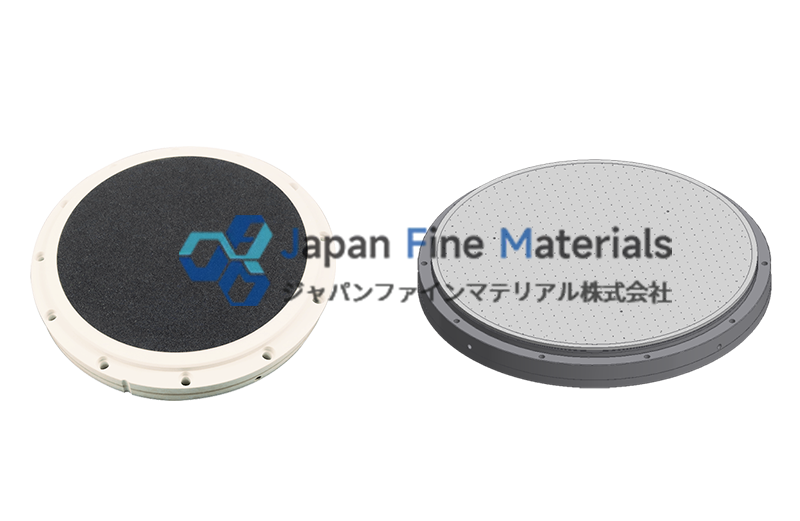
Both ceramic vacuum chucks and electrostatic chucks can be used for wafer clamping, but their operating principles differ.
|
Comparison Criteria |
Ceramic Vacuum Chuck |
Electrostatic Chuck |
|
Clamping Principle |
Vacuum Suction |
Electrostatic Adhesion |
|
Main Materials |
Ceramics such as aluminum oxide and aluminum nitride |
Specific dielectric ceramics |
|
Vacuum System Required |
Typically required |
Vacuum adhesion is not the primary method of securing the sample |
|
Adhesion method |
Vacuum Suction |
Electrostatic force |
|
Common Applications |
Wafer processing, inspection, and precision positioning |
Process equipment for semiconductor etching, deposition, and other processes |
|
Key Structural Features |
Vacuum channels, pores, adsorption areas |
Electrodes, dielectric layers, electrical performance |
The two are not simply interchangeable. When making an actual selection, the decision must be based on a combination of equipment structure, process temperature, wafer size, processing workflow, and electrical requirements.
How to Select the Right Ceramic Vacuum Chuck?
When selecting a ceramic vacuum chuck, the following factors should be considered.
Ceramic Materials
First, determine whether to use alumina, aluminum nitride, or other ceramic materials.
If the application prioritizes insulation properties, alumina should be the primary consideration; if high thermal conductivity is required, alumina nitride should be further evaluated.
Workpiece Dimensions
The chuck size must match the size of the wafer or workpiece.
It is also necessary to consider the workpiece’s thickness, shape, and any functional areas that need to be avoided to prevent interference between the suction structure and critical areas on the workpiece.
Surface Flatness and Roughness
For wafers and precision thin workpieces, the surface condition of the suction cup affects the support and adhesion performance.
Therefore, when purchasing, parameters such as flatness, parallelism, and surface roughness can be verified based on actual process requirements.
Vacuum Requirements
Vacuum pressure, flow rate, and vacuum channel design all affect suction performance.
For porous ceramic products, attention must also be paid to pore size, porosity, and gas permeability to ensure a proper match between the suction cup structure and the vacuum system.
Temperature Conditions
If the suction cup is to be used in high-temperature processes or those with significant temperature fluctuations, special attention must be paid to the ceramic material’s thermal conductivity, coefficient of thermal expansion, and applicable temperature range.
Custom Sizes and Interfaces
Installation dimensions and vacuum interfaces may vary across different pieces of equipment.
Therefore, when customizing a ceramic vacuum chuck, it is typically necessary to provide information such as workpiece dimensions, the suction area, mounting dimensions, vacuum interfaces, and operating temperature to facilitate the manufacturer’s structural design.
Conclusion
A ceramic vacuum chuck is a precision workpiece-holding component that combines ceramic materials with vacuum adhesion technology; it is widely used in wafer processing, semiconductor testing, electronics manufacturing, and other precision machining applications.
Its performance is closely related to factors such as the ceramic material, pore structure, surface flatness, vacuum channels, and machining precision. Therefore, when selecting a product, it is essential to match it to specific process parameters and equipment requirements rather than comparing a single parameter in isolation.
If you are looking for a Ceramic Vacuum Chuck suitable for wafer processing, semiconductor equipment, or precision manufacturing, JFM can provide corresponding product solutions and custom machining services based on your workpiece dimensions, ceramic material, vacuum requirements, mounting method, and operating environment. Please feel free to contact us to further discuss your specific needs.
FAQ
Can ceramic vacuum chucks be customized?
Yes. They can be customized based on requirements such as wafer size, equipment structure, mounting method, vacuum interface, and suction area.
What are the common sizes for ceramic vacuum chucks?
There are no standardized sizes; they are typically designed based on the dimensions of the wafer or workpiece and the available space within the equipment. Different wafer sizes generally require chucks of corresponding specifications.
Can ceramic vacuum chucks be used in high-temperature environments?
Some ceramic vacuum chucks are suitable for higher-temperature processing environments, but the specific operating temperature depends on the ceramic material, structural design, and process conditions; selection must be based on actual operating conditions.
Do ceramic vacuum chucks need to be cleaned regularly?
Yes. Particles, dust, or other contaminants may accumulate during use, and regular cleaning helps maintain the cleanliness of the suction surface. The cleaning method should be determined based on the ceramic material and specific process requirements.
How do I determine if a ceramic vacuum chuck is suitable for my equipment?
You primarily need to confirm parameters such as the wafer or workpiece dimensions, chuck size, mounting method, vacuum interface, and operating temperature. Providing equipment drawings or the dimensions of your existing chuck can help the manufacturer find a suitable match.
What is the difference between alumina and aluminum nitride ceramic chucks?
Alumina offers good electrical insulation and chemical resistance, making it suitable for a wide range of applications; aluminum nitride has high thermal conductivity, making it more suitable for applications with high heat dissipation requirements. The specific choice should be based on actual process conditions.
What parameters are required to customize a ceramic vacuum chuck?
Typically, you’ll need to provide information such as wafer size, chuck dimensions, mounting hole locations, vacuum interface, gripping area, operating temperature, and material requirements. If you have product drawings, you can also provide them directly to the manufacturer.
Can ceramic vacuum chucks be used with different types of wafers?
Specifications can be designed based on the size, thickness, and process requirements of different wafers; however, different wafers typically require matching adhesion structures and dimensions.