Conductive Ceramic Arm vs Metal Arm: Which Material Is Better?
-
2026-09-22 Industry News






Compare conductive ceramic arms and metal arms for semiconductor equipment, focusing on material properties, performance differences, and application considerations.
Introduction
In semiconductor manufacturing, precision automation equipment, and vacuum equipment, robotic arms serve as critical components for wafer handling and component transfer. They must meet the application requirements of high-precision motion, cleanroom compatibility, and long-term repetitive operation.
As semiconductor equipment technology continues to advance, in addition to traditional metal robotic arms, Conductive Ceramic Arms—manufactured using advanced ceramic materials—are gradually being adopted in certain high-precision equipment.
So, what are the differences between the Metal Arm and Conductive Ceramic Arm andtraditional? For which application scenarios are the two materials respectively suitable? What factors should equipment manufacturers consider when making a selection?
What Is a Conductive Ceramic Arm?
A Conductive Ceramic Arm is a precision structural component manufactured from conductive ceramic material, typically used in semiconductor equipment, wafer handling systems, and other automated equipment that requires high cleanliness and specific material properties.
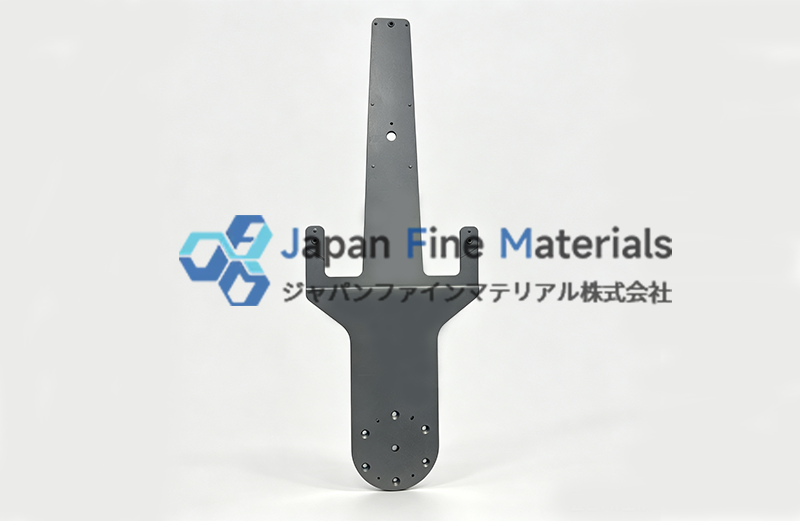
Unlike traditional insulating ceramics, conductive ceramics are formulated to give ceramic components a certain degree of electrical conductivity while retaining some of the original characteristics of ceramic materials.
Common materials include:
• Conductive alumina ceramic
• Silicon carbide ceramics
• Composite conductive ceramics
In semiconductor equipment, Conductive Ceramic Arm is typically used for:
• Wafer handling robots
• Vacuum transfer systems
• Semiconductor testing equipment
Their primary function is to grasp, support, and transport wafers or precision workpieces during equipment operation.
What is a Metal Arm?
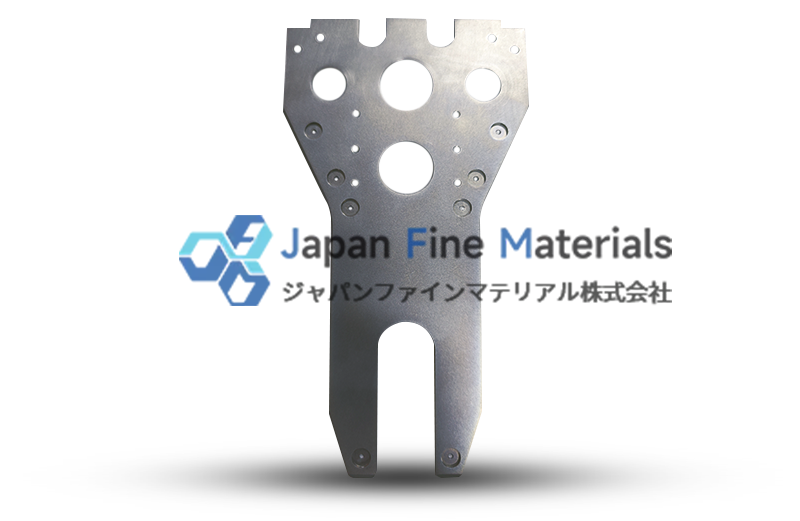
A Metal Arm is a mechanical structural component manufactured from metal materials and is widely used in automated equipment, robotic systems, and industrial equipment.
Common metal materials include:
• Aluminum alloy
• Stainless steel
• Titanium alloy
Because metal materials offer good machinability and well-established manufacturing processes, they remain a common choice in many industrial applications.
Metal arms typically have the following characteristics:
• Well-established manufacturing processes
• Flexible structural design
• Wide range of material options
• Manufacturing costs are relatively easy to control
For general automation equipment or applications with relatively standard material performance requirements, Metal Arms still offer significant value.
Different Material Systems
Different materials have different characteristics; therefore, selecting the appropriate robotic arm solution requires a comprehensive assessment that takes into account the equipment’s operating environment, process requirements, and application objectives.
|
VS |
Conductive Ceramic Arm |
Metal Arm |
|
Material Type |
Conductive Ceramic Material |
Metals such as aluminum alloy and stainless steel |
|
Density |
Generally lower |
Varies depending on the type of metal |
|
Thermal Expansion Properties |
Relatively small thermal dimensional changes |
Varies among different metals |
|
Chemical stability |
Good adaptability to certain corrosive environments |
Depends on the material and surface treatment |
|
Electrical conductivity |
Can be adjusted through material design |
Metals are inherently conductive |
|
Processing methods |
Ceramic molding + precision machining |
Machining, casting, etc. |
|
Applications |
Semiconductors, vacuum systems, precision equipment |
Automation equipment, industrial machinery |
Thermal Stability
In the semiconductor manufacturing process, some process equipment must operate in environments with fluctuating temperatures; therefore, the thermal properties of component materials influence the structural design of the equipment.
Ceramic materials typically have a low coefficient of thermal expansion, resulting in relatively minor dimensional changes during temperature fluctuations.
For the Conductive Ceramic Arm, this characteristic helps minimize the impact of temperature fluctuations on the dimensions of the mechanical structure, making it suitable for certain equipment that requires precise positioning.
In contrast, the thermal expansion characteristics of metallic materials are influenced by the specific type of material. For example:
• Aluminum alloys have high thermal conductivity but a relatively high coefficient of thermal expansion
• Stainless steel offers good mechanical properties, but its weight and thermal performance must be considered in conjunction with the specific design
|
VS |
Conductive Ceramic Arm |
Metal Arm |
|
Coefficient of Thermal Expansion |
Typically about 3–8 × 10⁻⁶/°C (varies depending on the type of ceramic material) |
Aluminum alloy: approximately 20–25 × 10⁻⁶/°C; stainless steel: approximately 10–18 × 10⁻⁶/°C |
|
Dimensional Stability |
Low thermal expansion; suitable for certain equipment requiring high precision |
May exhibit more pronounced dimensional changes under temperature fluctuations |
|
High-temperature applications |
Can be used in certain high-temperature, vacuum, and precision manufacturing equipment |
Evaluation must take into account the type of metal and structural design |
Therefore, in semiconductor equipment with strict temperature control, ceramic materials may better meet the requirements of certain applications.
Particle Control Capability
In semiconductor manufacturing environments, cleanliness is one of the key factors that must be prioritized during the equipment design process. Wafer surfaces are highly sensitive to microscopic particles; therefore, the material properties and manufacturing quality of components used inside the equipment must typically be carefully considered.
The Conductive Ceramic Arm is manufactured from ceramic materials and offers excellent material stability and wear resistance. After precision machining and surface treatment, it can be used in certain semiconductor equipment that requires strict particle control.
Although metal arms benefit from mature manufacturing processes, their surfaces may be affected by factors such as friction, oxidation, or wear during prolonged operation. Therefore, in application environments with high cleanliness requirements, surface treatment processes are typically required to optimize performance.
In practical applications, particle control is not only related to the material but is also influenced by the following factors:
• Surface roughness
• Machining precision
• Assembly method
• Operating environment
• Maintenance and management
Therefore, material selection must be evaluated in conjunction with the overall equipment design.
Mechanical Properties
Mechanical strength and structural stability are key factors in robotic arm design.
|
VS |
Conductive Ceramic Arm |
Metal Arm |
|
Hardness |
High hardness; for example, alumina ceramic is approximately 1500–2000 HV |
Aluminum alloy: approximately 100–200 HV; stainless steel: approximately 150–500 HV (varies depending on material and processing methods) |
|
Strength Characteristics |
High compressive strength, suitable for precision structural components |
Good toughness and impact resistance |
|
Weight Characteristics |
Ceramics typically have a density of approximately 3–4 g/cm³, which facilitates lightweight design |
Aluminum alloy has a density of approximately 2.7 g/cm³, while stainless steel has a density of approximately 7.8 g/cm³ |
In semiconductor equipment, robotic arms typically handle wafers that are relatively lightweight but require high precision. Such applications demand high structural rigidity and dimensional stability; therefore, the characteristics of ceramic materials can meet the requirements of certain precision applications.
Electrical Properties
In the semiconductor manufacturing process, electrostatic management is a critical aspect of equipment design. Electrostatic buildup can affect wafer handling processes; therefore, some equipment utilizes conductive materials for charge control.
Through material formulation design, the Conductive Ceramic Arm features adjustable resistivity characteristics, making it suitable for use in equipment structures requiring electrostatic control solutions.
In contrast, while metallic materials inherently possess good electrical conductivity, certain semiconductor equipment applications also require consideration of risks associated with metal ion contamination, surface treatment requirements, and adaptability to corrosive environments.
Therefore, in certain semiconductor equipment, conductive ceramic materials may be a suitable choice.
|
VS |
Conductive Ceramic Arm |
Metal Arm |
|
Conductivity |
The resistivity can be adjusted by modifying the material formulation; the typical range is approximately 10⁻²–10⁶ Ω·cm (varies depending on the material system) |
Metals inherently possess high electrical conductivity; for example, copper has a resistivity of approximately 1.68 × 10⁻⁶ Ω·cm |
|
Resistance Control |
Conductivity characteristics can be designed to meet the requirements of semiconductor equipment |
Resistance is relatively low, so the range for adjustment is limited |
|
Electrostatic Management |
Can be used in certain device structures that require electrostatic discharge control |
Possesses electrical conductivity but requires integration with equipment design for charge management |
Weight and Structural Design
The weight of the robotic arm affects the equipment’s motion control, response speed, and overall structural design.
Ceramic materials typically have a lower density; therefore, for the same structural dimensions, the Conductive Ceramic Arm may be lighter in weight. A lighter structural design can help equipment manufacturers optimize:
• Motion control solutions
• Drive system design
• Mechanical load distribution
Although metal materials offer good strength, there are significant weight differences among various metals. For example:
• Aluminum alloys are relatively lightweight and suitable for certain lightweight designs
• Stainless steel offers good corrosion resistance but is relatively heavy
Therefore, in semiconductor robotic systems, a comprehensive selection must be made based on wafer size, motion patterns, and equipment structure.
Conductive Ceramic Arm vs. Metal Arm: Which Is Better?
Conductive Ceramic Arms and Metal Arms each have their own characteristics; there is no single material suitable for all applications. When making an actual selection, it is necessary to comprehensively consider the equipment type, operating environment, and performance requirements.
For applications in semiconductor equipment, wafer handling systems, or vacuum equipment—where factors such as cleanliness, electrostatic control, and dimensional stability are critical— Conductive Ceramic Arms can be a suitable material choice.
If the application places greater emphasis on structural strength, ease of machining, and cost control, the Metal Arm offers a more established track record of use.
|
VS |
Conductive Ceramic Arm |
Metal Arm |
|
Material Type |
Conductive ceramic materials, such as conductive alumina and silicon carbide ceramics |
Metal materials such as aluminum alloy, stainless steel, and titanium alloy |
|
Thermal Expansion Properties |
Low coefficient of thermal expansion, approximately 3–8 × 10⁻⁶/°C, resulting in relatively minor dimensional changes |
The coefficient of thermal expansion varies depending on the material; for aluminum alloys, it is approximately 20–25 × 10⁻⁶/°C |
|
Particle Control |
Good surface stability, suitable for certain equipment environments with high cleanliness requirements |
Particle control requires a combination of material selection and surface treatment |
|
Hardness |
Relatively high hardness; for example, alumina ceramics have a hardness of approximately 1500–2000 HV |
Relatively low hardness; for example, aluminum alloy is approximately 100–200 HV |
|
Mechanical Properties |
Good compressive strength, suitable for precision structural applications |
Good toughness and strong impact resistance |
|
Weight |
Density is typically about 3–4 g/cm³ |
Aluminum alloy: approximately 2.7 g/cm³; stainless steel: approximately 7.8 g/cm³ |
|
Electrical conductivity |
Resistance characteristics can be adjusted through material formulation, making it suitable for certain electrostatic control applications |
Metals inherently possess good electrical conductivity |
|
Typical Applications |
Semiconductor equipment, wafer handling systems, vacuum equipment, precision automation equipment |
Industrial robots, automation equipment, general-purpose mechanical structures |
Conclusion
Both the Conductive Ceramic Arm and the Metal Arm are common mechanical design solutions in industrial equipment, but they differ significantly in terms of material properties and application areas.
Thanks to its mature manufacturing processes, excellent mechanical properties, and high design flexibility, the Metal Arm is widely used in many automated systems.
The Conductive Ceramic Arm, on the other hand, combines the characteristics of ceramic materials with electrical conductivity, demonstrating its value in semiconductor equipment, wafer handling systems, and certain precision manufacturing environments.
For equipment manufacturers, selecting the appropriate material for robotic arms requires a comprehensive consideration of the equipment’s operating environment, precision requirements, cleanliness standards, and supply chain capabilities—rather than simply comparing the materials themselves.
JFM specializes inand supply the R&D, manufacturing, of precision ceramic components, providing Conductive Ceramic Arms, Metal Arms, ceramic structural components, and customized ceramic solutions for sectors such as semiconductor equipment and automation equipment.
Leveraging our established supply resources, we provide —from material selection and structural design to precision machiningtailored to the specific operating conditions of our customers’ equipmentprofessional, coordinated support—, helping them develop ceramic components that meet their application specifications. If you are looking for Conductive Ceramic Arms and Metal Arms suitable for semiconductor equipment, please contact JFM to learn more about our products and customization options.