Porous Ceramic Chuck for Wafer Handling
-
2026-09-22 Industry News






Learn how porous ceramic chucks support wafer handling, with insights into their structure, vacuum performance, material properties, and key applications.
Introduction
In the semiconductor manufacturing process, wafers must be transferred multiple times between different equipment and process steps. From wafer cleaning, grinding, and polishing to inspection, thin wafer handling, and subsequent processing, each step involves the positioning and clamping of the wafer.
Compared to conventional mechanical clamping methods, vacuum suction minimizes direct contact between the chuck and the wafer edges, making it widely used in wafer handling equipment. The Porous Ceramic Chuck is a precision suction component developed based on traditional vacuum suction technology; its internal controlled microporous structure forms airflow channels, allowing the vacuum force to be distributed evenly across the suction surface.
For wafer handling, the value of a Porous Ceramic Chuck extends beyond simply providing suction; it also encompasses multiple aspects such as wafer support, force distribution, surface cleanliness, flatness, and equipment compatibility.
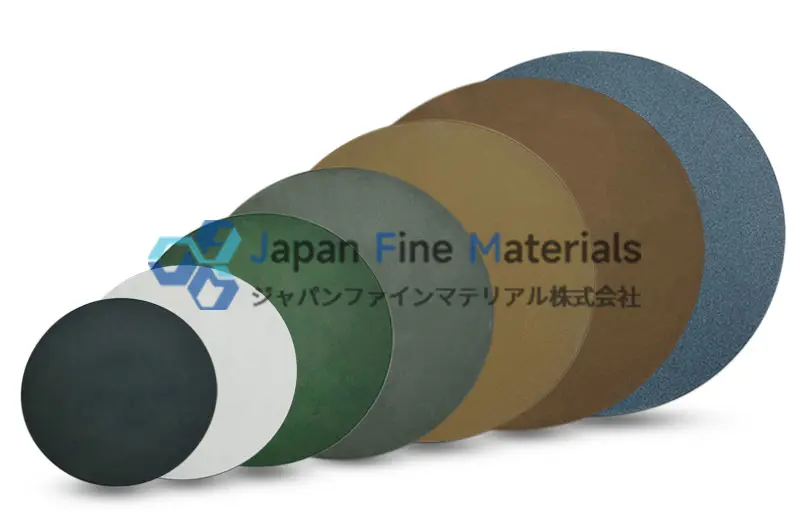
Why does wafer handling require precision adhesion?
Wafers typically have large diameters and relatively thin structures. During handling, if the gripping force is concentrated at a few points, it may cause localized stress changes in the wafer. This issue warrants particular attention for thin wafers, thinned wafers, or wafers with sensitive surface structures.
Furthermore, the wafer surface may already feature microstructures, thin films, or other functional layers; direct contact may also increase requirements for particle control, scratch prevention, and contamination control.
Therefore, wafer handling equipment typically requires a comprehensive evaluation of the following:
• Whether the holding force meets handling requirements
• Is the distribution of the gripping areas appropriate?
• Whether the wafer can maintain good flatness
• Whether the suction cup surface is suitable for a cleanroom environment
• Whether the vacuum system is compatible with the suction cup’s air circuit
• Is the suction cup material suitable for the equipment’s temperature and process conditions?
Porous Ceramic Chucks are a type of precision ceramic component specifically designed to meet these requirements.
What is a Porous Ceramic Chuck?
A Porous Ceramic Chuck is a vacuum-suction component that uses porous ceramic as its primary material.
Unlike ordinary ceramic plates, a Porous Ceramic Chuck contains a large number of interconnected micropores. These micropores are formed into a specific pore structure through material preparation and processing, and are connected to vacuum channels.
When the vacuum system is operational, negative pressure is generated inside the chuck, causing gas to flow through the porous ceramic structure toward the vacuum channels. Once a wafer is placed on the chuck’s surface, a pressure differential forms on either side of the wafer, thereby generating an adhesive force.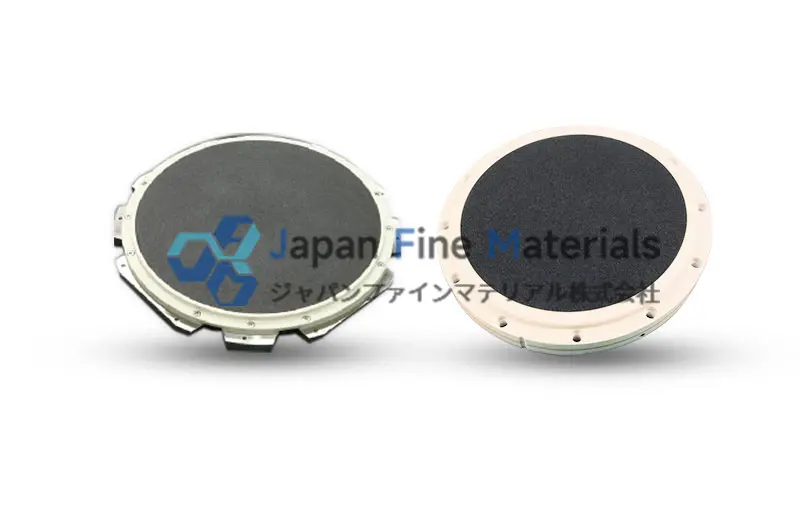
• Basic operating path: Vacuum source → Vacuum channels → Internal pores of the porous ceramic → Chuck surface → Wafer
Therefore, the adhesion performance of a Porous Ceramic Chuck depends on the vacuum source itself and is also influenced by the porosity, pore size distribution, permeability, and surface finish of the ceramic material.
How is a Porous Ceramic Chuck Used for Wafer Handling?
In a typical wafer handling process, a robotic arm or automated mechanism moves the wafer above the chuck. Once the wafer is properly positioned against the chuck’s surface, the vacuum system begins to operate.
As the pressure inside the chuck decreases, gas from the space between the wafer and the chuck enters the porous ceramic and is ultimately exhausted through the vacuum port.
At this point, atmospheric pressure acts on the upper surface of the wafer, while the interior of the suction cup maintains a lower pressure; the pressure difference between the two sides creates an adhesive force.
• This can be simply expressed as: Adhesive force ≈ Pressure difference × Effective adhesion area
Therefore, vacuum pressure is not the only factor to consider. The effective adhesion area, the contact condition between the wafer and the suction cup, and the gas permeability characteristics of the porous ceramic itself all affect the actual performance.
For wafer handling, inertial loads during motion—such as acceleration, deceleration, and rotation—must also be considered; therefore, the suction cup’s dimensions, vacuum parameters, and effective adhesion area typically need to be evaluated in conjunction with the equipment’s motion parameters.
Why is the porous structure important?
A key distinction between the Porous Ceramic Chuck and traditional perforated vacuum chucks is that its adsorption area derives from the microporous structure within the ceramic itself, rather than relying entirely on a small number of independent vacuum holes. This structure influences airflow distribution.
If the internal pore structure of the chuck is not designed properly, issues such as localized airflow concentration and variations in adhesion across different areas may arise. Therefore, the manufacturing of a Porous Ceramic Chuck requires not only control over external dimensions but also over the internal pore structure.
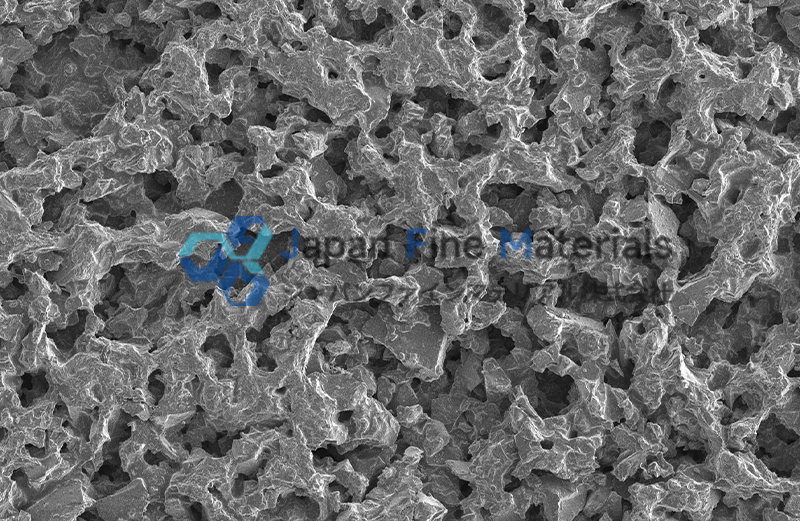
Key parameters include:
|
Parameter |
Effect on the Chuck |
|
Porosity |
Affects the internal gas permeability |
|
Pore size |
Affects airflow resistance and surface adsorption properties |
|
Pore Size Distribution |
Affects the uniformity of the adsorption area |
|
Permeability |
Reflects the ability of a gas to pass through a porous material |
|
Flatness |
Affects the contact condition between the wafer and the suction cup |
|
Surface Roughness |
Affects contact and cleanliness management |
|
Adsorption area |
Affects the effective adsorption area |
Therefore, when customizing a Porous Ceramic Chuck, it is not sufficient to provide only the outer diameter and thickness; internal structural parameters must also be confirmed based on the vacuum system and specific process.
Features of Porous Ceramic Chucks in Wafer Handling
Facilitates Distributed Adhesion
The interior of porous ceramics contains a large number of micropores, which allow the vacuum force to be distributed across a larger adsorption area.
Compared to adsorption structures that rely on a small number of concentrated pores, this approach—when properly designed—helps reduce the concentration of local adsorption forces.
For the handling of thin wafers, the distribution of suction force is a critical design consideration.
Supports Wafer Support
Porous ceramic chucks not only provide adhesion but also support the bottom of the wafer.
The flatness of the chuck surface, machining accuracy, and the design of the adsorption area all affect the support condition of the wafer once it is placed.
This is particularly important in applications such as grinding, polishing, and precision inspection, as localized deformation of the wafer may affect subsequent processing or measurement results.
Ceramic materials offer good dimensional stability
Common engineering ceramics, such as alumina and silicon carbide, have different coefficients of thermal expansion and thermal properties.
In equipment subject to temperature fluctuations, the thermal expansion behavior of the material affects the chuck’s dimensions and flatness. Therefore, when selecting ceramic materials, it is necessary to consider both the equipment’s operating temperature and the wafer processing conditions.
Suitable for Precision Surface Machining
Porous ceramic chucks typically require processes such as grinding and finishing to ensure the gripping surface meets the required dimensional and flatness specifications.
For precision wafer processing equipment, the microscopic condition of the chuck surface also requires attention, as surface roughness, particles, and machining residues can all affect wafer contact and cleanliness control.
In which wafer processing steps are porous ceramic chucks used?
Porous ceramic chucks can be used in a variety of wafer processing equipment, and their specific structure is adjusted according to different processes.
Wafer Handling
In automated wafer handling systems, porous ceramic chucks can be used for wafer pickup, positioning, and clamping.
During the design process, it is typically necessary to ensure compatibility between the suction cup’s weight, dimensions, vacuum connection, and the robot’s motion profile.
Wafer Polishing
During the wafer polishing process, the suction cup must provide support for the wafer while working in conjunction with the vacuum system to secure it in place.
For this type of application, the suction cup’s flatness, surface condition, material, and wear resistance are typically key parameters to consider.
Wafer Polishing
During the polishing process, there is relative motion between the wafer and the processing surface, so the suction cup must maintain proper support and adhesion.
A porous ceramic structure can be used to create distributed vacuum adhesion, while precision machining ensures the geometric accuracy of the wafer support surface.
Wafer Inspection
In optical inspection, dimensional inspection, and certain surface inspection equipment, wafers must be maintained in specific positions and orientations.
The surface flatness and cleanliness of the suction cup, as well as the areas where it may obstruct the wafer, are all factors that must be considered during equipment design.
Thin Wafer Handling
With the application of wafer thinning processes, the mechanical sensitivity of thin wafers during handling has become more pronounced.
Such scenarios typically require a tailored design that takes into account wafer thickness, dimensions, vacuum pressure, and the suction area, rather than simply using a standard suction cup.
How to Select a Porous Ceramic Chuck?
When selecting a porous ceramic chuck for wafer handling, one must not only consider the chuck’s outer diameter and thickness but also take into account wafer specifications, the vacuum system, the equipment’s motion mechanism, and the specific processing environment. The chuck itself is a functional component within the wafer handling system, and its parameters must be compatible with the entire equipment setup.
Wafer Size and Thickness
First, determine the wafer’s diameter, thickness, and specific processing conditions. Different wafer sizes correspond to different effective gripping areas, and thinner wafers typically require greater attention to support methods and the distribution of gripping force.
Therefore, the suction cup’s dimensions, suction area, and surface structure must be determined based on the actual wafer specifications, rather than simply selecting standard sizes.
Vacuum Pressure and Suction Area
Vacuum pressure and effective suction area jointly influence the suction cup’s actual holding capacity. The theoretical holding force can typically be estimated based on the pressure difference and effective suction area:
• Adhesive Force ≈ Pressure Differential × Effective Adhesion Area
However, in actual use, factors such as wafer weight, manipulator speed, acceleration, and safety margins must also be considered. Therefore, vacuum parameters must be matched to the equipment’s motion characteristics.
Porosity, Pore Size, and Permeability
The core feature of the Porous Ceramic Chuck lies in its internal microporous structure. Porosity, pore size distribution, and permeability affect the ability of gas to pass through the chuck as well as the airflow conditions within the adsorption area.
If the equipment has specific requirements for adsorption uniformity or vacuum response, these parameters must be specifically adjusted during the design phase to ensure that the porous ceramic structure is compatible with the operating parameters of the vacuum system.
Flatness and Surface Roughness
The flatness of the chuck’s surface affects the wafer’s support, while surface roughness is related to wafer contact, friction, and cleanliness management.
For applications such as grinding, polishing, and precision inspection, flatness and surface roughness requirements are typically determined based on the specific process. For general handling scenarios, appropriate selections can be made based on the equipment’s precision and wafer characteristics.
Materials and Operating Temperatures
Common porous ceramic materials include alumina and silicon carbide. Different materials vary in terms of thermal expansion, thermal conductivity, mechanical properties, and electrical properties.
If the suction cup is to be used in equipment subject to temperature fluctuations, it is necessary to consider both the thermal properties of the ceramic material and the thermal expansion compatibility between the suction cup and other components of the equipment.
Equipment Interfaces and Mounting Dimensions
In addition to the material and performance parameters of the suction cup itself, it is necessary to verify the vacuum interface, mounting holes, positioning structures, overall dimensions, and internal space of the equipment.
Particularly when used in automated wafer handling equipment, the suction cup must be compatible with the robotic arm, vacuum lines, and mounting mechanisms; therefore, these structural parameters typically need to be confirmed in advance before customization.
Conclusion
In wafer handling and precision machining equipment, the Porous Ceramic Chuck performs more than just a simple vacuum-suction function. Its material composition, pore structure, flatness, surface condition, and vacuum interface design all affect the fit between the chuck, the wafer, and the equipment.
For wafers of different sizes, thicknesses, and manufacturing processes, the structural parameters required for the chuck may also vary. Therefore, when selecting a Porous Ceramic Chuck, it is best to start with the specific application and conduct a comprehensive evaluation of the material, porosity, vacuum parameters, geometric accuracy, and mounting method.
JFM Porous Ceramic Chuck
JFM can discuss the material, porosity, dimensional accuracy, surface finish, and mounting method of the Porous Ceramic Chuck based on wafer size, equipment structure, vacuum system, and specific processing techniques.
If you are looking for a Porous Ceramic Chuck for wafer handling, grinding, polishing, or inspection equipment, please feel free to contact us. You may provide product drawings, dimensions, samples, or equipment interface specifications. Based on the information provided, JFM can gain a deeper understanding of your application requirements and discuss a suitable custom Porous Ceramic Chuck solution.