Ceramic Components in Semiconductor Etching Equipment
-
2026-02-14 Industry News






Discover how selecting the right precision ceramic materials for etching components optimizes semiconductor process stability and maximizes wafer yield.
In semiconductor manufacturing, Etching is a critical process that determines pattern transfer accuracy, Critical Dimension (CD) control, and final yield. In etching equipment, precision ceramic parts serve as key components within the reaction chamber, where they are exposed for long periods to harsh environments involving high-temperature, high-energy plasma ion bombardment, corrosive gases, as well as thermal cycles and thermal stress. The performance of ceramic components is directly linked not only to the stable operation of the equipment but also significantly impacts the reproducibility of the etching process and wafer yield.
Ceramic components are applied in various areas such as Chamber Liners (Shields), Focus Rings, Electrostatic Chuck (ESC) related components, and windows for various sensors. Due to their combination of excellent heat resistance, plasma erosion resistance, mechanical stability, and low particle characteristics, they are widely adopted as materials that support processing accuracy and reliability in advanced processes.
In recent years, etching processes have become increasingly sophisticated and complex, requiring material design (composition, purity, microstructure) and structural optimization (shape, tolerance, surface condition) tailored to process conditions. This enables compliance with strict requirements for securing process windows and improving productivity.
Requirements for Ceramic Components in Etching Processes
Etching environments vary significantly depending on the process, creating the following demands on material properties and structural design:
(1) Dry Etching
As components are exposed to ion bombardment, plasma action, and Radio Frequency (RF) electric fields, corrosion resistance to process gases and structural stability are required. The density, purity, and surface condition of the material affect particle risks and process variations.
(2) Wet Etching
Chemical compatibility with acidic and alkaline chemicals is required. Even with repeated immersion, cleaning, and temperature changes, it is necessary to maintain stability in dimensions and surface conditions to contribute to process reproducibility and contamination control.
(3) Plasma Etching / Reactive Ion Etching (RIE)
In high-power, long-duration operations, stable electrical insulation, controlled dielectric properties, and thermomechanical stability are important. These contribute to uniform plasma distribution, improved control of film thickness (processing amount), and assurance of process reproducibility.
(4) Comprehensive Requirements
Material selection, shape design, and surface treatment involve multifaceted constraints such as corrosion resistance, thermal stress, electric field distribution, and particle control. To achieve long-term stable operation and high yield, these must be optimized comprehensively.
Ceramic Materials and Selection Criteria
Appropriate material selection is the key to stable equipment operation and yield improvement. Representative materials and their characteristics are as follows:
|
Material |
Thermal Management |
Thermal Expansion |
Mechanical Properties Trend |
Key Applications |
|
Alumina (Al₂O₃) |
Medium |
Medium |
High hardness; Toughness is relatively low |
General-purpose Dry/Wet, Chamber insulation parts, Bushings |
|
Aluminum Nitride (AlN) |
High |
Low |
Good strength |
Rings/Insulation structures with high heat dissipation requirements, ESC related |
|
Silicon Nitride (Si₃N₄) |
Medium |
Low |
Excellent high toughness & thermal shock resistance |
High-stress components, Transfer arms, Positioning pins |
|
Zirconia (ZrO₂) |
Low |
High |
High toughness |
Wear-resistant/Impact-resistant parts, Bearing parts, Plungers |
|
Silicon Carbide (SiC) |
High |
Low |
Excellent high rigidity & wear resistance |
Internal chamber parts for long-term operation/high thermal load, Support/Isolation parts |
|
Yttria (Y₂O₃) |
Medium |
High |
Hardness is moderate |
Liners/Shielding parts for advanced processes, Coating applications |
Selection Points:
(1) Suitability for Process Conditions: Selected based on temperature, electric field, and gas corrosivity (Dry/Wet/Plasma/RIE).
(2) Particle Reduction: Using high-purity, high-density materials and appropriate surface treatments to suppress particle generation.
(3) Alignment with Equipment Specifications: Optimizing dimensions, tolerances, shapes, and surface conditions to match the equipment platform.
(4) Utilization of Composites & Surface Modification: Enhancing corrosion and wear resistance with composite ceramics or coatings as needed.
Key Ceramic Components Used in Etching Equipment
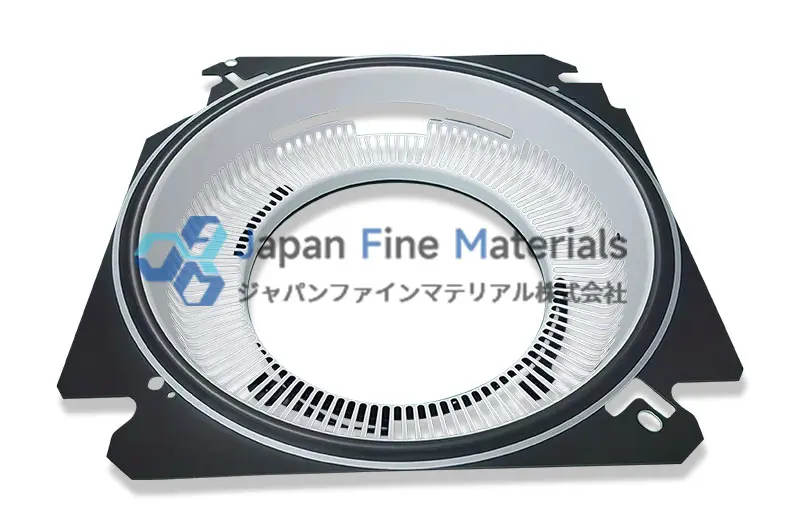
(1). Chamber Liner (Liner/Shield)
Chamber liners are consumable parts directly exposed to plasma and process gases. They reduce the risk of erosion and contamination of the chamber body and facilitate maintenance replacement. The material, shape, and surface condition affect reaction/deposition behavior, flaking particles, and thermal boundary conditions, thereby influencing process stability.
Main Materials
● Alumina (Al₂O₃): Excellent heat resistance, corrosion resistance, and mechanical strength.
● Yttria Coating (Y₂O₃): Thermal spray applied to alumina substrates to improve erosion resistance and low-particle properties against fluorine-based plasma (widely adopted in advanced processes).
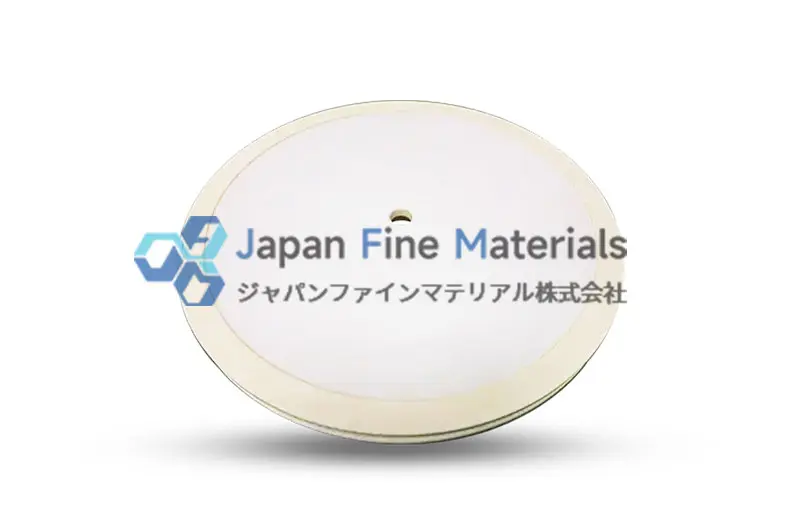
(2) Ceramic Window
Placed at the top of the reaction chamber, it isolates the vacuum from the process atmosphere while stably coupling RF energy to maintain the plasma. It is required to maintain dielectric properties and mechanical strength under plasma irradiation, corrosive gases, thermal cycles, and deposition/cleaning conditions, reducing the risks of cracks, abnormal discharge, and particles.
Main Materials
● Alumina (Al₂O₃): High-purity grades ensure translucency and excellent corrosion resistance.
● Quartz: Low dielectric loss and excellent RF transmission.
● Yttria (Y₂O₃): High resistance to fluorine-based plasma, effective in reducing metal contamination risks.
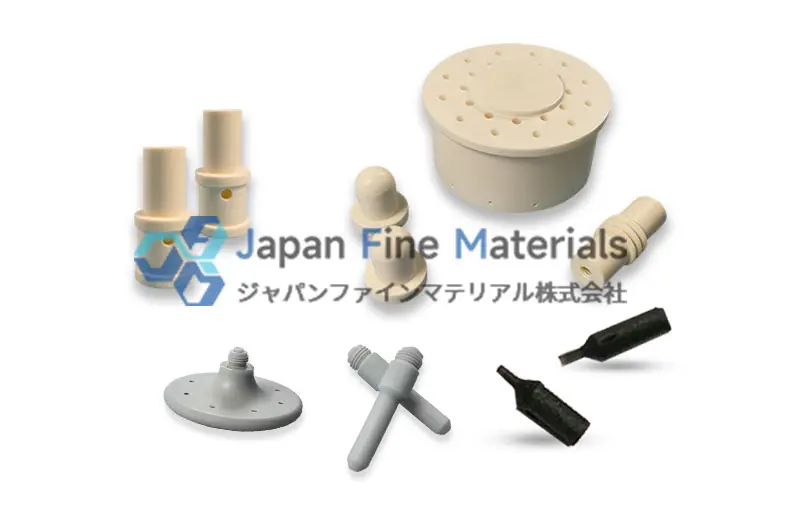
(3) Ceramic Nozzle
A critical component for process gas introduction; its flow path design, pore diameter accuracy, inner surface roughness, and placement are directly linked to gas distribution and etching uniformity. Corrosion resistance and dimensional stability to withstand high-energy ion bombardment are required.
Main Materials
● Alumina (Al₂O₃): Excellent insulation and strength, applied for general purposes.
● Aluminum Nitride (AlN): Advantageous for temperature uniformity due to high thermal conductivity.
● Silicon Carbide (SiC): Excellent high rigidity and wear resistance, effective for locations requiring long-term stability.
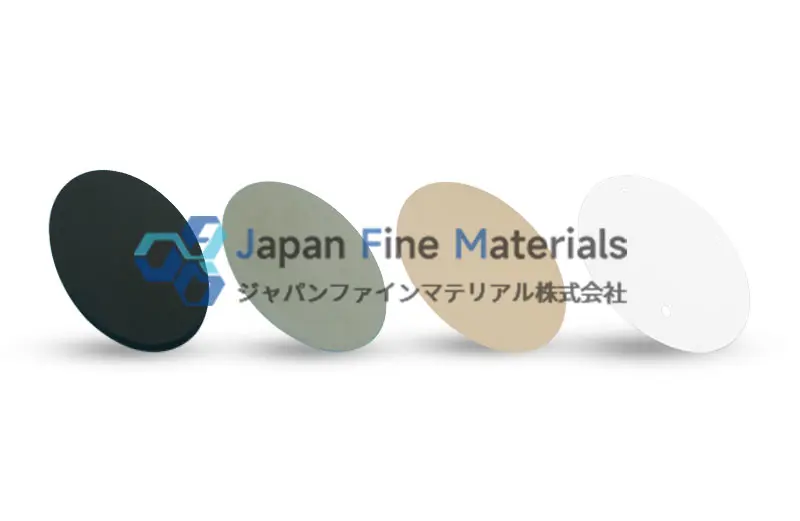
(4) Ceramic Substrate
Used as a structural member for wafer holding or ESCs; positioning accuracy and thermal interface stability affect temperature uniformity and processing variations. Electrical insulation under high RF voltage, thermal stress resistance, and flatness management are important.
Main Materials
● Alumina (Al₂O₃): High strength and high insulation, offering high versatility.
● Aluminum Nitride (AlN): Suitable for applications prioritizing temperature uniformity due to high thermal conductivity.
● Porous Ceramics: Utilized for adding functions such as vacuum chucking, pressure equalization, and gas distribution.
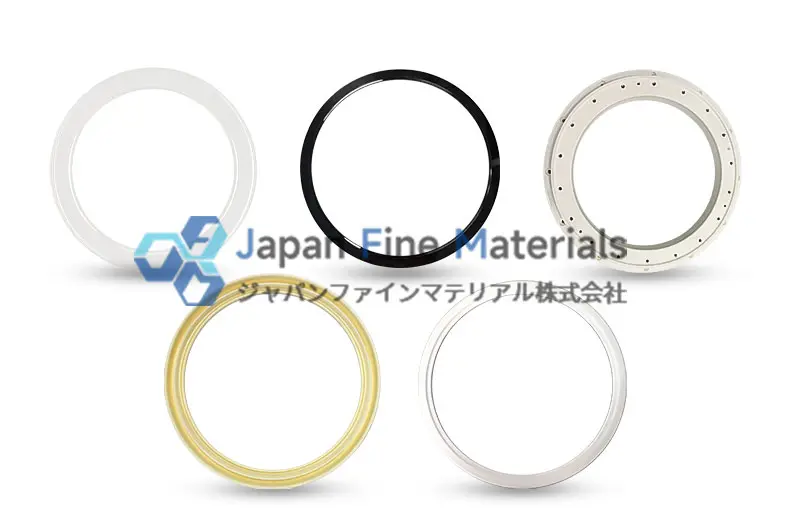
(5) Ceramic Ring
Used for plasma boundary control, wafer edge protection, and isolation of the etching area. Shape tolerance and material properties are directly linked to uniformity, edge quality, and yield. A design that avoids deformation and cracking due to thermal expansion differences and thermal stress is necessary.
Main Types
● Focus Ring / Edge Ring: Reduces processing variations (edge effect) in the peripheral area.
● Shadow Ring: Shields against straight-line ion bombardment and parasitic deposition (often operated as a replaceable part).
● Insulation Ring / Spacer Ring: Suppresses parasitic discharge through electrical and structural isolation.
● Shield Ring: Bears erosion and deposition, improving maintainability.
Main Materials
● Alumina (Al₂O₃): Excellent heat resistance and corrosion resistance.
● Aluminum Nitride (AlN): Excellent electrical insulation in addition to heat resistance.
● Silicon Carbide (SiC): Suitable for application in high-power conditions or high-temperature processes.
● Yttria (Y₂O₃): Used as a composite/coating material, effective for improving plasma erosion resistance.
● Quartz: Adopted for Focus Ring applications in specific processes.
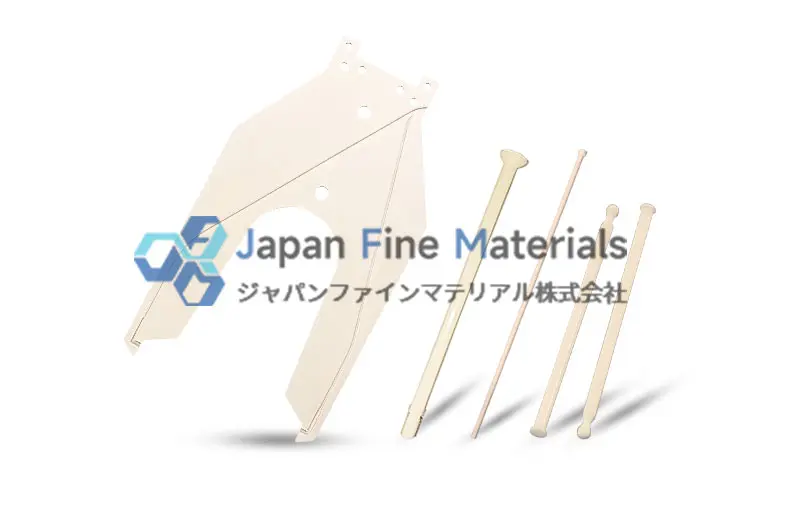
(6) Support & Positioning Components (Lift Pins/End Effectors/Alignment Pins, etc.)
Responsible for transport, lifting, and fixation in vacuum environments, these must maintain minute repetitive positioning accuracy while withstanding repeated operations and thermal cycles.
Main Materials
● Alumina (Al₂O₃): Excellent strength and insulation, wide range of applications.
● Zirconia (ZrO₂): High toughness, effective for locations where impact and stress concentration are concerns.
● Silicon Nitride (Si₃N₄): Excellent toughness and thermal cycle reliability.
● Aluminum Nitride (AlN): Effective for support/isolation aimed at heat dissipation and thermal gradient reduction.
● Silicon Carbide (SiC): Effective for locations with long-term load and frictional contact.
Contribution of Ceramic Components to Equipment Performance
Ceramic components go beyond structural support and contribute to process stability and yield in the following ways:
(1) Improvement of Process Reproducibility: Stabilization of electric field and plasma density distribution reduces variations in etching rate, CD, and sidewall shape.
(2) Suppression of Particle Contamination: High-purity, high-density materials and precision surface treatment reduce defect risks.
(3) Stabilization of Thermal and Electric Fields: Utilizing the material's dielectric constant and thermal characteristics to suppress hot spots and electric field effects at edge areas.
(4) Improvement of Maintainability and Lifespan: Corrosion and wear resistance extend replacement cycles and reduce the frequency of chamber openings.
(5) Effects of Design Optimization: Ring shape, edge radius (R), surface roughness, and coatings affect uniformity and particles.
(6) System Integration: Compatibility with metal parts, vacuum systems, and gas flow paths determines the stability of the entire chamber.
Conclusion
The process capability and operational stability of etching equipment are directly linked to wafer yield and productivity. Precision ceramic components are key elements supporting long-term stable operation in plasma and corrosive gas environments due to their heat resistance, chemical compatibility, electrical insulation, and low-particle characteristics. Material selection, structural design, and surface conditions for each part, such as Chamber Liners, Focus Rings, and support/isolation members, influence process reproducibility, maintenance cycles, and defect risks. Risk reduction of unplanned downtime and stable operation can be expected through appropriate material selection, precision machining, quality control, and maintenance design tailored to operating conditions.
At JFM, we provide technical support tailored to process conditions, from ceramic material selection proposals to custom machining and evaluation/verification support. We assist in equipment/process adaptation and performance verification from the perspectives of corrosion resistance, thermal management, insulation, and particle control.
● Supply of high-purity, precision ceramic components and quality control support.
● Material/structure selection and application proposals based on usage conditions.
● Custom machining and verification support tailored to equipment platforms and process requirements.
For evaluations and proposals according to equipment specifications and process conditions, please feel free to contact the JFM Technical Team.